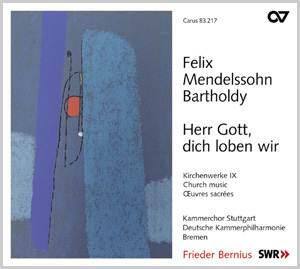
Neun Psalmen und das Cantique
 Anschauen
 Anhören
(9)
Anhören
(9)
- Psalm 5
- Cantique pour l’Eglise Wallonne de Francfort
- Psalm 2
- Psalm 24
- Psalm 31
- Psalm 91
- Psalm 93
- Psalm 98
- Psalm 100
 Zusatz-Material
- Zusatz-Material als Download-Produkt kaufen.
-
 Text (ohne Noten) zum Abdruck, html-Datei, Singtext, franz. Übersetzunghtml-Datei, Singtext, franz. Übersetzung (Leseprobe)Cantique pour l’Église Wallonne de Francfort Venez et chantez les louanges de ce Christ chanté par les anges,
et par eux toujours adoré ;
pour nous tirer de la misère,
il s’est fait enfant de colère :
pour nos forfaits, il fut navré.
Text: vermutlich Daniel A. E. Touchon
Psalm 2 Warum toben die Heiden, und die Leute reden so vergeblich?
Die Könige im Lande lehnen sich auf,
und die Herrn ratschlagen miteinander wider den Herrn und seinen Gesalbten:
„Lasst uns zerreißen ihre Bande, und von uns werfen ihre Seile!“
Aber der im Himmel wohnet, lachet ihrer, und der Herr spottet ihrer.
Er wird einst mit ihnen reden in seinem Zorn, und mit seinem Grimm wird er sie schrecken:
„Aber ich habe meinen König eingesetzt auf meinem heiligen Berge Zion.
Ich will von einer solchen Weise predigen, dass der Herr zu mir gesagt hat:
„Du bist mein Sohn, heute hab’ ich dich gezeuget;
heische von mir, so will ich dir die Heiden zum Erbe geben, und der Welt Ende zum Eigentum.
Du sollst sie mit eisernem Szepter zerschlagen, wie Töpfe sollst du sie zerbrechen.“
...
-
Text (ohne Noten) zum Abdruck, html-Datei, Singtext, engl. Übersetzunghtml-Datei, Singtext, engl. Übersetzung (Leseprobe)Cantique pour l’Église Wallonne de Francfort Let us sing the song of praise sung by angels to the Lord;
honor him, like them, resounding;
to save us from sin he came to us as a human child.
for our guilt he suffered torment.
Psalm 2 Why rage fiercely the heathen, and the people mediate a vain thing?
The kings of the earth they set themselves up,
and the rulers counsel take together against the Lord, and against his anointed.
“Now let us break their bands asunder, and cast away their cords from us!”
He that sitteth in the heav’ns shall laugh them to scorn,
and the Lord shall deride them.
In wrath he shall speak to them, and shall vexthem in his sore displeasure.
“Yet have I set my King on Zion’s holy hill, yea, on my holy hill of Zion.”
I will declare the law where-of the Lord hath said, as the Lord hath said unto me:
“Thou art my Son, thee this day have I begotten.
Ask thou of me, and I shall give the heathen for thine inheritance,
utmost parts for thy possession.
Thou shalt break them in pieces with sceptres of iron,
...
-
Text (ohne Noten) zum Abdruck, html-Datei, Singtext, deutsche Übersetzunghtml-Datei, Singtext, deutsche Übersetzung (Leseprobe)Cantique pour l’Église Wallonne de Francfort (Deutsch) Lasst euren Lobgesang erklingen dem Herrn,
dem alle Engel singen,
ehrt ihn, wie sie, mit Klang und Schall!
Um uns zu retten von der Sünde,
ward Jesus Christ zum Menschenkinde,
für unsre Schuld litt er die Qual.
Psalm 2 Warum toben die Heiden, und die Leute reden so vergeblich?
Die Könige im Lande lehnen sich auf,
und die Herrn ratschlagen miteinander wider den Herrn und seinen Gesalbten:
„Lasst uns zerreißen ihre Bande, und von uns werfen ihre Seile!“
Aber der im Himmel wohnet, lachet ihrer, und der Herr spottet ihrer.
Er wird einst mit ihnen reden in seinem Zorn, und mit seinem Grimm wird er sie schrecken:
„Aber ich habe meinen König eingesetzt auf meinem heiligen Berge Zion.
Ich will von einer solchen Weise predigen, dass der Herr zu mir gesagt hat:
„Du bist mein Sohn, heute hab’ ich dich gezeuget;
heische von mir, so will ich dir die Heiden zum Erbe geben, und der Welt Ende zum Eigentum.
Du sollst sie mit eisernem Szepter zerschlagen, wie Töpfe sollst du sie zerbrechen.“
...
Inhaltsverzeichnis


-
Komponist*in
Felix Mendelssohn Bartholdy
| 1809-1847Felix Mendelssohn Bartholdy (1809–1847) zählt zu den bedeutendsten Komponisten der musikalischen Romantik. Sein kompositorisches Schaffen verbindet die formale Klarheit der Wiener Klassik mit der gesteigerten Ausdruckskraft des 19. Jahrhunderts. Besonders prägend war seine Auseinandersetzung mit der Musik Johann Sebastian Bachs, deren Wiederentdeckung er durch die Aufführung der Matthäus-Passion im Jahr 1829 maßgeblich förderte.
Zu seinen bekanntesten Vokal-Kompositionen zählen seine beiden Oratorien Paulus und Elias, sowie seine Choralkantate Verleih uns Frieden gnädiglich. Darüber hinaus wirkte Mendelssohn als Dirigent, Pianist und Musikpädagoge und trug wesentlich zur Professionalisierung des Konzertwesens sowie zur Entwicklung des Leipziger Konservatoriums bei. Sein Werk nimmt eine zentrale Stellung in der Musikgeschichte des 19. Jahrhunderts ein und verbindet Traditionsbewusstsein mit romantischer Klangästhetik.
zur Person
-
Herausgeber*in
Pietro Zappalà
Rezensionen
Herr, sei gnädig Felix Mendelssohn
Herr, sei gnädig: Felix Mendelssohn
Ave, maris stella: Edvard Grieg
These two sacred works are published back-to-back in this moderately priced score. ”Herr; sei gnädig” (Lord, Have Mercy upon Us) is a plaintive work written in fugal style. The subject uses a poignant appoggiatura and a singular leap of a fifth to provide a distinctive sense of pleading. The addition of an ascending chromatic countermelody heightens this effect. While the vocal ranges are very comfortable, frequent chromaticisms and dissonances make this brief work challenging.
In contrast to the horizontal focus of Mendelssohn's fugue, Grieg's setting of the familiar Latin text ”Ave, maris stella” is largely homophonic. Seventh chords provide the primary vocabulary for two stunning harmonic progressions: the first featuring third relations and the second presenting a textbook tour through the circle of fifths. The music is repeated strophically for the second verse, before giving war to a simple ”amen”. A broad range of dynamics provides the final romantic touch to this very lovely work. This edition also includes four German verses at the end of the score. While English translations and piano reductions are not included, this publication featuring two highquality works is very worthy of consideration.
Don P. Ester
Quelle: Choral Journal Feb. 1995, S. 56
Bewertungen auf unserer Website können nur von Kund*innen mit registriertem Nutzerkonto abgegeben werden. Eine Überprüfung, ob die bewerteten Produkte tatsächlich erworben wurden, findet nicht statt.
Häufige Fragen zum Werk
 An dieser Stelle gibt es noch gar keine Fragen und Antworten zum Werk oder Ihre spezifische Frage zum Werk wurde noch nicht beantwortet? Klicken Sie hier und reichen Sie Ihre werkspezifische Frage bei unserem Kundenservice ein!