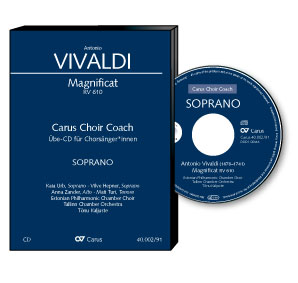
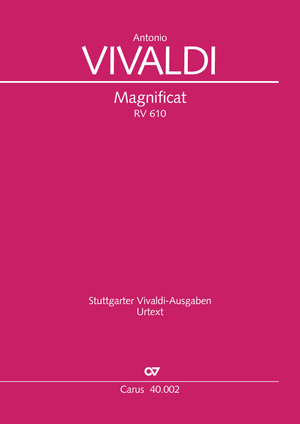
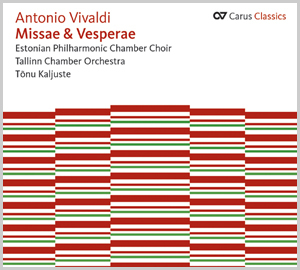
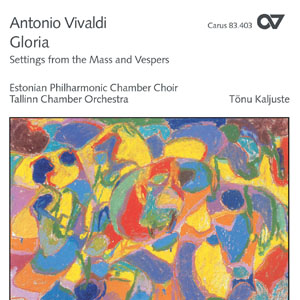
Le « Magnificat » RV 610 de Vivaldi, en neuf mouvements et écrit pour quatre solistes SSAT, un chœur SATB, cordes et basse continue, est particulièrement émouvant, poignant et profond. Le « Deposuit potentes » constitue une particularité parce que le chœur chante à l’unisson : un véritable défi puisqu’une intonation parfaite est indispensable.
Le Carus Choir Coach offre aux choristes une aide unique pour apprendre leur voix au sein de la sonorité du chœur et de l’orchestre. Pour chaque voix, un CD audio ou MP3 et un téléchargement est disponible avec tous les mouvements chantés par le chœur. Le CD se base sur un enregistrement d’interprètes prestigieux, qui ont pour celui-ci utilisé l’édition Urtext de Carus. Chaque mouvement est présenté en trois variantes :
- Version originale
- Coach : la voix sélectionnée est jouée au piano, avec l’enregistrement original en arrière-plan
- Coach en mode ralenti : l'enregistrement comme le coach sont ralentis à environ 70 % du tempo initial, ainsi les passages difficiles peuvent être travaillés efficacement.
Interprètes : Kaia Urb (soprano), Vilve Hepner (soprano), Anna Zander (alto), Mati Turi (tenore) – Estonian Philharmonic Chamber Choir, Tallinn Chamber Orchestra – Tõnu Kaljuste
Découvrir
 Ecouter
(9)
Ecouter
(9)
- Esurientes (Soli SS)
- Magnificat (Coro)
- Et exsultavit (Soli SAT, Coro)
- Et misericordia (Coro)
- Deposuit potentes (Coro)
- Suscepit Israel (Coro)
- Sicut locutus est (Coro SAB)
- Gloria patri (Coro)
- Fecit potentiam (Coro)
 S`exercer
-
 carus music, the Choir Coach
Üben mit carus music
carus music, the Choir Coach
Üben mit carus music
-
Aides à l'apprentissage
-
Aides à l'apprentissage voix alto
- Sicut locutus est (Coro SAB) (Choir Coach, Slow mode)
- Magnificat (Coro) (Choir Coach)
- Magnificat (Coro) (Choir Coach, Slow mode)
- Et exsultavit (Soli SAT, Coro) (Choir Coach)
- Et exsultavit (Soli SAT, Coro) (Choir Coach, Slow mode)
- Et misericordia (Coro) (Choir Coach)
- Et misericordia (Coro) (Choir Coach, Slow mode)
- Fecit potentiam (Coro) (Choir Coach)
- Fecit potentiam (Coro) (Choir Coach, Slow mode)
- Deposuit potentes (Coro) (Choir Coach)
- Deposuit potentes (Coro) (Choir Coach, Slow mode)
- Suscepit Israel (Coro) (Choir Coach)
- Suscepit Israel (Coro) (Choir Coach, Slow mode)
- Sicut locutus est (Coro SAB) (Choir Coach)
- Gloria patri (Coro) (Choir Coach)
- Gloria patri (Coro) (Choir Coach, Slow mode)
-
Aides à l'apprentissage voix basse
- Sicut locutus est (Coro SAB) (Choir Coach, Slow mode)
- Magnificat (Coro) (Choir Coach)
- Magnificat (Coro) (Choir Coach, Slow mode)
- Et exsultavit (Soli SAT, Coro) (Choir Coach)
- Et exsultavit (Soli SAT, Coro) (Choir Coach, Slow mode)
- Et misericordia (Coro) (Choir Coach)
- Et misericordia (Coro) (Choir Coach, Slow mode)
- Fecit potentiam (Coro) (Choir Coach)
- Fecit potentiam (Coro) (Choir Coach, Slow mode)
- Deposuit potentes (Coro) (Choir Coach)
- Deposuit potentes (Coro) (Choir Coach, Slow mode)
- Suscepit Israel (Coro) (Choir Coach)
- Suscepit Israel (Coro) (Choir Coach, Slow mode)
- Sicut locutus est (Coro SAB) (Choir Coach)
- Gloria patri (Coro) (Choir Coach)
- Gloria patri (Coro) (Choir Coach, Slow mode)
-
Aides à l'apprentissage voix tenore
- Magnificat (Coro) (Choir Coach)
- Magnificat (Coro) (Choir Coach, Slow mode)
- Et exsultavit (Soli SAT, Coro) (Choir Coach)
- Et exsultavit (Soli SAT, Coro) (Choir Coach, Slow mode)
- Et misericordia (Coro) (Choir Coach)
- Et misericordia (Coro) (Choir Coach, Slow mode)
- Fecit potentiam (Coro) (Choir Coach)
- Fecit potentiam (Coro) (Choir Coach, Slow mode)
- Deposuit potentes (Coro) (Choir Coach)
- Deposuit potentes (Coro) (Choir Coach, Slow mode)
- Suscepit Israel (Coro) (Choir Coach)
- Suscepit Israel (Coro) (Choir Coach, Slow mode)
- Gloria patri (Coro) (Choir Coach)
- Gloria patri (Coro) (Choir Coach, Slow mode)
-
Aides à l'apprentissage voix soprano
- Magnificat (Coro) (Choir Coach)
- Magnificat (Coro) (Choir Coach, Slow mode)
- Et exsultavit (Soli SAT, Coro) (Choir Coach)
- Et exsultavit (Soli SAT, Coro) (Choir Coach, Slow mode)
- Et misericordia (Coro) (Choir Coach)
- Et misericordia (Coro) (Choir Coach, Slow mode)
- Fecit potentiam (Coro) (Choir Coach)
- Fecit potentiam (Coro) (Choir Coach, Slow mode)
- Deposuit potentes (Coro) (Choir Coach)
- Deposuit potentes (Coro) (Choir Coach, Slow mode)
- Suscepit Israel (Coro) (Choir Coach)
- Suscepit Israel (Coro) (Choir Coach, Slow mode)
- Sicut locutus est (Coro SAB) (Choir Coach)
- Sicut locutus est (Coro SAB) (Choir Coach, Slow mode)
- Gloria patri (Coro) (Choir Coach)
- Gloria patri (Coro) (Choir Coach, Slow mode)
-
 Compléments
- Acheter des compléments au format téléchargement.
-
 Texte numérique (sans notes), licence d'impression incluse, fichier html, paroles, traduction en anglaisfichier html, paroles, traduction en anglais (Extrait)1. Magnificat (Tutti)
My soul doth magnify
2. Et exultavit (Aria Soprano 1, Soprano 2, Tenore e Coro)
the Lord.And my spirit hath rejoiced
3. Et misericordia eius (Tutti)
in God my Saviour.
For he hath regarded the low
estate of his handmaiden: for,
behold, from henceforth shall
call me blessed all generations.
For he that is mighty
hath done great things;
and holy is his name.And his mercy is on them
4. Fecit potentiam (Tutti)
that fear him
from generation to generation.He hath showed strength
with his arm;...
-
Texte numérique (sans notes), licence d'impression incluse, fichier html, paroles, traduction allemandefichier html, paroles, traduction allemande (Extrait)1. Magnificat (Tutti)
Meine Seele erhebt
2. (Et exultavit (Aria Soprano 1, Soprano 2, Tenore e Coro)
den Herrn,und mein Geist freuet sich
3. Et misericordia eius (Tutti)
Gottes, meines Heilands.
Denn er hat die Niedrigkeit
seiner Magd angesehen.
Siehe, von nun an werden mich
selig preisen alle Kindeskinder.
Denn er hat große Dinge an mir getan,
der da mächtig ist
und des Name heilig ist.Und seine Barmherzigkeit
4. Fecit potentiam (Tutti)
währet immer für und für
bei denen, die ihn fürchten.Er übet Gewalt
mit seinem Arm...
-
Texte numérique (sans notes), licence d'impression incluse, fichier html, paroles, originalfichier html, paroles, original (Extrait)1. Magnificat (Tutti)
Magnificat anima mea Dominum.
2. Et exultavit (Aria Soprano 1, Soprano 2, Tenore e Coro)Et exsultavit spiritus meus
3. Et misericordia eius (Tutti)
in Deo salutari meo.
Quia respexit humilitatem
ancillae suae,
ecce enim ex hoc beatam me
dicent omnes generationes.
Quia fecit mihi magna
qui potens est,
et sanctum nomen eius.Et misericordia
4. Fecit potentiam (Tutti)
a progenie in progenies
timentibus eum.Fecit potentiam
in bracchio suo,...
-
Texte numérique (sans notes), licence d'impression incluse, fichier html, Texte introductif, en anglaisfichier html, Texte introductif, en anglais (Extrait)Text from the CD Carus 83.325
Karl Heller
Translation (abridged): John CoombsThe Magnificat in G minor belongs liturgically in the service of Vespers. Vivaldi set this song of praise to Mary only once. The first version was written for the Ospedale della Pietà between 1713 and 1717 (RV 610b), but the work was revised at least twice. The version RV 610, differs from the original version only in points of detail. The characteristic features of this work include a clear sense of compositional terseness. Despite the particular charm of such a piece as the duet “Esurientes,” it is generally agreed that the greatest effect is created by the choral movements. This is true of the opening “Magnificat” with its extravagant gestures, concise plasticity in the unisono of the “Deposuit potentes de sede,” and above all of the “Et misericordia,” which is distinguished by its close counterpoint and expressive harmonic tension. The words at that point are set to music whose
...
-
Texte numérique (sans notes), licence d'impression incluse, fichier html, Texte introductif, en allemandfichier html, Texte introductif, en allemand (Extrait)Booklet-Text der CD Carus 83.325
Karl Heller
Die Wiederbelebung der Musik Antonio Vivaldis im 20. Jahrhundert ging einher mit der Neuentdeckung bisher völlig unbekannter Schaffensbereiche des Komponisten. Für die stärksten Überraschungen sorgte dabei ein großer Bestand an geistlicher Vokalmusik, dessen Repertoire von der groß angelegten Mess- und Vesperkomposition bis zum biblischen Oratorium und zur Solomotette reicht. Die ersten Wiederaufführungen solcher Werke, darunter das Gloria RV 589 und das Credo RV 591, während einer Vivaldi-Woche in Siena 1939 wurden geradezu als Sensation empfunden. Sie ließen deutlich werden, dass der Komponist gerade auf diesem Sektor Werke höchsten künstlerischen Ranges geschaffen hat.
Zu den Sätzen des Messordinariums tritt mit dem Magnificat g-Moll eine Komposition, die ihrer liturgischen Stellung nach dem Vespergottesdienst – als dessen Schlussstück – zugehört. Vivaldi hat diesen Lobgesang der Maria (Luk 1,46–55) nur ein einziges Mal vertont, die zwischen 1713 und 1717 entstandene Erstfassung (RV 610b) allerdings wenigstens zweimal umgearbeitet, das letzte Mal 1739 zu einer Fassung, die fünf neu komponierte Soloarien für Sängerinnen des Ospedale della Pietà
...
Acheter
Informations complémentaires sur l'œuvre
Sommaire


-
Compositeur
Antonio Vivaldi
| 1678-1741Antonio (Lucio) Vivaldi était un compositeur et violoniste italien de la période baroque.
On suppose que son père, lui-même musicien, fut responsable de l'éducation musicale de Vivaldi. Cependant, il commença sa carrière professionnelle comme prêtre, ce qui lui valut le surnom de Il prete rosso (le prêtre roux).
À partir de 1703, Vivaldi travailla par intermittence comme professeur de violon et compositeur à l'Ospedale della Pietà, un orphelinat pour filles à Venise, jusqu'à peu avant sa mort. Au départ, il y travailla également comme prêtre, mais abandonna cette fonction après trois ans. Il composa de nombreuses œuvres de musique de chambre et des concertos pour ses élèves de la Pietà. Les célèbres Quatre Saisons sont particulièrement connues et souvent jouées aujourd'hui. Vivaldi a également composé de la musique vocale sacrée et profane et était compositeur et directeur d'opéra.
Sur les plus de 800 œuvres connues aujourd'hui, seules 135 ont été publiées du vivant de Vivaldi. Après sa mort, les compositions de Vivaldi ont d'abord été largement oubliées. Beaucoup de ses œuvres ont été redécouvertes et publiées, en particulier au XXe siècle. Parmi elles figure le Gloria en ré majeur RV 589, la toute première édition musicale publiée par Carus-Verlag.
Plus d'information sur la personne
-
Ensemble
Estonian Philharmonic Chamber Choir
-
Ensemble
Tallinn Chamber Orchestra
-
Chef d'orchestre
Tonu Kaljuste
For twenty years Tõnu Kaljuste (conductor) was artistic director and principal conductor of the Estonian Philharmonic Chamber Choir, which he founded in 1981, and the Tallinn Chamber Orchestra. Kaljuste has also been chief conductor of the Swedish Radio Choir and the Netherlands Chamber Choir. He has directed international choral seminars and workshops for several years and has worked as a guest conductor with leading orchestras and choirs throughout Europe, Australia and America. As well as immersing himself in the music of the great northern and eastern European moderns, such as Schnittke, Kurtag, Penderecki, Rautavaara and Kancheli, he has a deep affinity with the composers of his native Estonia, including Pärt, Tüür, Tormis and Eller. He has established an international reputation with his wide-ranging repertoire from opera, via the traditional symphonic repertoire to contemporary music. His numerous recordings have won many awards and have been nominated for Grammy awards. In 1999 he received the Cannes Classical Award in the category “Best 20th Century Choral Music” for his recording of Alfred Schnittke’s Psalms of Repentance. In 2004 he was awarded first prize by the Estonian State Foundation “Kultuurkapital.” The same year he became artistic director of the Nargen Festival, an annual, three-month long musical event on the coast of Estonia. He is a member of the Royal Swedish Academy of Music. Plus d'information sur la personne
-
Solist - soprano
Kaia Urb
-
Solist - soprano
Vilve Hepner
-
Solist - alto
Anna Zander
-
Solist - ténor
Mati Turi
Les évaluations sur notre site web ne peuvent être effectuées que par des clients disposant d'un compte d'utilisateur enregistré. Il n'est pas vérifié si les produits évalués ont été effectivement achetés.
Aucune évaluation disponible pour ce produit.
Questions fréquentes sur l'œuvre
 Il n'y a pas encore de questions et réponses concernant cette œuvre ou vous n'avez pas trouvé la réponse à votre question sur l'œuvre ? Cliquez ici et envoyez votre question spécifique à notre service clients.