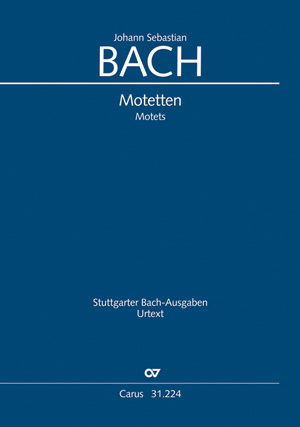
Les Motets de Johann Sebastian Bach sont à juste titre considérés comme un, sinon LE moment fort de l’exigeante littérature a cappella. Ils recèlent non seulement un caléidoscope des possibilités de composition, mais ont depuis toujours mauvaise réputation à cause de leurs nombreuses difficultés techniques, vocales et d’intonation. Ici tout chœur – et tout choriste — peut montrer son savoir-faire.
Le Carus Choir Coach offre aux choristes une aide unique pour apprendre leur voix au sein de la sonorité du chœur et de l’orchestre – seul avec un CD. Pour chaque voix, un CD audio ou MP3 est disponible avec tous les mouvements chantés par le chœur. Le CD se base sur un enregistrement d’interprètes prestigieux, qui ont pour celui-ci utilisé l’édition Urtext de Carus. Chaque mouvement est présenté en trois variantes:
- Version originale
- Coach: la voix sélectionnée est jouée au piano, avec l’enregistrement original en arrière-plan
- Coach en mode ralenti: l'enregistrement comme le coach sont ralentis à environ 70 % du tempo initial, ainsi les passages difficiles peuvent être travaillés efficacement
Les Motets sont chanté en allemand. Interprètes: Kammerchor Stuttgart – Frieder Bernius.
Découvrir
 Ecouter
(1)
Ecouter
(1)
- Lobet den Herrn, alle Heiden
 S`exercer
-
Aides à l'apprentissage
-
Aides à l'apprentissage voix soprano
- Lobet den Herrn, alle Heiden (Choir Coach)
- Lobet den Herrn, alle Heiden (Choir Coach, Slow mode)
-
Aides à l'apprentissage voix alto
- Lobet den Herrn, alle Heiden (Choir Coach)
- Lobet den Herrn, alle Heiden (Choir Coach, Slow mode)
-
Aides à l'apprentissage voix tenore
- Lobet den Herrn, alle Heiden (Choir Coach)
- Lobet den Herrn, alle Heiden (Choir Coach, Slow mode)
-
Aides à l'apprentissage voix basse
- Lobet den Herrn, alle Heiden (Choir Coach)
- Lobet den Herrn, alle Heiden (Choir Coach, Slow mode)
-
 Compléments
- Acheter des compléments au format téléchargement.
-
 Texte numérique (sans notes), licence d'impression incluse, fichier html, Texte introductif, en anglaisfichier html, Texte introductif, en anglais (Extrait)Text from the CD Carus 83.298
Uwe Wolf
Translation (abridged): Elizabeth RobinsonThe first printed edition of Johann Sebastian Bach’s motets appeared in Leipzig in 1802/03, over fifty years after the composer’s death. This was not only the first edition of the famous motets, but was also the first printed edition of Bach’s vocal works at all since 1708. It differs in some respects from our present-day editions, primarily in the inclusion in the place of the motet Lobet den Herrn of Ich lasse dich nicht, du segnest mich denn, attributed a little later to Johann Christoph Bach. In reprints of the first printed edition, accordingly, this was replaced by Lobet den Herrn, establishing the group of six motets which ultimately found their place in the Bach-Werke-Verzeichnis (Bach Works Catalog) as BWV 225–230, where they long held an undisputed position.
But doubts remain about Lobet den Herrn. There is so much which is curious about this motet, which breaks every rule, so that in the form in which it is known to us, it may well not be by Bach. On the other hand, we nevertheless believe that we find so much of Bach in it that hardly any other composer can be contemplated. We
...
-
Texte numérique (sans notes), licence d'impression incluse, fichier html, Texte introductif, en allemandfichier html, Texte introductif, en allemand (Extrait)Booklet-Text der CD Carus 83.298
Uwe Wolf
Gut 50 Jahre nach dem Tod des Komponisten erschien in Leipzig 1802/03 eine erste gedruckte Ausgabe der Motetten Johann Sebastian Bachs. Dies war nicht nur die erste Ausgabe der berühmten Motetten, es war zugleich die erste Druckausgabe Bachscher Vokalwerke überhaupt seit 1708. Herausgegeben wurden die Motetten von dem vielseitigen Leipziger Musiker Johann Gottlieb Schicht, damals Gewandhauskapellmeister, Musikdirektor der Leipziger Neukirche und der Leipziger Singakademie; 1810 wurde Schicht schließlich selbst als vierter Nachfolger Bachs Thomaskantor in Leipzig.
Schichts Ausgabe unterscheidet sich in manchem von unseren heutigen Ausgaben – vor allem an den Texten hatte Schicht Modernisierungen vorgenommen –, aber bereits mit dieser ersten Ausgabe wird die Sechszahl der Motetten Bachs etabliert, die bis heute viele Ausgaben und Einspielungen bestimmt. Die Erstausgabe enthielt allerdings nur fünf der „traditionellen“ Motetten Bachs: Anstelle der Motette Lobet den Herrn BWV 230 war nämlich Ich lasse dich nicht, du segnest mich denn BWV Anh. 159 enthalten. Erst deutlich später erschien 1821 die Erstausgabe von Lobet den Herrn,
...
-
Texte numérique (sans notes), licence d'impression incluse, fichier html, paroles, traduction en anglaisfichier html, paroles, traduction en anglais (Extrait)Sing now to God 1. Sing now to God
Sing now to God new songs of praise,
2. Aria
the assembly of righteous shall greatly exalt him.
Israel shall rejoice then, then in him that made him.
The sons of Zion shall celebrate his glorious majesty;
they shall give glory to his name with their dancing:
with trumpets and the harp they all shall sing before him.
Psalms 149:1–3O Lord, be merciful to us,
Choral
without thy help there is no grace
in all of our endeavor.
Now therefore be our shield and light,
and do not bring our hopes to naught,
but be our help forever.
O blessed and happy shall he be
who puts his hope and trust in thee.
Text of unknown originAs any father pities
the children that are his on earth,
so God the Lord has mercy
on all who worship him in truth.
He truly knows our frailty;
he knows that we are dust,
as grass upon the meadow,
a flower that withers fast.
The wind but blows upon it,
and quickly it is gone,
so man must also perish,
and soon his days are done.
Johann Gramann about 1530 „ Now praise, my soul, the Lord“...
-
Texte numérique (sans notes), licence d'impression incluse, fichier html, paroles, traduction en anglaisfichier html, paroles, traduction en anglais (Extrait)
1. Sing now to God Sing now to God new songs of praise,
the assembly of righteous shall greatly exalt him.
Israel shall rejoice then, then in him that made him.
The sons of Zion shall celebrate his glorious majesty;
they shall give glory to his name with their dancing:
with trumpets and the harp they all shall sing before him.
Psalms 149:1–32. Aria O Lord, be merciful to us,
without thy help there is no grace
in all of our endeavor.
Now therefore be our shield and light,
and do not bring our hopes to naught,
but be our help forever.
O blessed and happy shall he be
who puts his hope and trust in thee.
Text of unknown originChoral As any father pities
...
-
Texte numérique (sans notes), licence d'impression incluse, fichier html, paroles, originalfichier html, paroles, original (Extrait)
1. Singet dem Herrn Singet dem Herrn ein neues Lied,
die Gemeine der Heiligen sollen ihn loben.
Israel freue sich des, der ihn gemacht hat.
Die Kinder Zion sei’n fröhlich über ihrem Könige,
sie sollen loben seinen Namen im Reihen;
mit Pauken und mit Harfen sollen sie ihm spielen.
Psalm 149,1–32. Aria Gott, nimm dich ferner unser an,
denn ohne dich ist nichts getan
mit allen unsern Sachen.
Drum sei du unser Schirm und Licht,
und trügt uns unsre Hoffnung nicht,
so wirst du’s ferner machen.
Wohl dem, der sich nur steif und fest
auf dich und deine Huld verlässt.
Text unbekannter HerkunftChoral
...
-
Texte numérique (sans notes), licence d'impression incluse, fichier html, Texte introductif, en anglaisfichier html, Texte introductif, en anglais (Extrait)Text from the CD Carus 83.298
Uwe Wolf
Translation (abridged): Elizabeth RobinsonThe first printed edition of Johann Sebastian Bach’s motets appeared in Leipzig in 1802/03, over fifty years after the composer’s death. This was not only the first edition of the famous motets, but was also the first printed edition of Bach’s vocal works at all since 1708. It differs in some respects from our present-day editions, primarily in the inclusion in the place of the motet Lobet den Herrn of Ich lasse dich nicht, du segnest mich denn, attributed a little later to Johann Christoph Bach. In reprints of the first printed edition, accordingly, this was replaced by Lobet den Herrn, establishing the group of six motets which ultimately found their place in the Bach-Werke-Verzeichnis (Bach Works Catalog) as BWV 225–230, where they long held an undisputed position.
But doubts remain about Lobet den Herrn. There is so much which is curious about this motet, which breaks every rule, so that in the form in which it is known to us, it may well not be by Bach. On the other hand, we nevertheless believe that we find so much of Bach in it that hardly any other composer can be contemplated. We
...
-
Texte numérique (sans notes), licence d'impression incluse, fichier html, Texte introductif, en allemandfichier html, Texte introductif, en allemand (Extrait)Booklet-Text der CD Carus 83.298
Uwe Wolf
Gut 50 Jahre nach dem Tod des Komponisten erschien in Leipzig 1802/03 eine erste gedruckte Ausgabe der Motetten Johann Sebastian Bachs. Dies war nicht nur die erste Ausgabe der berühmten Motetten, es war zugleich die erste Druckausgabe Bachscher Vokalwerke überhaupt seit 1708. Herausgegeben wurden die Motetten von dem vielseitigen Leipziger Musiker Johann Gottlieb Schicht, damals Gewandhauskapellmeister, Musikdirektor der Leipziger Neukirche und der Leipziger Singakademie; 1810 wurde Schicht schließlich selbst als vierter Nachfolger Bachs Thomaskantor in Leipzig.
Schichts Ausgabe unterscheidet sich in manchem von unseren heutigen Ausgaben – vor allem an den Texten hatte Schicht Modernisierungen vorgenommen –, aber bereits mit dieser ersten Ausgabe wird die Sechszahl der Motetten Bachs etabliert, die bis heute viele Ausgaben und Einspielungen bestimmt. Die Erstausgabe enthielt allerdings nur fünf der „traditionellen“ Motetten Bachs: Anstelle der Motette Lobet den Herrn BWV 230 war nämlich Ich lasse dich nicht, du segnest mich denn BWV Anh. 159 enthalten. Erst deutlich später erschien 1821 die Erstausgabe von Lobet den Herrn,
...
-
Texte numérique (sans notes), licence d'impression incluse, fichier html, paroles, traduction en anglaisfichier html, paroles, traduction en anglais (Extrait)1. The Spirit makes our weakness strong
The Spirit makes our weakness strong,
2. Allabreve
for we do not know what we ought to pray for,
or how to ask it;
but then the Spirit himself comes to help us,
with inexpressible sighing.
Romans 8:26And he to whom all hearts are open,
3. Choral
he knows what is in the Spirit;
for so he helps all righteous men,
as God himself has willed it.
Romans 8:27O holiest fire, sweetest help,
now grant that we, in joy and hope,
be always constant in thy service;
in sorrow guide and preserve us.
O Lord, confirm us by thy power;
make strong and perfect our desire,
that we by noble endeavor
may pass through death to life forever.
Alleluia.
Martin Luther 1524
„Komm, Heiliger Geist, Herre Gott“ (verse 3)Translation: Jean Lunn
...
-
Texte numérique (sans notes), licence d'impression incluse, fichier html, paroles, originalfichier html, paroles, original (Extrait)
1. Der Geist hilft unser Schwachheit auf Der Geist hilft unser Schwachheit auf,
denn wir wissen nicht, was wir beten sollen,
wie sich’s gebühret;
sondern der Geist selbst vertritt aufs Beste
mit unaussprechlichem Seufzen.
Römer 8,262. Allabreve Der aber die Herzen forschet,
der weiß, was des Geistes Sinn sei;
denn er vertritt die Heiligen
nach dem, das Gott gefället.
Römer 8,273. Choral Du heilige Brunst, süßer Trost,
nun hilf uns, fröhlich und getrost
in deinem Dienst beständig bleiben,
die Trübsal uns nicht abtreiben.
O Herr, durch dein Kraft uns bereit
und stärk des Fleisches Blödigkeit,
...
-
Texte numérique (sans notes), licence d'impression incluse, fichier html, Texte introductif, en anglaisfichier html, Texte introductif, en anglais (Extrait)Text from the CD Carus 83.298
Uwe Wolf
Translation (abridged): Elizabeth RobinsonThe first printed edition of Johann Sebastian Bach’s motets appeared in Leipzig in 1802/03, over fifty years after the composer’s death. This was not only the first edition of the famous motets, but was also the first printed edition of Bach’s vocal works at all since 1708. It differs in some respects from our present-day editions, primarily in the inclusion in the place of the motet Lobet den Herrn of Ich lasse dich nicht, du segnest mich denn, attributed a little later to Johann Christoph Bach. In reprints of the first printed edition, accordingly, this was replaced by Lobet den Herrn, establishing the group of six motets which ultimately found their place in the Bach-Werke-Verzeichnis (Bach Works Catalog) as BWV 225–230, where they long held an undisputed position.
But doubts remain about Lobet den Herrn. There is so much which is curious about this motet, which breaks every rule, so that in the form in which it is known to us, it may well not be by Bach. On the other hand, we nevertheless believe that we find so much of Bach in it that hardly any other composer can be contemplated. We
...
-
Texte numérique (sans notes), licence d'impression incluse, fichier html, Texte introductif, en allemandfichier html, Texte introductif, en allemand (Extrait)Booklet-Text der CD Carus 83.298
Uwe Wolf
Gut 50 Jahre nach dem Tod des Komponisten erschien in Leipzig 1802/03 eine erste gedruckte Ausgabe der Motetten Johann Sebastian Bachs. Dies war nicht nur die erste Ausgabe der berühmten Motetten, es war zugleich die erste Druckausgabe Bachscher Vokalwerke überhaupt seit 1708. Herausgegeben wurden die Motetten von dem vielseitigen Leipziger Musiker Johann Gottlieb Schicht, damals Gewandhauskapellmeister, Musikdirektor der Leipziger Neukirche und der Leipziger Singakademie; 1810 wurde Schicht schließlich selbst als vierter Nachfolger Bachs Thomaskantor in Leipzig.
Schichts Ausgabe unterscheidet sich in manchem von unseren heutigen Ausgaben – vor allem an den Texten hatte Schicht Modernisierungen vorgenommen –, aber bereits mit dieser ersten Ausgabe wird die Sechszahl der Motetten Bachs etabliert, die bis heute viele Ausgaben und Einspielungen bestimmt. Die Erstausgabe enthielt allerdings nur fünf der „traditionellen“ Motetten Bachs: Anstelle der Motette Lobet den Herrn BWV 230 war nämlich Ich lasse dich nicht, du segnest mich denn BWV Anh. 159 enthalten. Erst deutlich später erschien 1821 die Erstausgabe von Lobet den Herrn,
...
-
Texte numérique (sans notes), licence d'impression incluse, fichier html, paroles, traduction en anglaisfichier html, paroles, traduction en anglais (Extrait)1. Chorale: Jesu, my salvation
Jesu, my salvation,
2. There can be no ungodliness
and my heart’s possession,
Jesu, all my joy,
with what great desiring,
with what deep despairing,
I have longed for thee!
Lamb of God, O well-belov’d,
here on earth no joy allures me;
nothing less can please me.
Johann Franck 1653, „Jesu, my salvation“ (verse 1)There can be no ungodliness in those
3. Chorale: Lord, thou dost defend me
who truly are in Jesus Christ,
those who follow not their passions,
but the Spirit.
Romans 8:1Lord, thou dost defend me
4. For the new law
from the storms around me
and the enemy.
Let the devil taunt me;
let the world affront me;
Jesus is with me.
Though storms crash, though lightnings flash,
and though sin and hell afflict me;
Jesus will protect me.
Jesu, my salvation (verse 2)For the new law of Spirit,
5. Yes, though Satan hates me
the law that wakes to life all that are in Jesus,
has delivered me from all the law of sin and of destruction.
Romans 8:2Yes, though Satan hates
...
-
Texte numérique (sans notes), licence d'impression incluse, fichier html, paroles, originalfichier html, paroles, original (Extrait)
1. Choral: Jesu, meine Freude Jesu, meine Freude,
meines Herzens Weide,
Jesu, meine Zier.
Ach, wie lang, wie lange
ist dem Herzen bange
und verlangt nach dir!
Gottes Lamm, mein Bräutigam,
außer dir soll mir auf Erden
nichts sonst Liebers werden.
Johann Franck 1653, „Jesu meine Freude“ (Str. 1)2. Es ist nun nichts Verdammliches Es ist nun nichts Verdammliches
an denen, die in Christo Jesu sind,
die nicht nach dem Fleische wandeln,
sondern nach dem Geist.
Römer 8,13. Choral: Unter deinem Schirmen Unter deinem Schirmen
bin ich vor den Stürmen
...
-
Texte numérique (sans notes), licence d'impression incluse, fichier html, Texte introductif, en anglaisfichier html, Texte introductif, en anglais (Extrait)Text from the CD Carus 83.298
Uwe Wolf
Translation (abridged): Elizabeth RobinsonThe first printed edition of Johann Sebastian Bach’s motets appeared in Leipzig in 1802/03, over fifty years after the composer’s death. This was not only the first edition of the famous motets, but was also the first printed edition of Bach’s vocal works at all since 1708. It differs in some respects from our present-day editions, primarily in the inclusion in the place of the motet Lobet den Herrn of Ich lasse dich nicht, du segnest mich denn, attributed a little later to Johann Christoph Bach. In reprints of the first printed edition, accordingly, this was replaced by Lobet den Herrn, establishing the group of six motets which ultimately found their place in the Bach-Werke-Verzeichnis (Bach Works Catalog) as BWV 225–230, where they long held an undisputed position.
But doubts remain about Lobet den Herrn. There is so much which is curious about this motet, which breaks every rule, so that in the form in which it is known to us, it may well not be by Bach. On the other hand, we nevertheless believe that we find so much of Bach in it that hardly any other composer can be contemplated. We
...
-
Texte numérique (sans notes), licence d'impression incluse, fichier html, Texte introductif, en allemandfichier html, Texte introductif, en allemand (Extrait)Booklet-Text der CD Carus 83.298
Uwe Wolf
Gut 50 Jahre nach dem Tod des Komponisten erschien in Leipzig 1802/03 eine erste gedruckte Ausgabe der Motetten Johann Sebastian Bachs. Dies war nicht nur die erste Ausgabe der berühmten Motetten, es war zugleich die erste Druckausgabe Bachscher Vokalwerke überhaupt seit 1708. Herausgegeben wurden die Motetten von dem vielseitigen Leipziger Musiker Johann Gottlieb Schicht, damals Gewandhauskapellmeister, Musikdirektor der Leipziger Neukirche und der Leipziger Singakademie; 1810 wurde Schicht schließlich selbst als vierter Nachfolger Bachs Thomaskantor in Leipzig.
Schichts Ausgabe unterscheidet sich in manchem von unseren heutigen Ausgaben – vor allem an den Texten hatte Schicht Modernisierungen vorgenommen –, aber bereits mit dieser ersten Ausgabe wird die Sechszahl der Motetten Bachs etabliert, die bis heute viele Ausgaben und Einspielungen bestimmt. Die Erstausgabe enthielt allerdings nur fünf der „traditionellen“ Motetten Bachs: Anstelle der Motette Lobet den Herrn BWV 230 war nämlich Ich lasse dich nicht, du segnest mich denn BWV Anh. 159 enthalten. Erst deutlich später erschien 1821 die Erstausgabe von Lobet den Herrn,
...
-
Texte numérique (sans notes), licence d'impression incluse, fichier html, paroles, traduction en anglaisfichier html, paroles, traduction en anglais (Extrait)Be not afraid
Be not afraid, I am with you;
Choral
tremble not, for I am your God.
I strengthen you, I give you my help,
I uphold you now through the right hand
of my righteousness.
Be not afraid,
for in truth I have redeemed you,
for by your name
I now have named you and called you.
Isaiah 41:10 and 43:1Lord, my shepherd, source of gladness,
thou art mine, I am thine,
no one can divide us.
I am thine, for by thy passion,
with thy blood, for my good,
thou hast brought salvation.
Thou art mine, for I shall hold thee;
from my heart, O my light,
I will never yield thee.
Let me give thee my devotion,
that for me thou mayst be
my belov’d possession.
Paul Gerhardt 1653,
„Warum sollt ich mich denn grämen“ (verse 11, 12)
Be not afraid, thou art mine.Translation: Jean Lunn
...
-
Texte numérique (sans notes), licence d'impression incluse, fichier html, paroles, originalfichier html, paroles, original (Extrait)
Fürchte dich nicht Fürchte dich nicht, ich bin bei dir;
weiche nicht, denn ich bin dein Gott!
Ich stärke dich, ich helfe dir auch,
ich erhalte dich durch die rechte Hand meiner Gerechtigkeit.
Fürchte dich nicht,
denn ich habe dich erlöset,
ich habe dich bei deinem Namen gerufen.
Jesaja 41,10 und 43,1Choral Herr, mein Hirt, Brunn aller Freuden,
du bist mein, ich bin dein,
niemand kann uns scheiden.
Ich bin dein, weil du dein Leben
und dein Blut mir zugut
in den Tod gegeben.
Du bist mein, weil ich dich fasse
und dich nicht, o mein Licht,
...
-
Texte numérique (sans notes), licence d'impression incluse, fichier html, Texte introductif, en anglaisfichier html, Texte introductif, en anglais (Extrait)Text from the CD Carus 83.298
Uwe Wolf
Translation (abridged): Elizabeth RobinsonThe first printed edition of Johann Sebastian Bach’s motets appeared in Leipzig in 1802/03, over fifty years after the composer’s death. This was not only the first edition of the famous motets, but was also the first printed edition of Bach’s vocal works at all since 1708. It differs in some respects from our present-day editions, primarily in the inclusion in the place of the motet Lobet den Herrn of Ich lasse dich nicht, du segnest mich denn, attributed a little later to Johann Christoph Bach. In reprints of the first printed edition, accordingly, this was replaced by Lobet den Herrn, establishing the group of six motets which ultimately found their place in the Bach-Werke-Verzeichnis (Bach Works Catalog) as BWV 225–230, where they long held an undisputed position.
But doubts remain about Lobet den Herrn. There is so much which is curious about this motet, which breaks every rule, so that in the form in which it is known to us, it may well not be by Bach. On the other hand, we nevertheless believe that we find so much of Bach in it that hardly any other composer can be contemplated. We
...
-
Texte numérique (sans notes), licence d'impression incluse, fichier html, Texte introductif, en allemandfichier html, Texte introductif, en allemand (Extrait)Booklet-Text der CD Carus 83.298
Uwe Wolf
Gut 50 Jahre nach dem Tod des Komponisten erschien in Leipzig 1802/03 eine erste gedruckte Ausgabe der Motetten Johann Sebastian Bachs. Dies war nicht nur die erste Ausgabe der berühmten Motetten, es war zugleich die erste Druckausgabe Bachscher Vokalwerke überhaupt seit 1708. Herausgegeben wurden die Motetten von dem vielseitigen Leipziger Musiker Johann Gottlieb Schicht, damals Gewandhauskapellmeister, Musikdirektor der Leipziger Neukirche und der Leipziger Singakademie; 1810 wurde Schicht schließlich selbst als vierter Nachfolger Bachs Thomaskantor in Leipzig.
Schichts Ausgabe unterscheidet sich in manchem von unseren heutigen Ausgaben – vor allem an den Texten hatte Schicht Modernisierungen vorgenommen –, aber bereits mit dieser ersten Ausgabe wird die Sechszahl der Motetten Bachs etabliert, die bis heute viele Ausgaben und Einspielungen bestimmt. Die Erstausgabe enthielt allerdings nur fünf der „traditionellen“ Motetten Bachs: Anstelle der Motette Lobet den Herrn BWV 230 war nämlich Ich lasse dich nicht, du segnest mich denn BWV Anh. 159 enthalten. Erst deutlich später erschien 1821 die Erstausgabe von Lobet den Herrn,
...
-
Texte numérique (sans notes), licence d'impression incluse, fichier html, paroles, traduction en anglaisfichier html, paroles, traduction en anglais (Extrait)
Coro Come, Jesu, for I am weary;
my powers grow less from day to day,
and I desire thy peace and glory;
the bitter path grows hard for me.
O come and make me thy possession;
thou only art the way,
all truth and all salvation.
Paul Thymich 1684 for the funeral of Jacob Thomasius (Str. 1)Aria Into thy hands I yield my spirit,
and say, O world, a last good night.
If death comes now, I shall not fear it;
in thee my spirit is content.
In God’s own house I would be standing,
for Jesus now and ever
shows us life abounding.
Paul Thymich 1684 for the funeral of Jacob Thomasius (verse 11)Translation: Jean Lunn
...
-
Texte numérique (sans notes), licence d'impression incluse, fichier html, paroles, originalfichier html, paroles, original (Extrait)
Coro Komm, Jesu, komm, mein Leib ist müde,
die Kraft verschwindt je mehr und mehr,
ich sehne mich nach deinem Friede;
der saure Weg wird mir zu schwer!
Komm, komm, ich will mich dir ergeben;
du bist der rechte Weg,
die Wahrheit und das Leben.
Paul Thymich 1684 zum Begräbnis von Jacob Thomasius (Str. 1)Aria Drum schließ ich mich in deine Hände
und sage, Welt, zu guter Nacht!
Eilt gleich mein Lebenslauf zu Ende,
ist doch der Geist wohl angebracht.
Er soll bei seinem Schöpfer schweben,
weil Jesus ist und bleibt
der wahre Weg zum Leben.
Paul Thymich 1684 zum Begräbnis von Jacob Thomasius (Str. 11)...
-
Texte numérique (sans notes), licence d'impression incluse, fichier html, Texte introductif, en anglaisfichier html, Texte introductif, en anglais (Extrait)Text from the CD Carus 83.298
Uwe Wolf
Translation (abridged): Elizabeth RobinsonThe first printed edition of Johann Sebastian Bach’s motets appeared in Leipzig in 1802/03, over fifty years after the composer’s death. This was not only the first edition of the famous motets, but was also the first printed edition of Bach’s vocal works at all since 1708. It differs in some respects from our present-day editions, primarily in the inclusion in the place of the motet Lobet den Herrn of Ich lasse dich nicht, du segnest mich denn, attributed a little later to Johann Christoph Bach. In reprints of the first printed edition, accordingly, this was replaced by Lobet den Herrn, establishing the group of six motets which ultimately found their place in the Bach-Werke-Verzeichnis (Bach Works Catalog) as BWV 225–230, where they long held an undisputed position.
But doubts remain about Lobet den Herrn. There is so much which is curious about this motet, which breaks every rule, so that in the form in which it is known to us, it may well not be by Bach. On the other hand, we nevertheless believe that we find so much of Bach in it that hardly any other composer can be contemplated. We
...
-
Texte numérique (sans notes), licence d'impression incluse, fichier html, Texte introductif, en allemandfichier html, Texte introductif, en allemand (Extrait)Booklet-Text der CD Carus 83.298
Uwe Wolf
Gut 50 Jahre nach dem Tod des Komponisten erschien in Leipzig 1802/03 eine erste gedruckte Ausgabe der Motetten Johann Sebastian Bachs. Dies war nicht nur die erste Ausgabe der berühmten Motetten, es war zugleich die erste Druckausgabe Bachscher Vokalwerke überhaupt seit 1708. Herausgegeben wurden die Motetten von dem vielseitigen Leipziger Musiker Johann Gottlieb Schicht, damals Gewandhauskapellmeister, Musikdirektor der Leipziger Neukirche und der Leipziger Singakademie; 1810 wurde Schicht schließlich selbst als vierter Nachfolger Bachs Thomaskantor in Leipzig.
Schichts Ausgabe unterscheidet sich in manchem von unseren heutigen Ausgaben – vor allem an den Texten hatte Schicht Modernisierungen vorgenommen –, aber bereits mit dieser ersten Ausgabe wird die Sechszahl der Motetten Bachs etabliert, die bis heute viele Ausgaben und Einspielungen bestimmt. Die Erstausgabe enthielt allerdings nur fünf der „traditionellen“ Motetten Bachs: Anstelle der Motette Lobet den Herrn BWV 230 war nämlich Ich lasse dich nicht, du segnest mich denn BWV Anh. 159 enthalten. Erst deutlich später erschien 1821 die Erstausgabe von Lobet den Herrn,
...
-
Texte numérique (sans notes), licence d'impression incluse, fichier html, paroles, traduction en anglaisfichier html, paroles, traduction en anglais (Extrait)
Praise ye the Lord, all ye nations,
and praise him, O all ye people!
For his most merciful kindness
watches over us for evermore.
Alleluia. Psalms 117:1–2Translation: Margaret Schubert
...
-
Texte numérique (sans notes), licence d'impression incluse, fichier html, paroles, originalfichier html, paroles, original (Extrait)
Lobet den Herrn, alle Heiden,
und preiset ihn, alle Völker!
Denn seine Gnade und Wahrheit
waltet über uns in Ewigkeit.
Alleluja.
Psalm 117,1–2...
-
Texte numérique (sans notes), licence d'impression incluse, fichier html, Texte introductif, en anglaisfichier html, Texte introductif, en anglais (Extrait)Text from the CD Carus 83.298
Uwe Wolf
Translation (abridged): Elizabeth RobinsonThe first printed edition of Johann Sebastian Bach’s motets appeared in Leipzig in 1802/03, over fifty years after the composer’s death. This was not only the first edition of the famous motets, but was also the first printed edition of Bach’s vocal works at all since 1708. It differs in some respects from our present-day editions, primarily in the inclusion in the place of the motet Lobet den Herrn of Ich lasse dich nicht, du segnest mich denn, attributed a little later to Johann Christoph Bach. In reprints of the first printed edition, accordingly, this was replaced by Lobet den Herrn, establishing the group of six motets which ultimately found their place in the Bach-Werke-Verzeichnis (Bach Works Catalog) as BWV 225–230, where they long held an undisputed position.
But doubts remain about Lobet den Herrn. There is so much which is curious about this motet, which breaks every rule, so that in the form in which it is known to us, it may well not be by Bach. On the other hand, we nevertheless believe that we find so much of Bach in it that hardly any other composer can be contemplated. We
...
-
Texte numérique (sans notes), licence d'impression incluse, fichier html, Texte introductif, en allemandfichier html, Texte introductif, en allemand (Extrait)Booklet-Text der CD Carus 83.298
Uwe Wolf
Gut 50 Jahre nach dem Tod des Komponisten erschien in Leipzig 1802/03 eine erste gedruckte Ausgabe der Motetten Johann Sebastian Bachs. Dies war nicht nur die erste Ausgabe der berühmten Motetten, es war zugleich die erste Druckausgabe Bachscher Vokalwerke überhaupt seit 1708. Herausgegeben wurden die Motetten von dem vielseitigen Leipziger Musiker Johann Gottlieb Schicht, damals Gewandhauskapellmeister, Musikdirektor der Leipziger Neukirche und der Leipziger Singakademie; 1810 wurde Schicht schließlich selbst als vierter Nachfolger Bachs Thomaskantor in Leipzig.
Schichts Ausgabe unterscheidet sich in manchem von unseren heutigen Ausgaben – vor allem an den Texten hatte Schicht Modernisierungen vorgenommen –, aber bereits mit dieser ersten Ausgabe wird die Sechszahl der Motetten Bachs etabliert, die bis heute viele Ausgaben und Einspielungen bestimmt. Die Erstausgabe enthielt allerdings nur fünf der „traditionellen“ Motetten Bachs: Anstelle der Motette Lobet den Herrn BWV 230 war nämlich Ich lasse dich nicht, du segnest mich denn BWV Anh. 159 enthalten. Erst deutlich später erschien 1821 die Erstausgabe von Lobet den Herrn,
...
-
Texte numérique (sans notes), licence d'impression incluse, fichier html, paroles, traduction en anglaisfichier html, paroles, traduction en anglais (Extrait)
To thee will I cling, until I am blessed!
Lord Jesus, my Saviour, to thee will I cling,
until I am blessed!
Genesis 32:26Since thou my God and Father art,
thy child will ne’er from thee depart,
not from the Father’s heart.
No virtue is in me from birth,
no comfort have I here on earth.
Erasmus Alber 1557, „Why are you troubled, my heart?“ (Str. 3)Translation: Margaret Schubert
...
-
Texte numérique (sans notes), licence d'impression incluse, fichier html, paroles, originalfichier html, paroles, original (Extrait)
Ich lasse dich nicht, du segnest mich denn.
Mein Jesu, ich lasse dich nicht,
du segnest mich denn.
Genesis 32,26Weil du mein Gott und Vater bist,
dein Kind wirst du verlassen nicht,
du väterliches Herz.
Ich bin ein armer Erdenkloß,
auf Erden weiß ich keinen Trost.
Erasmus Alber 1557, „Warum betrübst du dich, mein Herz“ (Str. 3)...
-
Texte numérique (sans notes), licence d'impression incluse, fichier html, Texte introductif, en anglaisfichier html, Texte introductif, en anglais (Extrait)Text from the CD Carus 83.298
Uwe Wolf
Translation (abridged): Elizabeth RobinsonThe first printed edition of Johann Sebastian Bach’s motets appeared in Leipzig in 1802/03, over fifty years after the composer’s death. This was not only the first edition of the famous motets, but was also the first printed edition of Bach’s vocal works at all since 1708. It differs in some respects from our present-day editions, primarily in the inclusion in the place of the motet Lobet den Herrn of Ich lasse dich nicht, du segnest mich denn, attributed a little later to Johann Christoph Bach. In reprints of the first printed edition, accordingly, this was replaced by Lobet den Herrn, establishing the group of six motets which ultimately found their place in the Bach-Werke-Verzeichnis (Bach Works Catalog) as BWV 225–230, where they long held an undisputed position.
But doubts remain about Lobet den Herrn. There is so much which is curious about this motet, which breaks every rule, so that in the form in which it is known to us, it may well not be by Bach. On the other hand, we nevertheless believe that we find so much of Bach in it that hardly any other composer can be contemplated. We
...
-
Texte numérique (sans notes), licence d'impression incluse, fichier html, Texte introductif, en allemandfichier html, Texte introductif, en allemand (Extrait)Booklet-Text der CD Carus 83.298
Uwe Wolf
Gut 50 Jahre nach dem Tod des Komponisten erschien in Leipzig 1802/03 eine erste gedruckte Ausgabe der Motetten Johann Sebastian Bachs. Dies war nicht nur die erste Ausgabe der berühmten Motetten, es war zugleich die erste Druckausgabe Bachscher Vokalwerke überhaupt seit 1708. Herausgegeben wurden die Motetten von dem vielseitigen Leipziger Musiker Johann Gottlieb Schicht, damals Gewandhauskapellmeister, Musikdirektor der Leipziger Neukirche und der Leipziger Singakademie; 1810 wurde Schicht schließlich selbst als vierter Nachfolger Bachs Thomaskantor in Leipzig.
Schichts Ausgabe unterscheidet sich in manchem von unseren heutigen Ausgaben – vor allem an den Texten hatte Schicht Modernisierungen vorgenommen –, aber bereits mit dieser ersten Ausgabe wird die Sechszahl der Motetten Bachs etabliert, die bis heute viele Ausgaben und Einspielungen bestimmt. Die Erstausgabe enthielt allerdings nur fünf der „traditionellen“ Motetten Bachs: Anstelle der Motette Lobet den Herrn BWV 230 war nämlich Ich lasse dich nicht, du segnest mich denn BWV Anh. 159 enthalten. Erst deutlich später erschien 1821 die Erstausgabe von Lobet den Herrn,
...
Acheter
Informations complémentaires sur l'œuvre
Sommaire


-
Compositeur
Johann Sebastian Bach
| 1685-1750Jean-Sébastien Bach compte parmi les compositeurs les plus importants de l'histoire de la musique occidentale. Il était issu d'une dynastie de musiciens très ramifiée, qui a donné naissance à de nombreux musiciens municipaux et organistes dans la région de Thuringe et de Saxe.
Bach vocal
Depuis la création des éditions Carus, l’édition des œuvres de Jean-Sébastien Bach constitue pour nous une priorité particulière. À l’occasion de l’année commémorative de la Réforme, nous avons achevé le projet « Bach vocal ». La musique vocale sacrée de Bach est désormais disponible dans son intégralité sous forme d’éditions modernes « Urtext », accompagnées du matériel d’exécution. Une édition complète de toutes les partitions, présentée dans un coffret de grande qualité, est également disponible. Traduit avec DeepL.com (version gratuite)
Plus d'information sur la personne
-
Chœur
Kammerchor Stuttgart
The Kammerchor Stuttgart is regarded as one of the best ensembles of its kind. Over its fifty-year existence, Frieder Bernius has developed the choir into an exceptional ensemble acclaimed by audiences and press alike. This has led to invitations for the choir to perform at all the important European festivals. In Germany the chamber choir performs at festivals and in concert halls in repertoire ranging from the 17th to the 21st century. Frieder Bernius and his ensemble have received numerous accolades for their contribution to new music. The Kammerchor Stuttgart has made over 80 CDs and LPs, numerous of which have been awarded international recording prizes (including the Edison award, Diapason d’or, Gramophone Choice, Classical Internet Award, International Classical Music Award, and German Record Critics’ Award prizes). The International Federation for Choral Music has invited the ensemble to sing at the 1st, 4th and 10th World Symposia on Choral Music in Vienna, Sydney and Seoul. Regular tours of North America and Asia since 1988 and a South America tour reflect the Kammerchor Stuttgart’s international reputation. Since 1984 the top ensemble has also been invited to Israel biennially. Plus d'information sur la personne
-
Chef d'orchestre
Frieder Bernius
| 1947Le travail de Frieder Bernius jouit d’une grande reconnaissance à l’échelle mondiale. Il est très sollicité à l’international, tant comme chef d’orchestre que comme professeur. Ses partenaires artistiques sont principalement le Chœur de chambre de Stuttgart, l’Orchestre baroque de Stuttgart, la Hofkapelle de Stuttgart et la Philharmonie classique de Stuttgart. C’est en 1968, avec la création du Chœur de chambre de Stuttgart, qu’il a posé les bases de sa carrière exceptionnelle, qu’il a rapidement fait de cet ensemble l’un des plus éminents de son genre. Qu’il s’agisse d’œuvres vocales de Monteverdi, Bach, Haendel, Mozart, Beethoven, Fauré et Ligeti, de musiques de théâtre de Mendelssohn ou de symphonies de Haydn, Burgmüller et Schubert, le travail de Frieder Bernius vise toujours un son à la fois fidèle à l’idéal sonore original et d’une personnalité incomparable. Il se consacre aussi bien à la redécouverte d’opéras du XVIIIe siècle qu’aux créations de compositions contemporaines. Il porte un intérêt particulier à l’histoire de la musique du sud-ouest de l’Allemagne. Le travail de Frieder Bernius est largement documenté sur disques et CD sous le label Carus. De nombreux enregistrements ont été récompensés par des prix internationaux. Dans le cadre du Festival choral allemand de Stuttgart, Frieder Bernius s’est vu décerner un CD d’or par les éditions Carus pour son intégrale de la musique vocale sacrée de Felix Mendelssohn Bartholdy. Plus d'information sur la personne
Les évaluations sur notre site web ne peuvent être effectuées que par des clients disposant d'un compte d'utilisateur enregistré. Il n'est pas vérifié si les produits évalués ont été effectivement achetés.
Aucune évaluation disponible pour ce produit.
Questions fréquentes sur l'œuvre
 Il n'y a pas encore de questions et réponses concernant cette œuvre ou vous n'avez pas trouvé la réponse à votre question sur l'œuvre ? Cliquez ici et envoyez votre question spécifique à notre service clients.