

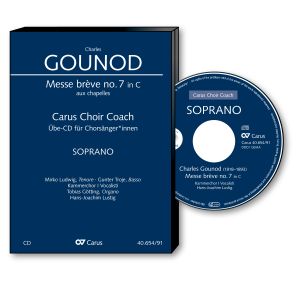
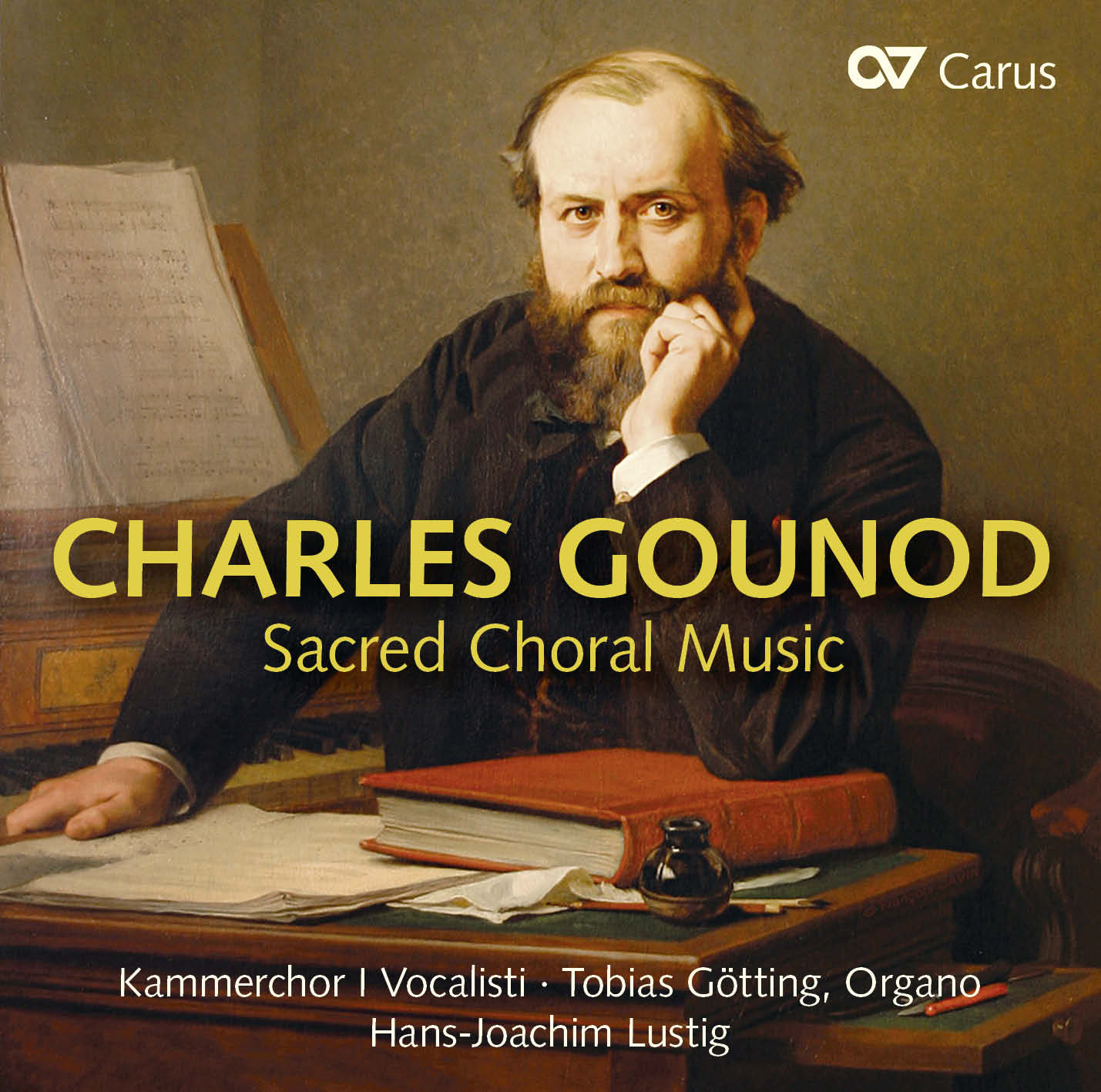
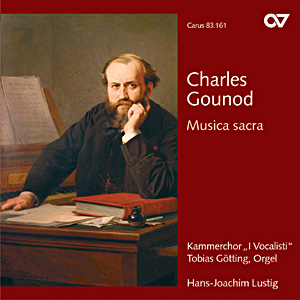
Le titre de cette composition de Gounod, « Messe brève n° 7 » ne pouvait être mieux choisi: aucun mouvement n'excède 5 minutes, et la messe ne contient pas de Credo: celui-ci doit être récité par l'assemblée. Ainsi, cette messe est parfaitement adaptée à une fête religieuse, d'autant plus qu'elle est appréciée des choeurs à petit effectif, de par son caractère chantable et sa facilité d'exécution. Le style déclamatif est cher à Gounod, tout comme sa tendance à adapter les motifs au rythme de la phrase et à conserver le rythme parlé en plaçant la récitation sur une seule note. Ce style est dévoilé dès le Kyrie et reste dans l'oreille dès la première écoute...
- Version originale
- Coach : la voix sélectionnée est jouée au piano, avec l’enregistrement original en arrière-plan
- Coach en mode ralenti : l'enregistrement comme le coach sont ralentis à environ 70 % du tempo initial, ainsi les passages difficiles peuvent être travaillés efficacement.
Interprètes: Mirko Ludwig (Tenor), Gunter Troje (Bass) – Kammerchor « I Vocalisti » – Hans-Joachim Lustig
Découvrir
 Ecouter
(7)
Ecouter
(7)
- Messe brève no. 7. Kyrie
- Gloria in excelsis Deo
- Domine Fili unigenite
- Quoniam tu solus Sanctus
- Sanctus
- O salutaris hostia
- Agnus Dei
 S`exercer
-
 carus music, the Choir Coach
Üben mit carus music
carus music, the Choir Coach
Üben mit carus music
-
Aides à l'apprentissage
-
Aides à l'apprentissage voix alto
- Messe brève no. 7. Kyrie (Choir Coach)
- Messe brève no. 7. Kyrie (Choir Coach, Slow mode)
- Gloria in excelsis Deo (Choir Coach)
- Gloria in excelsis Deo (Choir Coach, Slow mode)
- Domine Fili unigenite (Choir Coach)
- Domine Fili unigenite (Choir Coach, Slow mode)
- Quoniam tu solus Sanctus (Choir Coach)
- Quoniam tu solus Sanctus (Choir Coach, Slow mode)
- Sanctus (Choir Coach)
- Sanctus (Choir Coach, Slow mode)
- O salutaris hostia (Choir Coach)
- O salutaris hostia (Choir Coach, Slow mode)
- Agnus Dei (Choir Coach)
- Agnus Dei (Choir Coach, Slow mode)
-
Aides à l'apprentissage voix tenore
- Messe brève no. 7. Kyrie (Choir Coach)
- Messe brève no. 7. Kyrie (Choir Coach, Slow mode)
- Gloria in excelsis Deo (Choir Coach)
- Gloria in excelsis Deo (Choir Coach, Slow mode)
- Domine Fili unigenite (Choir Coach)
- Domine Fili unigenite (Choir Coach, Slow mode)
- Quoniam tu solus Sanctus (Choir Coach)
- Quoniam tu solus Sanctus (Choir Coach)
- Sanctus (Choir Coach)
- Sanctus (Choir Coach, Slow mode)
- O salutaris hostia (Choir Coach)
- O salutaris hostia (Choir Coach, Slow mode)
- Agnus Dei (Choir Coach)
- Agnus Dei (Choir Coach, Slow mode)
-
Aides à l'apprentissage voix basse
- Messe brève no. 7. Kyrie (Choir Coach)
- Messe brève no. 7. Kyrie (Choir Coach, Slow mode)
- Gloria in excelsis Deo (Choir Coach)
- Gloria in excelsis Deo (Choir Coach, Slow mode)
- Domine Fili unigenite (Choir Coach)
- Domine Fili unigenite (Choir Coach, Slow mode)
- Quoniam tu solus Sanctus (Choir Coach)
- Quoniam tu solus Sanctus (Choir Coach, Slow mode)
- Sanctus (Choir Coach)
- Sanctus (Choir Coach, Slow mode)
- O salutaris hostia (Choir Coach)
- O salutaris hostia (Choir Coach, Slow mode)
- Agnus Dei (Choir Coach)
- Agnus Dei (Choir Coach, Slow mode)
-
Aides à l'apprentissage voix soprano
- Messe brève no. 7. Kyrie (Choir Coach)
- Messe brève no. 7. Kyrie (Choir Coach, Slow mode)
- Gloria in excelsis Deo (Choir Coach)
- Gloria in excelsis Deo (Choir Coach, Slow mode)
- Domine Fili unigenite (Choir Coach)
- Domine Fili unigenite (Choir Coach, Slow mode)
- Quoniam tu solus Sanctus (Choir Coach)
- Quoniam tu solus Sanctus (Choir Coach, Slow mode)
- Sanctus (Choir Coach)
- Sanctus (Choir Coach, Slow mode)
- O salutaris hostia (Choir Coach)
- O salutaris hostia (Choir Coach, Slow mode)
- Agnus Dei (Choir Coach)
- Agnus Dei (Choir Coach, Slow mode)
-
 Compléments
- Acheter des compléments au format téléchargement.
-
 Texte numérique (sans notes), licence d'impression incluse, fichier html, paroles, originalfichier html, paroles, original (Extrait)
1 Kyrie eleison. Christe eleison. Kyrie eleison.
2 Gloria in excelsis Deo.
Et in terra pax hominibus bonae voluntatis.
Laudamus te, benedicimus te, adoramus te, glorificamus te.
Gratias agimus tibi propter magnam gloriam tuam.
Domine Deus, Rex caelestis, Deus Pater omnipotens.3 Domine Fili unigenite, Jesu Christe.
Domine Deus, Agnus Dei, Filius Patris.
Qui tollis peccata mundi, miserere nobis.
Qui tollis peccata mundi, suscipe deprecationem nostram.
Qui sedes ad dexteram Patris, miserere nobis.4 Quoniam tu solus Sanctus, tu solus Dominus,
tu solus Altissimus, Jesu Christe.
Cum Sancto Spiritu, in gloria Dei Patris. Amen.5 Sanctus, Sanctus, Sanctus, Dominus Deus Sabaoth.
...
-
Texte numérique (sans notes), licence d'impression incluse, fichier html, paroles, traduction en anglaisfichier html, paroles, traduction en anglais (Extrait)1
Lord, have mercy on us.
2
Christ, have mercy on us.
Lord, have mercy on us.Glory be to God on high
3
and on earth peace to men of good will.
We praise thee; we bless thee;
we adore thee; we glorify thee.
We give thee thanks for thy great glory.Lord God, heavenly King, God the almighty Father.
4
O Lord, the only-begotten Son, Jesus Christ,
O Lord God, Lamb of God, Son of the Father.
Thou who takest away the sins of the world,
have mercy upon us.
Thou who takest away the sins of the world,
receive our prayer.
Thou that sittest at the right hand of the Father,
have mercy upon us.For thou alone art the Holy One,
thou alone art the Lord,...
-
Texte numérique (sans notes), licence d'impression incluse, fichier html, paroles, traduction allemandefichier html, paroles, traduction allemande (Extrait)1
Herr, erbarme dich unser.
2
Christus, erbarme dich unser.
Herr, erbarme dich unser.Ehre sei Gott in der Höhe und Friede auf Erden
3
den Menschen, die guten Willens sind.
Wir loben dich, wir preisen dich,
wir beten dich an, wir rühmen dich.
Wir danken dir, denn groß ist deine Herrlichkeit.
Herr und Gott, König des Himmels,
Gott, allmächtiger Vater.Herr Jesus Christus, eingeborener Sohn,
Herr und Gott, Lamm Gottes, Sohn des Vaters.
Du nimmst hinweg die Sünden der Welt,
erbarme dich unser. Du nimmst hinweg die Sünden der Welt,
nimm an unser Gebet.
Du sitzest zur Rechten des Vaters:
erbarme dich unser....
Acheter
Informations complémentaires sur l'œuvre
Sommaire


-
Compositeur
Charles Gounod
| 1818-1893Charles Gounod est surtout connu de nos jours pour ses opéras Faust (1859) et Roméo et Juliette (1867) et sa très populaire Méditation sur le 1er prélude de piano de J. S. Bach (1852), remaniée en 1859 en Ave Maria. Sa réputation de grand compositeur d'opéras est loin cependant de rendre justice à l'ensemble de son œuvre immense qui aborde tous les genres. Ses œuvres de musique d'église constituent la majeure partie de cet œuvre et surpassent de loin, en nombre, la production de tous les autres compositeurs français du XIXe siècle. C'est avant tout à son séjour à Rome (1840–42) que Gounod doit sa vocation de compositeur de musique spirituelle. Le contact avec la musique de Palestrina l'impressionna profondément et influença durablement les œuvres qu'il composa par la suite pour l'église. Comme pour Palestrina, la musique d'église avait, pour Gounod, pour vocation principale de mettre au premier plan le message de la foi et d'éviter tout effet apparent dans l'expression musicale. Plus d'information sur la personne
-
Ensemble
Kammerchor "I Vocalisti"
Depending on the project, the chamber choir I Vocalisti consists of 20 to 60 vocally and musically trained singers from Northern Germany, who come together to perform challenging sacred and secular choral music at a professional level. Since its founding in 1991, the ensemble has performed in numerous concert series and has received prizes at national and international choral competitions, including 1st Prize at the 6th German Choir Competition in 2002 and 1st Prizes at the international choral contests in Tolosa, Spain in 2004, and in Cork, Ireland in 2009. In addition, I Vocalisti has recorded numerous works for radio, television and CD productions. The ensemble performs at major festivals, including the Schleswig-Holstein Musik Festival and the Festival des Choeurs lauréats. Furthermore, the choir regularly expands its musical spectrum by working in crossover projects with such groups as the Klazz Brothers and the Danish world music band Afenginn. As a guest choir for master classes, I Vocalisti has worked with directors such as Volker Hempfling, Frieder Bernius and Malcolm Goldring. The ensemble is also distinguished by its work with various composers and conductors such as U?is Prauli?š, Eric Whitacre, Ola Gjeilo and Christoph Eschenbach. Plus d'information sur la personne
-
Chef d'orchestre
Hans-Joachim Lustig
Hans-Joachim Lustig is the founder and director of I Vocalisti. After completing his degree in Music Education, he has spent his career working as a freelance director and conductor in Lübeck, Germany. In 1994/95 he was the recipient of a fellowship awarded by the Deutsche Musikrat (German Music Council). He conducts seminars for choirs and choral directors both nationally and internationally. Lustig is also artistic director of the successful German boys’ choir, the Chorknaben Uetersen, whose male voices won 1st Prize at the 6th German Choir Competition in 2002. In addition, he is a sought-after adjudicator at choral competitions and frequently serves as a guest conductor for various choirs, including the Belgrade Radio Television Choir, the Philharmonia Chorus in London and the Ankara State Choir. Plus d'information sur la personne
-
Solist - ténor
Mirko Ludwig
-
Solist - basse
Gunter Troje
Les évaluations sur notre site web ne peuvent être effectuées que par des clients disposant d'un compte d'utilisateur enregistré. Il n'est pas vérifié si les produits évalués ont été effectivement achetés.
Aucune évaluation disponible pour ce produit.
Questions fréquentes sur l'œuvre
 Il n'y a pas encore de questions et réponses concernant cette œuvre ou vous n'avez pas trouvé la réponse à votre question sur l'œuvre ? Cliquez ici et envoyez votre question spécifique à notre service clients.