Psalm 148 and 150
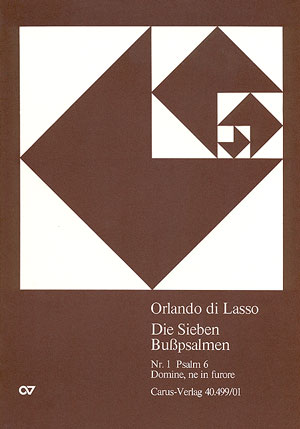
Laudate Dominum. Aus: Die sieben Bußpsalmen
 View
View

-
Composer
Orlando di Lasso
| 1532-1594
-
Editor
Stefan Schulze
Reviews
Psalm 148 und 150
Orlando di Lasso: Psalm 148 und 150
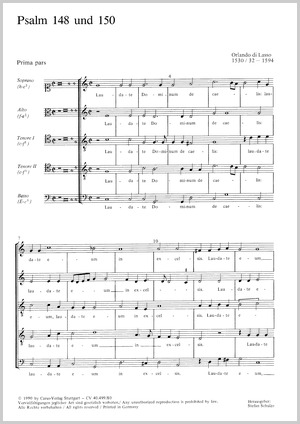
Chöre, die gerne anspruchsvolle A-cappella-Literatur singen, kommen bei Orlando di Lasso (1530/32-1594) ganz auf die Rechnung. Die beiden hier vertonten, zu einem vierteiligen Stück zusammengefassten Psalmen verlangen einen fünfstimmigen Chor (2 Tenöre), der in den imitatorischen Passagen einige rhythmische Schwierigkeiten zu bewältigen hat. Wie neuere Gepflogenheiten zeigen, wird diese Art von Musik sicher am besten von einer kleinen Gruppe musiziert. Dann kommt das interessante Leben der sich bildenden und auflösenden Dissonanzen sicher besser zum Erblühen, als wenn große Chöre ein unnötiges Volumen auf Kosten der rhythmischen Präzision entfalten.
Quelle: Singen und Musizieren im Gottesdienst 3/92, S. 173
Orlando di Lasso’s extended, moderately difficult Latin setting of Psalms 148 and 150 is presented here in a new scholarly edition. This fourteen-minute, four- section work is largely polyphonic, with shorter passages in homophonic style. Part One, scored for SATTB choir, is the most lengthy of the four sections and, except for the very brief passage of chordal writing at the outset, is entirely polyphonic. Part Two, although slightly shorter, is also scored for SATTB chorus in polyphonic style. Part three is set for three voices (SAT) and is perhaps intended for soloists, although the edition allows the conductor to make the decision. The rhythms of part three are somewhat more complex and the writing a bit more florid than that of the other three sections. Part four is scored for SSATTB choir, and these final measures of ”laudate” texts are logically and forcefully presented in homophonic style, rather than the more textually obscure polyphonic manner used in earlier parts. The ranges are moderate: soprano, b to e2; alto, f to a1; both tenor parts, c to f1; and bass, E to c1.
The edition is printed cleanly and contains no extraneous dynamic markings or other editorial suggestions. Same conductors might wish for more standard barring practice (bar lines in Ibis edition are printed between the staves). The notation used here does not tie held notes over the bar line but places the full note values where the notes originate. Although somewhat confusing to inexperienced singers, this style of notation indicates the unimportance of set metric units in the composer’s mind. No translation, introductory remarks, or piano reduction is provided in this otherwise excellent and highly worthwhile edition of Lasso’s fine work.
Jerry Blackstone
Quelle: Keine Angaben
Reviews on our website can only be submitted by customers with a registered user account. A check whether the rated products were actually purchased does not take place.
Frequent questions about this work
 There are no questions and answers available so far or you were unable to find an answer to your specific question about this work? Then click here and send your specific questions to our Customer Services!