Gabriel Fauré's Requiem is the key work among the French master's sacred compositions.
The work was already a success with audiences during the composer's lifetime and remains so to this day.
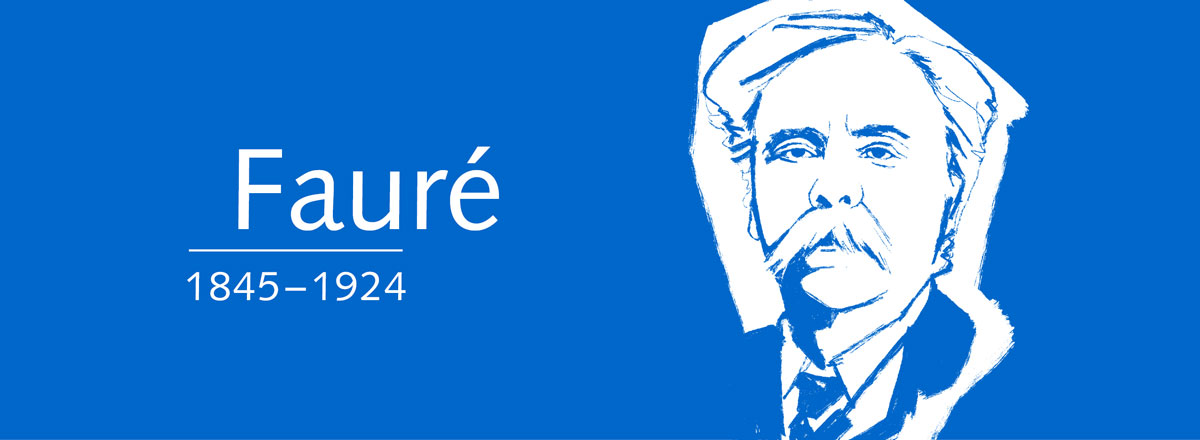
Thanks to his work as a church musician Gabriel Fauré composed a whole range of sacred choral music. He mainly favored more intimate chamber music scorings which could convey a feeling of “human” expression. His popular larger choral works – the Cantique de Racine and the atmospheric Requiem – are available in the Carus catalog in various authentic versions for smaller and larger forces. Carus also publishes selected works from Fauré’s extensive output of chansons in arrangements for mixed chorus.
Gabriel Fauré's Requiem is the key work among the French master's sacred compositions.
The work was already a success with audiences during the composer's lifetime and remains so to this day.
The present reconstruction of a "version with small orchestra" is distinguished from other such attempts by the fact that it is the first to offer the work not in a mixed version, but in its 1889 form.
This differs from the final version both musically and in terms of scoring, as it does not yet use flutes, clarinets and bassoons and only two horns.
As the offertory in 1889 did not yet include choral parts, the appendix to the edition contains the offertory of the "symphonic version".

Yves Castagnet, titular organist at the choir organ of Notre Dame in Paris and rooted in the French organ tradition, has transferred the orchestral part to the organ for this edition.
The transparent structure and richness of color of the orchestral part are retained - not least thanks to differentiated suggestions for registration.
The Cantique already possesses the typical Fauré characteristics of an expressive choral movement and, together with the Requiem, which was composed much later, is one of the composer's most popular works.
One of Gabriel Fauré's most popular compositions is his Pavane. What is less known, however, is that the premiere of this stylized dance in April 1888 was actually performed in this present version with a mixed choir rather than in the now more familiar orchestral version or instrumental arrangements.
In addition to this edition of the orchestral version with a piano reduction penned by the composer, Carus has also published a contemporary arrangement for choir with piano four hands (Carus 10.402/10).
With our practice app carus music, choir singers can easily practise the Requiem for themselves. Choose your vocal range and practise the work on your smartphone, tablet or PC today!
After his training at the École de musique classique et religieuse in Paris, Gabriel Fauré worked primarily as a church musician until his appointment as director of the conservatory there.
"Musique religieuse" contains all the smaller choral and ensemble works as well as previously unpublished original arrangements for orchestra or chamber ensemble.
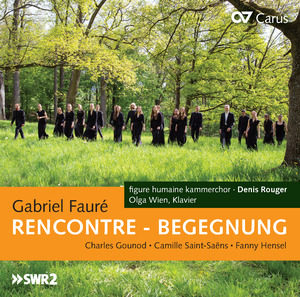
Gabriel Fauré was a master of lyrical passion. He particularly loved intimate, chamber ensembles. For the Fauré anniversary year of 2024 – marking 100 years since his death – Denis Rouger has arranged numerous songs by the great French composer of the late Romantic and fin-de-siècle periods for his figure humaine chamber choir. The well-known art songs, originally composed for solo voice and piano, can now be enjoyed anew in this sensitive choral interpretation.