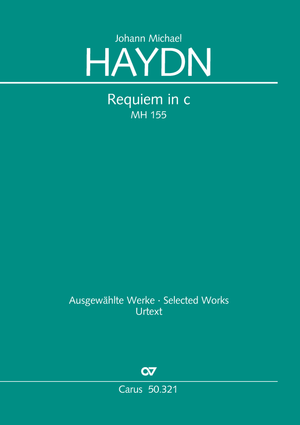
Requiem in C minor
MH 155, 1771
Johann Michael Haydn’s Requiem in C minor heavily influenced W. A. Mozart’s Requiem. In just two weeks Michael Haydn composed his work in December 1771, on the occasion of the death of his employer, Prince Bishop Sigismund Count Schrattenbach, who was beloved among the people and was a great patron of the arts. The work was written under the impression of personal tragedy: Haydn’s only child, Aloisia Josepha, died in January 1771, before completing her first year of life. Parts of the “Schrattenbach-Requiem” were played together with the completed movements from his second, unfinished Requiem during his own furneral service. During the funeral service in Vienna for Joseph Haydn, parts of his younger brother’s “C-minor Requiem” were also performed.
Purchase
Additional product information
-
Composer
Johann Michael Haydn
| 1737-1806Johann Michael Haydn worked at the renowned ecclesiastical princely court in Salzburg from 1763. Stylistically, he bridged the gap between the early classical period and the Biedermeier period during his 43 years there. In accordance with his official duties, Haydn contributed to practically all the genres cultivated in the Catholic liturgy: Haydn's church music is characterised by his knowledge of the liturgical function and the musical interpretation of religious texts. Johann Michael Haydn was initially regarded by his contemporaries as equal to Joseph Haydn. It was only the rapid rise of his elder brother to become the most important instrumental composer of the time that pushed Johann Michael Haydn into the shadows, from which the joy of musical discovery in recent years has increasingly brought him out. Personal details
Reviews on our website can only be submitted by customers with a registered user account. A check whether the rated products were actually purchased does not take place.
No feedback available for this product.
Frequent questions about this work
 There are no questions and answers available so far or you were unable to find an answer to your specific question about this work? Then click here and send your specific questions to our Customer Services!