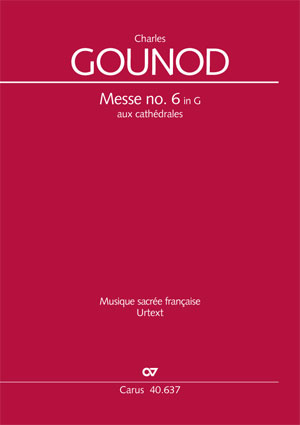
Messe no. 6 aux cathédrales
CG 71b, 1890
 View
View

-
Composer
Charles Gounod
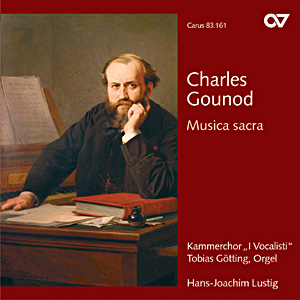
| 1818-1893Charles Gounod is known today especially as the composer of the operas Faust (1859) and Roméo et Juliette (1867), and of the very popular Méditation sur le 1er prélude de piano de J. S. Bach (1852), arranged in 1859 as an Ave Maria. The fact that Gounod is regarded primarily as an important opera composer does not do justice to his extensive œuvre, which encompasses all genres. His creative output is dominated by his church music, which overshadows that of all other 19th-century composers. Personal details
Reviews
Charles Gounod: Messe no
Charles Gounod: Messe no. 6 in G aux cathédrales
Charles Francois Gounod (1818 -1893) ist in Deutschland eigentlich nur bekannt durch seine Meditation über das C- Dur-Präludium aus Bachs Wohltemperiertem Klavier, dem späteren „Ave Maria”, mit dem viele Kollegen immer wieder bei Trauungen genervt werden, und durch seine Oper „Faust”. Dass er eine ganze Reihe von Messen geschrieben hat, ist bei uns weitgehend unbekannt. Der Carus-Verlag legt nun ein Werk vor, das sich durch eine leicht fassliche musikalische Sprache und dadurch einen sehr eingängigen Charakter auszeichnet.
Einfache musikalische Mittel setzt Gounod formbildend ein und prägt so charakteristische Eigenheiten der einzelnen Sätze aus. Der Chorsatz ist bis auf eine Stelle im Gloria ganz homophon und in keiner Weise durch den in Deutschland zu dieser Zeit um sich greifenden Cäcilianismus geprägt. Es handelt sich um glut- und blutvolle Musik mit manchmal etwas süßlicher Melodik. (Das ist nicht wertend gemeint)
Zur Interpretation: Der Chor muss sich an ein paar ungewohnte harmonische Verbindungen gewöhnen, dank der mitlaufenden Orgel ist das vielleicht nicht so problematisch wie es a cappella wäre. Er muss dynamisch sehr beweglich sein und rhythmisch äußerst präzise singen: Es dürfte dann ein farbenfrohes, kurzweiliges Stück expressiv-romantischer Chormusik entstehen, an der die Zuhörer und Interpreten ihre Freude haben. Angegebene Aufführungsdauer: 22 Minuten.
Ulrich Feige
Quelle: Württembergische Blätter für Kirchenmusik 2/92, S. 86
Charles Gounod: Messe No. 6 in G major
Gounod produced a significant number of sacred works, perhaps reflecting his decision at one time to consider entering the priesthood. The Mass is charming in its simplicity. Gounod’s Iyric melodies combine with a chordal and diatonic harmonization to make the work both attractive and accessible. The organ serves to reinforce vocal parts. Brief unaccompanied sections are also included. There are no solos in the work.
Two additional movements are included: ”O salutaris hostia” and ”Domine sa!vam”. The editor describes these as traditional French additions to the Mass, though they may be omitted. The complete work lasts approximately twenty-two minutes.
Dawn O. Willis
Quelle: Choral Journal 10/92, S. 64
Reviews on our website can only be submitted by customers with a registered user account. A check whether the rated products were actually purchased does not take place.
Frequent questions about this work
 There are no questions and answers available so far or you were unable to find an answer to your specific question about this work? Then click here and send your specific questions to our Customer Services!