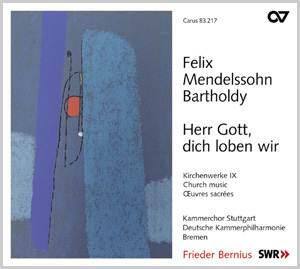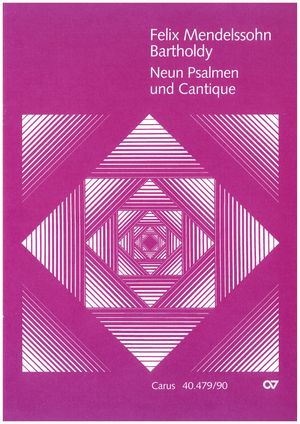
Neun Psalmen und das Cantique

 Listen
(9)
Listen
(9)
- Psalm 5
- Cantique pour l’Eglise Wallonne de Francfort
- Psalm 2
- Psalm 24
- Psalm 31
- Psalm 91
- Psalm 93
- Psalm 98
- Psalm 100
 Additional material
- Purchase additional material as a download product.
-
 Digital text (without sheet music) incl. printing licence, html file, singing text, french translationhtml file, singing text, french translation (Sample)Cantique pour l’Église Wallonne de Francfort Venez et chantez les louanges de ce Christ chanté par les anges,
et par eux toujours adoré ;
pour nous tirer de la misère,
il s’est fait enfant de colère :
pour nos forfaits, il fut navré.
Text: vermutlich Daniel A. E. Touchon
Psalm 2 Warum toben die Heiden, und die Leute reden so vergeblich?
Die Könige im Lande lehnen sich auf,
und die Herrn ratschlagen miteinander wider den Herrn und seinen Gesalbten:
„Lasst uns zerreißen ihre Bande, und von uns werfen ihre Seile!“
Aber der im Himmel wohnet, lachet ihrer, und der Herr spottet ihrer.
Er wird einst mit ihnen reden in seinem Zorn, und mit seinem Grimm wird er sie schrecken:
„Aber ich habe meinen König eingesetzt auf meinem heiligen Berge Zion.
Ich will von einer solchen Weise predigen, dass der Herr zu mir gesagt hat:
„Du bist mein Sohn, heute hab’ ich dich gezeuget;
heische von mir, so will ich dir die Heiden zum Erbe geben, und der Welt Ende zum Eigentum.
Du sollst sie mit eisernem Szepter zerschlagen, wie Töpfe sollst du sie zerbrechen.“
...
-
Digital text (without sheet music) incl. printing licence, html file, singing text, english translationhtml file, singing text, english translation (Sample)Cantique pour l’Église Wallonne de Francfort Let us sing the song of praise sung by angels to the Lord;
honor him, like them, resounding;
to save us from sin he came to us as a human child.
for our guilt he suffered torment.
Psalm 2 Why rage fiercely the heathen, and the people mediate a vain thing?
The kings of the earth they set themselves up,
and the rulers counsel take together against the Lord, and against his anointed.
“Now let us break their bands asunder, and cast away their cords from us!”
He that sitteth in the heav’ns shall laugh them to scorn,
and the Lord shall deride them.
In wrath he shall speak to them, and shall vexthem in his sore displeasure.
“Yet have I set my King on Zion’s holy hill, yea, on my holy hill of Zion.”
I will declare the law where-of the Lord hath said, as the Lord hath said unto me:
“Thou art my Son, thee this day have I begotten.
Ask thou of me, and I shall give the heathen for thine inheritance,
utmost parts for thy possession.
Thou shalt break them in pieces with sceptres of iron,
...
-
Digital text (without sheet music) incl. printing licence, html file, singing text, german translationhtml file, singing text, german translation (Sample)Cantique pour l’Église Wallonne de Francfort (Deutsch) Lasst euren Lobgesang erklingen dem Herrn,
dem alle Engel singen,
ehrt ihn, wie sie, mit Klang und Schall!
Um uns zu retten von der Sünde,
ward Jesus Christ zum Menschenkinde,
für unsre Schuld litt er die Qual.
Psalm 2 Warum toben die Heiden, und die Leute reden so vergeblich?
Die Könige im Lande lehnen sich auf,
und die Herrn ratschlagen miteinander wider den Herrn und seinen Gesalbten:
„Lasst uns zerreißen ihre Bande, und von uns werfen ihre Seile!“
Aber der im Himmel wohnet, lachet ihrer, und der Herr spottet ihrer.
Er wird einst mit ihnen reden in seinem Zorn, und mit seinem Grimm wird er sie schrecken:
„Aber ich habe meinen König eingesetzt auf meinem heiligen Berge Zion.
Ich will von einer solchen Weise predigen, dass der Herr zu mir gesagt hat:
„Du bist mein Sohn, heute hab’ ich dich gezeuget;
heische von mir, so will ich dir die Heiden zum Erbe geben, und der Welt Ende zum Eigentum.
Du sollst sie mit eisernem Szepter zerschlagen, wie Töpfe sollst du sie zerbrechen.“
...
Contents


-
Composer
Felix Mendelssohn Bartholdy
| 1809-1847Felix Mendelssohn Bartholdy (1809–1847) is regarded as one of the most important composers of the Romantic period. His compositions combine the formal clarity of the Viennese Classical period with the heightened expressiveness of the 19th century. His engagement with the music of Johann Sebastian Bach was particularly influential; he played a key role in its rediscovery through the performance of the St Matthew Passion in 1829.
Among his best-known vocal works are his two oratorios, Paulus and Elias, as well as his chorale cantata Verleih uns Frieden gnädiglich. Furthermore, Mendelssohn worked as a conductor, pianist and music teacher, and made a significant contribution to the professionalisation of the concert scene and to the development of the Leipzig Conservatoire. His work occupies a central position in 19th-century music history and combines a sense of tradition with Romantic sound aesthetics.
Personal details
-
Editor
Pietro Zappalà
Reviews
Herr, sei gnädig Felix Mendelssohn
Herr, sei gnädig: Felix Mendelssohn
Ave, maris stella: Edvard Grieg
These two sacred works are published back-to-back in this moderately priced score. ”Herr; sei gnädig” (Lord, Have Mercy upon Us) is a plaintive work written in fugal style. The subject uses a poignant appoggiatura and a singular leap of a fifth to provide a distinctive sense of pleading. The addition of an ascending chromatic countermelody heightens this effect. While the vocal ranges are very comfortable, frequent chromaticisms and dissonances make this brief work challenging.
In contrast to the horizontal focus of Mendelssohn's fugue, Grieg's setting of the familiar Latin text ”Ave, maris stella” is largely homophonic. Seventh chords provide the primary vocabulary for two stunning harmonic progressions: the first featuring third relations and the second presenting a textbook tour through the circle of fifths. The music is repeated strophically for the second verse, before giving war to a simple ”amen”. A broad range of dynamics provides the final romantic touch to this very lovely work. This edition also includes four German verses at the end of the score. While English translations and piano reductions are not included, this publication featuring two highquality works is very worthy of consideration.
Don P. Ester
Quelle: Choral Journal Feb. 1995, S. 56
Reviews on our website can only be submitted by customers with a registered user account. A check whether the rated products were actually purchased does not take place.
Frequent questions about this work
 There are no questions and answers available so far or you were unable to find an answer to your specific question about this work? Then click here and send your specific questions to our Customer Services!