

The cantata Widerstehe doch der Sünde BWV 54 is now one of Johann Sebastian Bach’s most popular solo cantatas. The short text, which comprises three movements, comes from a 1711 collection of cantata texts by the Darmstadt court poet Christian Lehms, and warns in drastic terms that no sinner will inherit the kingdom of God. It is certainly no coincidence that Bach allocated this text to an alto voice, then often regarded as a symbol for the repentant sinner. The cantata comes from Bach’s Weimar period and only survives in a fair copy of the score by Johann Gottfried Walther (music text ) and Johann Tobias Krebs (vocal text underlay). This didn’t ’t present any difficulties in preparing an edition. In Lehms’ word book the cantata is allocated to Oculi Sunday (the third Sunday in Lent), but can also readily be sung on other occasions in the church year.
Explore


 Additional material
- Purchase additional material as a download product.
-
 Digital text (without sheet music) incl. printing licence, html file, singing text, english translationhtml file, singing text, english translation (Sample)1 Aria
Stand firm against the lure of sinning,
2 Recitativo
for its poison will defile.
Never be by Satan blinded;
for defying God’s pure honor,
brings a curse, which ends in death.This sort of loathsome sin
3 Aria
can indeed with beauty be adorned;
but yet, when all is done, comes sorrow and distress
and feelings of dismay.
Its surface gleams like gold;
but if you look within
one finds instead an empty shadow,
a whitewashed sepulchre.
Like Sodom’s apples they invite,
but who partakes of this deception,
shall never reach God’s hoped for realm.
For it is like the sharpest sword,
which does through soul and body pierce....
-
Digital text (without sheet music) incl. printing licence, html file, singing text, originalhtml file, singing text, original (Sample)1 Aria Widerstehe doch der Sünde,
sonst ergreifet dich ihr Gift.
Lass dich nicht den Satan blenden,
denn die Gottes Ehre schänden,
trifft ein Fluch, der tödlich ist. 2 RecitativoDie Art verruchter Sünden
scheint zwar von außen wunderschön;
allein man muss hernach mit Kummer und Verdruss
viel Ungemach empfinden.
Von außen ist sie Gold;
doch, will man weiter gehn,
so zeigt sich nur ein leerer Schatten
und übertünchtes Grab.
Sie ist den Sodomsäpfeln gleich,
und die sich mit derselben gatten,
gelangen nicht in Gottes Reich.
Sie ist als wie ein scharfes Schwert,
das uns durch Leib und Seele fährt....
Purchase
Additional product information
-
Composer
Johann Sebastian Bach
| 1685-1750Johann Sebastian Bach is one of the most important composers of Western music history. He came from a widely ramified musical dynasty, which produced numerous musicians and organists in the Thuringian-Saxon area.
Bach vocal
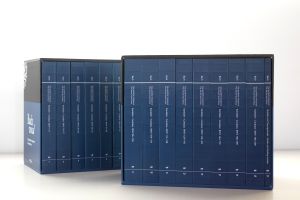
Ever since Carus-Verlag was founded in 1972, publishing the music of Johann Sebastian Bach has been a special focus for us. In the 2017 Reformation anniversary year we completed the Bach vocal project. Bach’s complete sacred vocal works are now available in modern “Urtext” editions, together with performance material. A complete edition of all the full scores is also available in a high quality box set.
Personal details
-
Editor
Ulrich Leisinger
-
Songwriter / Librettist
Georg Christian Lehms
-
Vocal score arranger
Paul Horn
| 1922-2016Paul Horn war ein deutscher Kirchenmusiker, Organist, Komponist und Musikwissenschaftler. Er studierte Kirchenmusik und Orgel an der Evangelischen Kirchenmusikschule Esslingen am Neckar bei Hans-Arnold Metzger und Musikwissenschaft, Theologie und Geschichte an der Universität Tübingen. Seine berufliche Laufbahn begann als Kantor an der Evangelischen Michaelskirche in Stuttgart-Degerloch. 1954 wurde er Kantor an der Evangelischen Stadtkirche Ravensburg, eine Position, die er bis zu seiner Pensionierung innehatte. Als Musikwissenschaftler arbeitete Horn bis ins hohe Alter eng mit Carus zusammen. So stammen zahlreiche Carus-Klavierauszüge aus seiner Feder. Personal details
-
Continuo realization
Paul Horn
| 1922-2016Paul Horn war ein deutscher Kirchenmusiker, Organist, Komponist und Musikwissenschaftler. Er studierte Kirchenmusik und Orgel an der Evangelischen Kirchenmusikschule Esslingen am Neckar bei Hans-Arnold Metzger und Musikwissenschaft, Theologie und Geschichte an der Universität Tübingen. Seine berufliche Laufbahn begann als Kantor an der Evangelischen Michaelskirche in Stuttgart-Degerloch. 1954 wurde er Kantor an der Evangelischen Stadtkirche Ravensburg, eine Position, die er bis zu seiner Pensionierung innehatte. Als Musikwissenschaftler arbeitete Horn bis ins hohe Alter eng mit Carus zusammen. So stammen zahlreiche Carus-Klavierauszüge aus seiner Feder. Personal details
-
Translator
Henry Drinker
Reviews on our website can only be submitted by customers with a registered user account. A check whether the rated products were actually purchased does not take place.
No feedback available for this product.
Frequent questions about this work
 There are no questions and answers available so far or you were unable to find an answer to your specific question about this work? Then click here and send your specific questions to our Customer Services!