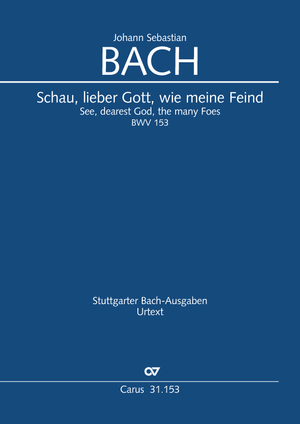
See, dearest God, the many foes
Cantata for the Sunday after New Year’ Day BWV 153, 1724
Bach chose an unconventional beginning for his nine-movement cantata Schau, lieber Gott, wie meine Feind (See, dearest God, the many foes) BWV 153, which he composed in his first year as Kantor of St. Thomas’s for the Sunday after New Year 1724. Instead of the usual opening chorus, the cantata opens with a simple four-part chorale movement. There are also chorales in the middle of the work (movement 5) and at the end. By avoiding extended or demanding choral movements, Bach probably wanted to save the voices of his choir members at St Thomas’s, who had just been involved in a demanding week of almost constant singing. This may also be why the cantata uses just three soloists (alto, tenor, bass). In the arias, each preceded by a secco recitative, the accompaniment is provided by 2 violins and viola.
Explore



 Additional material
- Purchase additional material as a download product.
-
 Digital text (without sheet music) incl. printing licence, html file, singing text, english translationhtml file, singing text, english translation (Sample)1 Choral
See, dearest God, the many foes
2 Recitativo (Alto)
that constantly assail me,
so foully deal such mighty blows,
that strength I fear will fail me.
The devil, flesh and wicked world
had long my soul to hell have hurled,
did not thy grace avail me.Beloved God, with pity do thou hear me,
3 Aria (Basso)
protect me, ever hear me.
Around me here are evil beast which sore dismay me,
I live in constant fear that in their rage and hate
they will not wait
to master and to slay me.Be not dismayed, I am with thee,
be not afraid, I am with thee.
Fear thou not, I am thy God.
Help will I give, uphold thee...
-
Digital text (without sheet music) incl. printing licence, html file, singing text, originalhtml file, singing text, original (Sample)1 Choral
Schau, lieber Gott, wie meine Feind,
2 Recitativo (Alto)
damit ich stets muss kämpfen,
so listig und so mächtig seind,
dass sie mich leichtlich dämpfen!
Herr, wo mich deine Gnad nicht hält,
so kann der Teufel, Fleisch und Welt
mich leicht in Unglück stürzen.Mein liebster Gott, ach lass dichs doch erbarmen,
3 Aria (Basso)
ach hilf doch, hilf mir Armen!
Ich wohne hier bei lauter Löwen und bei Drachen,
und diese wollen mir durch Wut und Grimmigkeit
in kurzer Zeit
den Garaus völlig machen.Fürchte dich nicht,
ich bin mit dir.
Weiche nicht,
ich bin dein Gott;...
Purchase
Additional product information
-
Composer
Johann Sebastian Bach
| 1685-1750Johann Sebastian Bach is one of the most important composers of Western music history. He came from a widely ramified musical dynasty, which produced numerous musicians and organists in the Thuringian-Saxon area.
Bach vocal
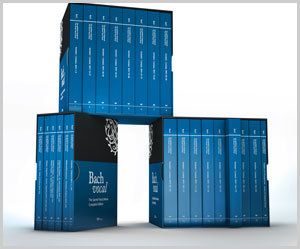
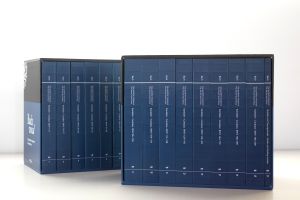
Ever since Carus-Verlag was founded in 1972, publishing the music of Johann Sebastian Bach has been a special focus for us. In the 2017 Reformation anniversary year we completed the Bach vocal project. Bach’s complete sacred vocal works are now available in modern “Urtext” editions, together with performance material. A complete edition of all the full scores is also available in a high quality box set.
Personal details
-
Editor
Karin Wollschläger
Reviews on our website can only be submitted by customers with a registered user account. A check whether the rated products were actually purchased does not take place.
No feedback available for this product.
Frequent questions about this work
 There are no questions and answers available so far or you were unable to find an answer to your specific question about this work? Then click here and send your specific questions to our Customer Services!