

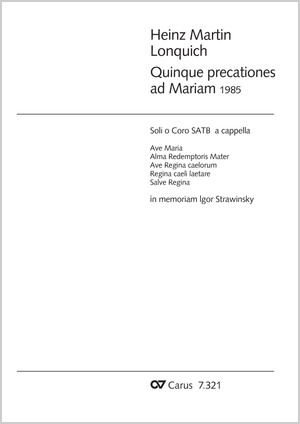
Quinque precationes ad Mariam in memoriam Igor Strawinsky
 View
View

Contents

-
Composer
Heinz Martin Lonquich
| 1937-2014Heinz Martin Lonquich was a German composer, church musician and deacon. He studied piano, composition and electronic music at the conservatories in Saarbrücken and Cologne. Lonquich composed numerous works for various ensembles, including piano music, chamber music, sacred music and new sacred songs. His larger works include oratorios and masses.
He received several awards for his work, including the North Rhine-Westphalia Music Prize (1968) and the Orlando di Lasso Medal from the Allgemeiner Cäcilienverband (1997). His son Alexander Lonquich (born 1960) is a well-known pianist.
Personal details
Reviews
Heinz Martin Lonquich: Quinque precationes ad Mariam
... Der sich ergebende Chorklang ist sehr dicht und von geradezu himmlischer Entrücktheit; allerdings ist er auch das Ergebnis einer Kompositionsweise, die es dem Chor nicht immer sehr leicht macht, diese Klangvisionen zu realisieren. Der sehr dissonante Stil Lonquichs ist zum Beispiel aufgrund von Sekundparallelen oder vertrackten Melodieverläufen stellenweise nicht unproblematisch, zum Beispiel in „Ave Regina caelorum” (Takt 2/ 3) oder „Salve Regina” (Takt 20/2). Dennoch, diese spirituell tief empfundenen Stücke lohnen alle Mühen, die sie Sängern und Dirigenten abverlangen, allemal.
Musica Sacra, Juli/August 2000
Reviews on our website can only be submitted by customers with a registered user account. A check whether the rated products were actually purchased does not take place.
Frequent questions about this work
 There are no questions and answers available so far or you were unable to find an answer to your specific question about this work? Then click here and send your specific questions to our Customer Services!