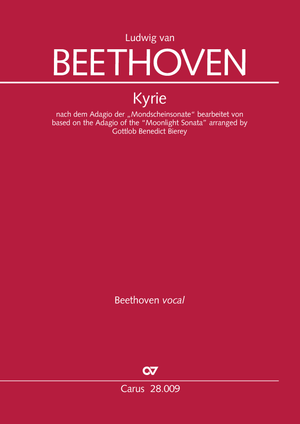
How do Beethoven’s Moonlight Sonata and a choir fit together? Exceptionally well, thanks to the arrangement by Beethoven’s contemporary Gottlob Benedict Bierey! His version is instantly catchy and moving. Available for various instrumentations.

Works everyone knows – but not in these arrangements
Beethoven’s Moonlight Sonata Schumann's famous song cycle Dichterliebe as a choral work? Many works are familiar only in their original instrumentation, so choral arrangements can be very exciting, especially as some of these were even written by the composers’ own contemporaries.
We recommend choral versions of well-known originals: amazingly, they sound just right, and it’s repertoire your audience will recognize immediately!
-
Beethoven / Bierey – Kyrie
-
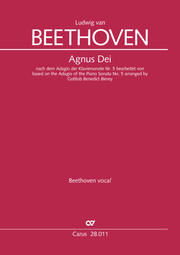
Beethoven / Bierey – Agnus Dei
Bierey arranged the slow movement of Beethoven’s Piano Sonata No. 5 for voices and orchestra, choosing to set the text of the Agnus Dei from the Latin Ordinary to this music. The resulting sound is astonishingly harmonious: it’s as if Beethoven had already heard the vocal line in his “inner ear” while composing!
-
Schumann / Cho – Dichterliebe
This arrangement of the Dichterliebe cycle makes Schumann’s world-famous song repertoire accessible to choirs, opening up a whole new musical experience. Hye-Young Cho is one of South Korea’s leading composers. She has crafted her arrangement with subtle nuances, employing the choir’s voice section with great variety and precision. Cho’s harmonies align closely with Schumann’s piano score.

-
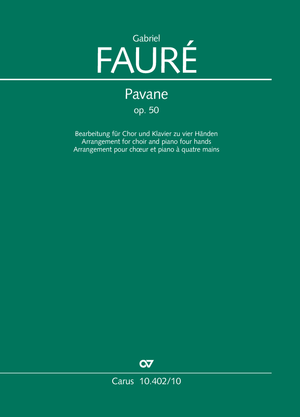
Fauré – Pavane
Gabriel Fauré’s Pavane for orchestra – we all know it. But it’s less well known that this stylized dance was actually performed in a version for mixed choir at its premiere in April 1888. Also available: an arrangement for choir with piano four hands.
-
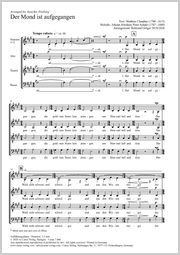
Gröger – Der Mond ist aufgegangen
This jazzy, striking and moving arrangement of the beloved folk song classic Der Mond ist aufgegangen (The Moon Has Risen) could well become your choir’s favorite piece. Just give it a listen!
-
Beethoven / Schindler – Ode to Joy
Beethoven’s Ode to Joy is festive, powerful music that expresses joy, community, protest, and gratitude. Peter Schindler’s cool arrangement for choir and piano (or optionally for choir, band, and wind instruments) captures all of these emotions. Brass riffs, jazzy harmonies, and choral writing for one to three parts make for a true musical highlight, with the entire audience even joining in for the finale!
.jpg "Beethoven / Schindler – Ode to Joy")
-
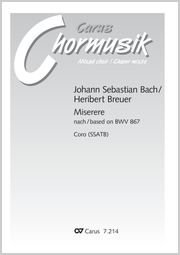
Bach / Breuer – Miserere
This one gets under your skin! Heribert Breuer’s Miserere is based on the Prelude and Fugue in B-flat minor from Book 1 of Johann Sebastian Bach’s Well-Tempered Clavier. To adapt the work for voices, Breuer transposed it down a third and set it to words from Psalm 51. Quite challenging, but utterly captivating!
-
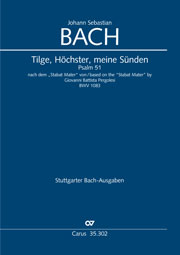
Bach / Pergolesi / Bartels – Forgive, Most High, My Sins
None other than Johann Sebastian Bach arranged Giovanni Battista Pergolesi’s moving Stabat Mater for performance at Leipzig’s St. Thomas Church. Jörn Bartels’ arrangement demonstrates that Bach’s version also works wonderfully with a choir. Suitable for small choirs and ensembles.
-
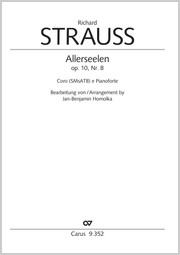
Strauss / Homolka – Allerseelen
Allerseelen or All Souls’ Day is one of Richard Strauss’s most popular songs. Jan-Benjamin Homolka has carefully arranged the song for a five-part chamber choir. The character of the original is preserved, in part because Homolka retains the original piano accompaniment and assigns the original vocal part to the soprano.
-
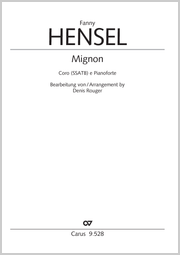
Hensel / Rouger – Mignon: Nur wer die Sehnsucht kennt
Nur wer die Sehnsucht kennt (Only those who know longing) comes from Johann Wolfgang von Goethe’s novel Wilhelm Meister’s Apprenticeship. Over the years these wistful, plaintive words have been a repeated source of inspiration to composers, including Fanny Mendelssohn. In his choral arrangement of her song, Denis Rouger succeeds in carefully adapting the piece to the needs and expressive capabilities of a choir. Beautiful to sing, and to hear!
.jpg "Beethoven / Bierey – Kyrie")
.jpg "Fauré – Pavane")