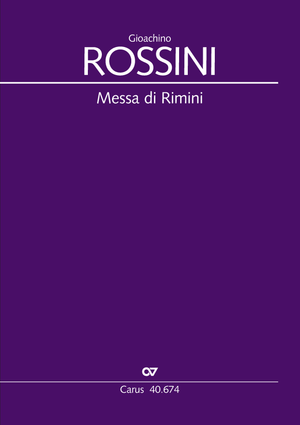
Messa di Rimini
1809
Gioachino Rossini’s operatic works are framed by the composition of church music. In his youth he grew up surrounded by sacred music and through this music gained his first experience as a composer, which included learning how to write for the voice. Musically, he took stock of the wisdom he gained in his later years by composing key works such as Stabat Mater and Petite Messe solennelle. The Missa di Rimini belongs to Rossini’s first creative period and was composed in 1809 for the local cathedral. It is a Kyrie – Gloria Mass in which the Gloria, in accordance with the Italian tradition is extended and divided in ten numbers. The Mass is characterized by the joy of making music and offers both soloists and choir rewarding, if not difficult musical tasks. The compositional demands of the Mass are demonstrated also by the presence of extended instrumental passages in the work.
Acheter
Informations complémentaires sur l'œuvre
-
Compositeur
Gioachino Rossini
| 1792-1868Gioachino Antonio Rossini était un compositeur italien, aujourd'hui surtout connu pour ses opéras. Rossini remporta ses premiers grands succès en 1813 à Venise avec l'opéra seria Tancredi et l'opéra buffa L'italiana in Algeri. Les années suivantes confirmèrent cette réussite. À partir de 1830, Rossini se retira presque complètement de la vie publique. Il composa encore de nombreuses œuvres, dont le Stabat mater, mais consacra principalement son temps à la bonne chère et aux plaisirs de la vie. Rossini jouit d'une immense renommée dans toute l'Europe de son vivant, mais aussi, grâce à son caractère manifestement humoristique et aimable, d'une grande popularité auprès de nombre de ses collègues. Plus d'information sur la personne
Les évaluations sur notre site web ne peuvent être effectuées que par des clients disposant d'un compte d'utilisateur enregistré. Il n'est pas vérifié si les produits évalués ont été effectivement achetés.
Aucune évaluation disponible pour ce produit.
Questions fréquentes sur l'œuvre
 Il n'y a pas encore de questions et réponses concernant cette œuvre ou vous n'avez pas trouvé la réponse à votre question sur l'œuvre ? Cliquez ici et envoyez votre question spécifique à notre service clients.