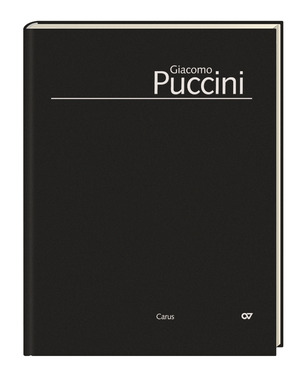
Composizioni per organo
Edizione Nazionale delle Opere di Giacomo Puccini, II/2.1
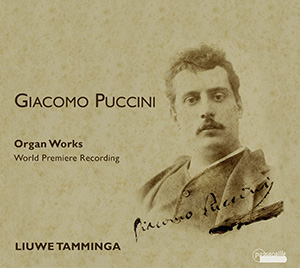
The organ is the instrument on which the young Giacomo Puccini began his career as a musician. Through the rediscovery of a considerable number of hand-written pieces, which he composed after 1870 as part of his duties as organist in the churches of Lucca, several primary sources are now available. These give an insight into the beginnings of his musical activities which have only been known about from anecdotes from his first biographers until now.
Puccini’s organ repertoire includes works which were typical for liturgical organ music at that time: sonatas for the main sections of the mass, versets which were substituted for Gregorian chant, marches, which were played after the mass (exceptionally even waltzes), and even a pastorale for Christmas time.
This music was written with the sound of instruments made in Tuscany in mind. These have just one manual, a 8 foot Principale register and a small pedalboard always coupled to the manual. In addition there were several solo stops divided into "bass" and "soprano".Puccini contributed with originality to the renewal of Italian organ practice, which began in his day to discard its operatic style in favor of a style more suited to the liturgy.
Puccini’s organ repertoire includes works which were typical for liturgical organ music at that time: sonatas for the main sections of the mass, versets which were substituted for Gregorian chant, marches, which were played after the mass (exceptionally even waltzes), and even a pastorale for Christmas time.
This music was written with the sound of instruments made in Tuscany in mind. These have just one manual, a 8 foot Principale register and a small pedalboard always coupled to the manual. In addition there were several solo stops divided into "bass" and "soprano".Puccini contributed with originality to the renewal of Italian organ practice, which began in his day to discard its operatic style in favor of a style more suited to the liturgy.
Découvrir
 Consulter

Acheter
Informations complémentaires sur l'œuvre
Sommaire
-
Compositeur
Giacomo Puccini
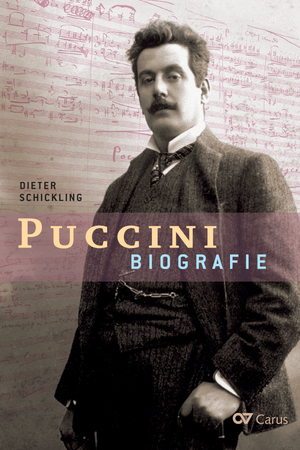
| 1858-1924Giacomo Puccini est issu d'une dynastie de musiciens d'église travaillant dans la ville toscane de Lucca. Sa Messa a 4 con orchestra, créée dans cette ville en 1880, semble le montrer sur cette voie, mais il entre immédiatement au Conservatoire de Milan dans le but de devenir compositeur d'opéra. C'est là qu'il écrivit ses seules pièces orchestrales indépendantes, Preludio sinfonico (1882) et Capriccio sinfonico (1883), ainsi que quelques-uns de ses 16 chants pour piano (canti), qui ont été conservés dans leur intégralité et qu'il composa presque tout au long de sa carrière en faisant souvent référence à ses opéras. C'est avec Manon Lescaut (1893) qu'il perce en tant que compositeur d'opéras ; entre 1893 et 1904, il compose ses œuvres les plus jouées à ce jour, La Bohème, Tosca et Madama Butterfly. Ces dernières années, on s'est rendu compte que l'ensemble de l'œuvre de Puccini nécessitait une réévaluation. Il est ainsi de plus en plus considéré comme un musicien à la recherche d'un nouveau départ vers la modernité. Plus d'information sur la personne
-
Éditeur
Virgilio Bernardoni
Critiques
... Die Neu- bzw. Erstausgabe bietet mit ihrer heiter-beschwingten Musik den Interpreten und Interpretinnen Gelegenheit, sich auch dort zu profilieren, wo Orgelmusik derzeit einen eher schweren Stand hat.
Joachim Schreiber, Ars Organi, Sept. 2019
Les évaluations sur notre site web ne peuvent être effectuées que par des clients disposant d'un compte d'utilisateur enregistré. Il n'est pas vérifié si les produits évalués ont été effectivement achetés.
Aucune évaluation disponible pour ce produit.
Questions fréquentes sur l'œuvre
 Il n'y a pas encore de questions et réponses concernant cette œuvre ou vous n'avez pas trouvé la réponse à votre question sur l'œuvre ? Cliquez ici et envoyez votre question spécifique à notre service clients.