

Oratorio de l’Ascension
Oratorium Festo Ascensionis Christi BWV 11, 1735
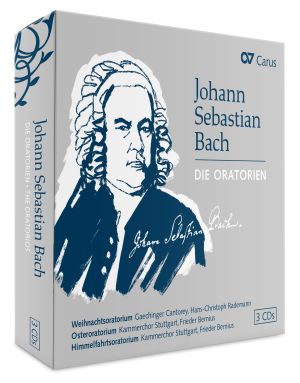
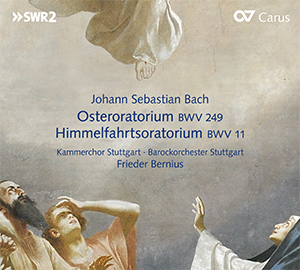
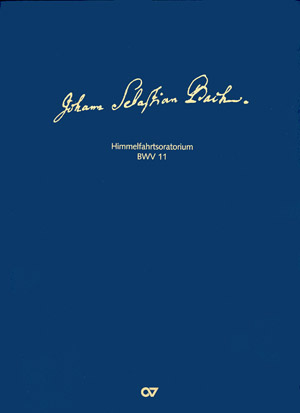
L’Oratorio de l’Ascension BWV 11 a été écrit pour les fêtes de l’année liturgique 1734/35. En raison de son caractère et de ses dimensions, il fait penser aux cantates de Bach, mais à cause de la narration biblique par un évangéliste, il doit être considéré comme un oratorio. Pour les choristes, les défis résident dans le tempo majoritairement rapide et les coloratures, qui expriment la joie provoquée par l’Ascension du Christ.
L’enregistrement original a été réalisé avec un accordage d’époque. Il sonne environ un demi-ton plus grave que l’accordage moderne de notre piano.Il suffit de s’exercer. Partout. A tout moment.
Que ce soit à la maison sur votre tablette ou votre PC ou en déplacement sur votre smartphone : avec carus music, the Choir Coach, vous avez toujours vos œuvres chorales avec vous pour vous entraîner ! Avec l’application chorale de carus music, vous pouvez écouter votre partition ainsi qu’un enregistrement de première qualité sur n’importe quel appareil et vous entraîner facilement à votre propre partie de chœur avec un coach. Avec carus music, la préparation de vos concerts est facile, efficace et amusante à maîtriser !
Interprètes: Joanne Lunn (soprano), David Allsopp (alto), Samuel Boden (tenore), Tobias Berndt (basso) - Kammerchor Stuttgart, Barockorchester Stuttgart - Frieder Bernius
Découvrir
 Ecouter
(11)
Ecouter
(11)
- Coro: Lobet Gott in seinen Reichen
- Recitativo (T): Der Herr Jesus hub seine Hände auf
- Recitativo accompagnato (B): Ach, Jesu, ist dein Abschied schon so nah?
- Aria (A): Ach, bleibe doch, mein liebstes Leben
- Recitativo (T): Und ward aufgehoben zusehends
- Corale: Nun lieget alles unter dir
- Recitativo (TB): Und da sie ihm nachsahen gen Himmel fahren
- Recitativo accompagnato (A): Ach ja! so komme bald zurück
- Recitativo (T): Sie aber beteten ihn an
- Aria (S): Jesu, deine Gnadenblicke
- Corale: Wenn soll es doch geschehen
 Compléments
- Acheter des compléments au format téléchargement.
-
 Texte numérique (sans notes), licence d'impression incluse, fichier html, paroles, traduction en anglaisfichier html, paroles, traduction en anglais (Extrait)1. Coro
Praise to God on high in heaven,
2. Recitativo (T)
praise him all ye earthly creatures,
sing his praise with loud acclaim!
Praise him all ye hosts of heaven,
men and angels join in chorus,
sing and praise his holy name.Then did Jesus lift up his hands on high and gave unto them his blessing; it came to pass, that as he blessed them, he rose to heaven.
3. Recitativo accompagnato (B)Ah, Jesus must thou go away so soon?
4. Aria (A)
Ah, is the hour already come,
when thou and I must needs be parted?
Ah, look now, see the bitter teardrops
that down our pallid cheeks are rolling,
’tis thee for whom we’re yearning,
’tis thou who dost our cares allay.
Ah, go thou not away!Ah, leave me not, my dearest Saviour,
5. Recitativo (T)
ah, linger yet a while with me.
Thy farewell and the empty morrow
bring to me deepest, darkest sorrow;
ah, Lord abide a while with me;
with thee away is all disaster.And before their eyes he was taken away up to heaven, and the clouds of heav’n from out their sight received him; there he reigns with the Father Almighty!
6. CoraleRuler art
...
-
Texte numérique (sans notes), licence d'impression incluse, fichier html, paroles, originalfichier html, paroles, original (Extrait)1. Coro
Lobet Gott in seinen Reichen,
2. Recitativo (T)
preiset ihn in seinen Ehren,
rühmet ihn in seiner Pracht!
Sucht sein Lob recht zu vergleichen,
wenn ihr mit gesamten Chören
ihm ein Lied zu Ehren macht!Der Herr Jesus hub seine Hände auf und segnete seine Jünger, und es geschah, da er sie segnete, schied er von ihnen.
3. Recitativo accompagnato (B)Ach, Jesu, ist dein Abschied schon so nah?
4. Aria (A)
Ach, ist denn schon die Stunde da,
da wir dich von uns lassen sollen?
Ach, siehe, wie die heißen Tränen
von unsern blassen Wangen rollen,
wie wir uns nach dir sehnen,
wie uns fast aller Trost gebricht.
Ach, weiche doch noch nicht!Ach, bleibe doch, mein liebstes Leben,
5. Recitativo (T)
ach, fliehe nicht so bald von mir!
Dein Abschied und dein frühes Scheiden
bringt mir das allergrößte Leiden,
ach ja, so bleibe doch noch hier;
sonst werd ich ganz von Schmerz umgeben.Und ward aufgehoben zusehends und fuhr auf gen Himmel, eine Wolke nahm ihn weg vor ihren Augen, und er sitzet zur rechten Hand Gottes.
6. CoraleNun lieget alles unter dir,
...
-
Texte numérique (sans notes), licence d'impression incluse, fichier html, Texte introductif, en anglaisfichier html, Texte introductif, en anglais (Extrait)Text from the CD Carus 83.290
Ulrich Leisinger
Translation: Ulrich Leisinger, John Coombs“A sacred oratorio [... ] is nothing other than a poem intended to be set to music which presents a certain sacred action or virtue in a dramatic manner.” These words are found in issue 20 of the Critischer Musikus, a weekly magazine about music, by which, between 1737 and 1740, Johann Adolph Scheibe, a student and sometimes rebellious critic of Johann Sebastian Bach, intended to introduce a wider audience to the music of his time. According to Scheibe, “the arrangement of the words consists of biblical sayings, arias, cavatas, recitatives, chorales, or short excerpts from psalms and songs of praise.” Oratorios can be either dramatic, if they include personages, which may be taken either from the bible or be freely invented, with regard to poetic considerations; but at the same time they can also be “poetic and prosaic”, namely when the text is based on the narrative accounts of the Evangelist from the Bible, for example in the Passion or the Resurrection histories. One could object, says Scheibe, that such an oratorio shows a certain tendency towards the epic, “but since the Evangelist, who in
...
-
Texte numérique (sans notes), licence d'impression incluse, fichier html, Texte introductif, en allemandfichier html, Texte introductif, en allemand (Extrait)Booklet-Text der CD Carus 83.290
Ulrich Leisinger
„Ein geistliches Oratorium [... ] ist nichts andres, als ein Singgedicht, welches eine gewisse geistliche Handlung oder Tugend auf dramatische Art vorstellet“, heißt es im 20. Stück des Critischen Musikus, einer Wochenschrift über Musik, mit der der Bach-Schüler und gelegentlich vorwitzige Bach-Kritiker Johann Adolph Scheibe in den Jahren 1737 bis 1740 einem breiteren Publikum Einblick in die Musik seiner Zeit geben wollte. „Die Einrichtung der Worte“, fährt Scheibe fort, „besteht aus biblischen Sprüchen, Arien, Cavaten, Recitativen, Choralen, oder kurzen Sätzen aus Psalmen und Lobgesängen.“ Oratorien können entweder dramatisch eingerichtet sein, indem sie handelnde, teils biblische, teils aus dichterischen Erwägungen heraus hinzugefügte Personen aufweisen; sie können aber auch „poetisch und prosaisch“ zugleich sein, nämlich dann, wenn sie als Textgrundlage den Evangelienbericht – etwa der Passions- oder der Auferstehungshistorie – aus der Bibel verwenden. Zwar ließe sich einwenden, so Scheibe, dass ein derartiges Oratorium in der Grundtendenz episch angelegt sei,
...
Acheter
Informations complémentaires sur l'œuvre
Sommaire


-
Compositeur
Johann Sebastian Bach
| 1685-1750Jean-Sébastien Bach compte parmi les compositeurs les plus importants de l'histoire de la musique occidentale. Il était issu d'une dynastie de musiciens très ramifiée, qui a donné naissance à de nombreux musiciens municipaux et organistes dans la région de Thuringe et de Saxe.
Bach vocal
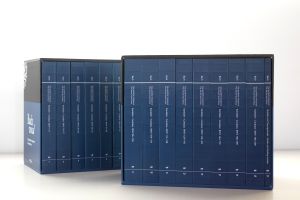
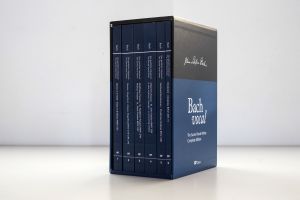
Depuis la création des éditions Carus, l’édition des œuvres de Jean-Sébastien Bach constitue pour nous une priorité particulière. À l’occasion de l’année commémorative de la Réforme, nous avons achevé le projet « Bach vocal ». La musique vocale sacrée de Bach est désormais disponible dans son intégralité sous forme d’éditions modernes « Urtext », accompagnées du matériel d’exécution. Une édition complète de toutes les partitions, présentée dans un coffret de grande qualité, est également disponible. Traduit avec DeepL.com (version gratuite)
Plus d'information sur la personne
-
Chœur
Kammerchor Stuttgart
The Kammerchor Stuttgart is regarded as one of the best ensembles of its kind. Over its fifty-year existence, Frieder Bernius has developed the choir into an exceptional ensemble acclaimed by audiences and press alike. This has led to invitations for the choir to perform at all the important European festivals. In Germany the chamber choir performs at festivals and in concert halls in repertoire ranging from the 17th to the 21st century. Frieder Bernius and his ensemble have received numerous accolades for their contribution to new music. The Kammerchor Stuttgart has made over 80 CDs and LPs, numerous of which have been awarded international recording prizes (including the Edison award, Diapason d’or, Gramophone Choice, Classical Internet Award, International Classical Music Award, and German Record Critics’ Award prizes). The International Federation for Choral Music has invited the ensemble to sing at the 1st, 4th and 10th World Symposia on Choral Music in Vienna, Sydney and Seoul. Regular tours of North America and Asia since 1988 and a South America tour reflect the Kammerchor Stuttgart’s international reputation. Since 1984 the top ensemble has also been invited to Israel biennially. Plus d'information sur la personne
-
Orchestre
Barockorchester Stuttgart
The Barockorchester Stuttgart, which was founded by Bernius in 1985, specializes in 18th century music. The musicians are among the leading representatives of historical performance practice and perform exclusively on original instruments. The ensemble dedicates itself to a large extent to the revival of 18th century operas. It has performed at numerous international festivals, among others in Rome, Dresden and Göttingen. Plus d'information sur la personne
-
Chef d'orchestre
Frieder Bernius
| 1947Le travail de Frieder Bernius jouit d’une grande reconnaissance à l’échelle mondiale. Il est très sollicité à l’international, tant comme chef d’orchestre que comme professeur. Ses partenaires artistiques sont principalement le Chœur de chambre de Stuttgart, l’Orchestre baroque de Stuttgart, la Hofkapelle de Stuttgart et la Philharmonie classique de Stuttgart. C’est en 1968, avec la création du Chœur de chambre de Stuttgart, qu’il a posé les bases de sa carrière exceptionnelle, qu’il a rapidement fait de cet ensemble l’un des plus éminents de son genre. Qu’il s’agisse d’œuvres vocales de Monteverdi, Bach, Haendel, Mozart, Beethoven, Fauré et Ligeti, de musiques de théâtre de Mendelssohn ou de symphonies de Haydn, Burgmüller et Schubert, le travail de Frieder Bernius vise toujours un son à la fois fidèle à l’idéal sonore original et d’une personnalité incomparable. Il se consacre aussi bien à la redécouverte d’opéras du XVIIIe siècle qu’aux créations de compositions contemporaines. Il porte un intérêt particulier à l’histoire de la musique du sud-ouest de l’Allemagne. Le travail de Frieder Bernius est largement documenté sur disques et CD sous le label Carus. De nombreux enregistrements ont été récompensés par des prix internationaux. Dans le cadre du Festival choral allemand de Stuttgart, Frieder Bernius s’est vu décerner un CD d’or par les éditions Carus pour son intégrale de la musique vocale sacrée de Felix Mendelssohn Bartholdy. Plus d'information sur la personne
-
Solist - soprano
Joanne Lunn
Joanne Lunn, soprano, studied at the Royal College of Music in London, where she won the renowned Tagore Gold Medal. She regularly concertizes as a soloist with all the renowned early music ensembles. She gave her opera debut at the English National Opera in Monteverdi’s L’incoronazione di Poppea and sang the role of Helena in Britten’s A Midsummer Night’s Dream in Venice, as well as singing in Monteverdi’s L’Orfeo in Paris and Beijing. In the field of oratorio, Joanne Lunn has worked together with conductors such as Bernius, Minkowski, Norrington and Suzuki. Plus d'information sur la personne
-
Solist - alto
David Allsopp
David Allsopp underwent the typical English training as a singer: he began as a choirboy in Rochester and was a choral scholar at King’s College, Cambridge. After completing his studies, he moved to Westminster Cathedral in London before venturing out on a freelance career. He works closely with groups such as Tenebrae, Polyphony, the Gabrieli Consort and Gallicantus. Thanks to his career path, he is just as familiar with the music of the Middle Ages, the Renaissance and the Baroque (especially Bach and Handel) as he is with the music of contemporary composers. Plus d'information sur la personne
-
Solist - ténor
Samuel Boden
The tenor Samuel Boden studied at Trinity College of Music in London with John Wakefield and graduated with distinction in 2006. His repertoire is very broad and includes operas and oratorios ranging from the Baroque to the modern period. His concert repertoire includes, among others, works by Bach, Mozart, Britten and Charpentier. CD recordings of Monteverdi's "Vespers 1610" with the Orchestra of the Age of Enlightenment, cantatas by Pachelbel und Bach, as well as Bach's "B Minor Mass" document his predilection for Baroque music. Plus d'information sur la personne
-
Solist - basse
Tobias Berndt
Tobias Berndt began his musical education in the Dresden Kreuzchor. He studied with Christian Polster in Leipzig and continued his training with Rudolf Piernay in Mannheim. He also studied with Dietrich Fischer-Dieskau and Thomas Quasthoff. He was a laureate in numerous renowned singing competitions, winning – among others – the International Das Lied Competition in Berlin, the International Brahms Competition and the Cantilena Singing Competition. Tobias Berndt has also established himself abroad as an opera and concert singer. He has collaborated with conductors such as Philippe Herreweghe, Helmuth Rilling, Frieder Bernius, Teodor Currentzis, Marcus Creed, Hans-Christoph Rademann, Andrea Marcon, Marek Janowski and Sir Roger Norrington and has performed at the Berliner Philharmonie, the Tonhalle in Zurich, the Concertgebouw Amsterdam, the Leipzig Gewandhaus, the Tchaikovsky Concert Hall in Moscow, the Teatro Colon in Buenos Aires and at Lincoln Center in New York. He has also performed at important festivals such as the Prague Spring, the Rheingau Musik Festival, the Händel Festivals in Göttingen und Halle, the Bachfest Leipzig, the Oregon Bach Festival and the International Music Festival in Peking. An extensive discography attests to his versatile artistic activities. Plus d'information sur la personne
Les évaluations sur notre site web ne peuvent être effectuées que par des clients disposant d'un compte d'utilisateur enregistré. Il n'est pas vérifié si les produits évalués ont été effectivement achetés.
Aucune évaluation disponible pour ce produit.
Questions fréquentes sur l'œuvre
 Il n'y a pas encore de questions et réponses concernant cette œuvre ou vous n'avez pas trouvé la réponse à votre question sur l'œuvre ? Cliquez ici et envoyez votre question spécifique à notre service clients.