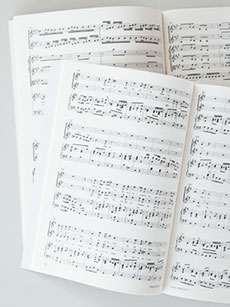
Das Posthorn. Concerto in B
Bearbeitung für Blockflötenquartett RV 363
-
Komponist*in
Antonio Vivaldi
| 1678-1741Antonio (Lucio) Vivaldi war ein italienischer Komponist und Geiger der Barockzeit.
Es wird angenommen, dass sein Vater, der selbst Musiker war, für Vivaldis musikalische Ausbildung verantwortlich war. Seine berufliche Laufbahn begann er jedoch als Priester, was ihm in Venedig den Spitznamen Il prete rosso (der rothaarige Priester) einbrachte.
Ab 1703 arbeitete Vivaldi mit Unterbrechungen bis kurz vor seinem Tod als Geigenlehrer und Komponist am Ospedale della Pietà, einem Waisenhaus für Mädchen in Venedig. Zunächst war er dort auch als Priester tätig, gab diese Tätigkeit aber nach drei Jahren wieder auf. Für seine Schülerinnen an der Pietà schrieb er zahlreiche Kammermusikwerke und Konzerte. Die berühmten Vier Jahreszeiten sind besonders bekannt und werden heute oft aufgeführt. Vivaldi komponierte unter anderem auch geistliche und weltliche Vokalmusik und war Opernkomponist und Intendant.
Von den über 800 Werken, die heute bekannt sind, wurden zu Vivaldis Lebzeiten nur 135 veröffentlicht. Nach seinem Tod gerieten die Kompositionen Vivaldis zunächst weitgehend in Vergessenheit. Viele seiner Werke wurden erst im 20. Jahrhundert wiederentdeckt und veröffentlicht. Darunter ist auch das Gloria in D RV 589, die allererste Notenausgabe des Carus-Verlags.
zur Person
-
Bearbeiter*in
Conny Campagne
| 1922-2022
Rezensionen
CONCERTO IN B FLAT MAJOR ”POSTHORN”
CONCERTO IN B FLAT MAJOR ”POSTHORN”
Conny Campagne’s arrangement of the ”Posthorn” Concerto, RV363, is unusual in being set for an ensemble of sopranino, alto, tenor, and bass. The upper part, by design, stands apart from the rest of the ensemble (reaching a high F on occasion), thereby reflecting its rote in carrying the majority of the solo violin part. The leaping octave figure in the first movement, from which the concerto takes its name, is matched by a highly ornamented middle movement and a lively concluding 3/8 Allegro. This work is almost up to the level of difficulty of the Dolmetsch arrangements and would be most suitable for an advanced ensemble.
The level of accuracy is quite high in all of these editions with only an occasional misplaced rest or ornament. They are generally free of unnecessary editorial suggestions, allowing ensembles to find their own solutions to the problems of translating the original string (or organ) textures. The Dolmetsch editions are the most fully marked (including metronome marks), but always clearly and musically. These editions will give pleasure to performers and audiences alike and are a good war for recorder players to experience the Vivaldian concerto style „from the inside” in much the same spirit as Bach’s organ transcriptions.
Quelle: American Recorder, Jan. 2002, S. 22f.
Bewertungen auf unserer Website können nur von Kund*innen mit registriertem Nutzerkonto abgegeben werden. Eine Überprüfung, ob die bewerteten Produkte tatsächlich erworben wurden, findet nicht statt.
Häufige Fragen zum Werk
 An dieser Stelle gibt es noch gar keine Fragen und Antworten zum Werk oder Ihre spezifische Frage zum Werk wurde noch nicht beantwortet? Klicken Sie hier und reichen Sie Ihre werkspezifische Frage bei unserem Kundenservice ein!