Anyone who is familiar with Bruckner’s symphonies and great masses will probably be astonished upon hearing his Missa solemnis of 1854: can the tradition of the Viennese classics still be so clearly evident in a work by Bruckner? And yet, isn’t it...
Full score, foreword in German and English
more
Dvorák’s mighty Requiem was commissioned for Birmingham’s renowned music festival. Since its premiere there in 1891 under the composer’s direction, it has enjoyed huge popularity. Although based on the liturgical Latin text, it was conceived from...
Full score, foreword in German and English
more
As Kapellmeister at Dresden’s royal theater, Carl Maria von Weber’s primary task was to establish a German opera. However, it was also part of his duties to take care of church music every three weeks. This assignment was gladly accepted by the...
Full score, foreword in German and English
more
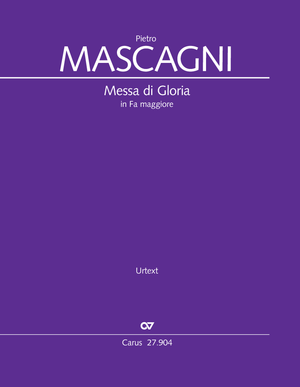
Looking for some operatic drama for your church choir? Then the Messa di Gloria for soloists, choir and orchestra by Pietro Mascagni is just up your alley. Acclaimed throughout the world for his brilliant Cavalleria rusticana, Mascagni wrote this...
Full score, foreword in German and English
more
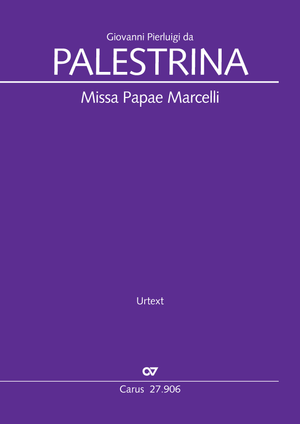
Giovanni Pierluigi da Palestrina’s Missa Papae Marcelli is one of the most famous works of the Renaissance age. And it’s not just the early 17th-century myth that this piece “saved” polyphonic sacred music from being banned by the Council of Trent...
Full score, foreword in German, English and Italian
more
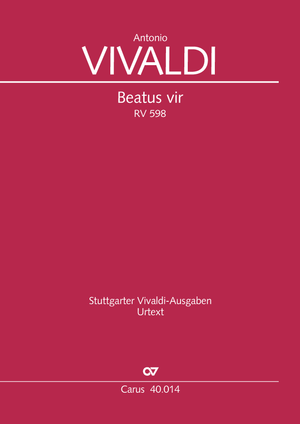
Antonio Vivaldi made three settings of Psalm 111 (112) “Beatus vir” (“Blessed is the man who fears the Lord”). The two surviving examples could hardly be more different: the large-scale RV 597 (Carus 40.012/00) for double choir and the small but...
Full score, foreword in German and English
more
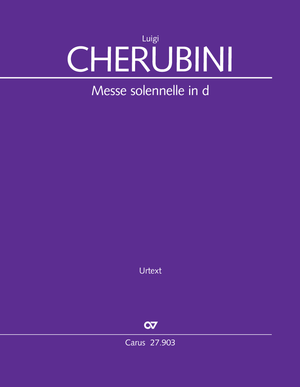
How does a composer apply for a position at court? With their own music, of course! When, in 1810, Luigi Cherubini wanted to recommend himself as Joseph Haydn’s successor at the court of the Hungarian Prince Nikolaus II. Esterházy, he composed his...
Full score, foreword in German and English
more
Goethe’s “Lied der Parzen” tells us “So sangen die Parzen” (Thus sang the Parcae). These were the goddesses of destiny in Greek and Roman mythology. The excerpt from the play Iphigenie auf Tauris inspired Johannes Brahms to create his Gesang der...
Full score, foreword in German and English
more