

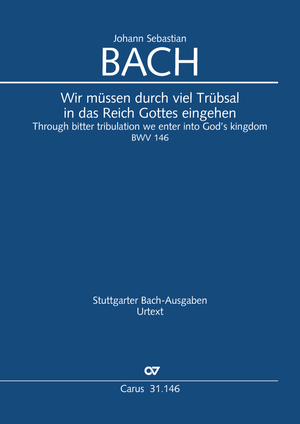
Full score
moreFrieder Bernius - favorite cantata
Wir müssen durch viel Trübsal in das Reich Gottes eingehen BWV 146
Through bitter tribulation we enter into God's kingdom
Cantata BWV 146 is one of the less known works, and is the very first cantata which I myself performed in 1971. Not only for that reason has it remained one of my favorite cantatas.
When we hear the opening, it immediately strikes as familiar: the beginning of the Harpsichord Concerto in D minor! What does this have to do with the title of the cantata, with "Trübsal" [tribulation]? Or with the "Eingehen in das Reich Gottes" [entering into the kingdom of God]? We soon realize that it is not the introduction to an opening chorus, but an introductory sinfonia with an organ solo part instead of the harpsichord. We call this secondary exploitation nowadays. Is it a coincidental choice? But could the key of D minor not also correspond with the "Trübsal" [tribulation] and the concertante-rhythmic style be interpreted as joy at the "Reich Gottes" [kingdom of God].
Now we come to the second movement. Only now do we hear the text of the cantata, set in G minor and in a four-part setting, but this time entirely without any instrumental introduction which is unusual. The orchestra underlies the choral writing with a theme played in unison which is again well-known to us: it is the slow movement of the Harpsichord Concerto! A passacaglia, the theme of which constantly repeats and gives the upper parts the opportunity to depict the tribulation through the broken dominant seventh chord of the bass line. What an overwhelming combination of instrumental concerto and choral writing! Who else could write like this other than Bach, without recourse to earlier models?
In the following aria in B flat major the alto frees herself from so much tribulation in a duet with a violin and with ascending motifs to the text "ich will nach dem Himmel zu", but not without looking back at "schnödes Sodom" [wicked Sodom] with sighing nine-seven chords. In the B section of the da capo aria, the theme at "meines Bleibens ist nicht hier" seems famililar to us – we recognize it as the theme of the cantata (and an organ fugue) Ich hatte viel Bekümmernis. That is what is special about Bach: we can reconstruct his compositional thought process and at the same time enjoy the musical result!
How else could the following soprano accompagnato recitative with the words "Ach" [Ah!], "böse Welt" [evil world], "Weinen" [weeping], "Seufzer" [sighs], "Leid" [sorrow] be treated compositionally than with diminished chords, chromatic lines and sighing suspensions? And the following soprano aria? I still remember as if it were yesterday my feelings of happiness at hearing the duet with the flute, accompanied by two oboes d'amore. How it constantly changes between the D minor of "Zähren" [tears] and the "bangem Herzen" [anxious heart] and the F major of the "Herrlichkeit" [glory] and the "Tage der seligen Ernte" [day of the blessed harvest]. And in the tenor/bass duet "Wie will ich mich freuen" [How shall I rejoice], which ends the cantata: can anyone rejoice ["freuen"] and be refreshed ["laben"] more appropriately in music – rhythmically, metrically and melodically – than in this minuet for two voices?
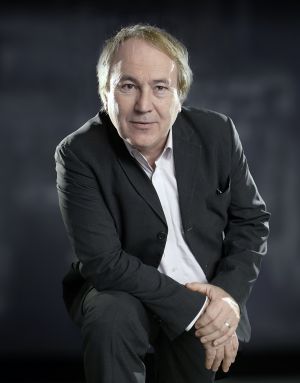
Foto: © Gudrun Bublitz