Nature and Lyricism in Romantic Choral Works

From Mendelssohn’s Im Freien zu singen via Fanny Hensel’s Gartenlieder to Schubert’s Gott in der Natur – many Romantic choral works bring blooming gardens and idyllic landscapes to life. We invite you to discover more of these beautiful pieces – perhaps you’ll find some inspiration for your next concert?

  • Felix Mendelssohn-Bartholdy: Im Freien zu singen

    These choral works intended for outdoor performance reflect Mendelssohn’s melodic and harmonic sophistication. With their emotional depth and thoughtful choral writing, these pieces are especially suitable for singing in gardens or similar open-air venues, where the lyrical and nature-inspired themes truly come into their own.

  • Fanny Hensel: Gartenlieder (Garden Songs)

    Inspired by her family’s Sunday musical gatherings, Hensel composed settings of six Romantic poems, each one rich with recurring motifs of nature and memorable melodies. These pieces constitute a vibrant and melodically diverse treasure trove for choirs.

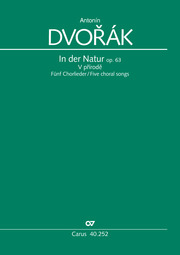
  • Antonín Dvorák: In der Natur. Five Choral Songs

    Dvorák’s choral songs from op. 63 appear simple, but they’re full of expressive emotion and subtle intensity. These masterful works leave a lasting impression.

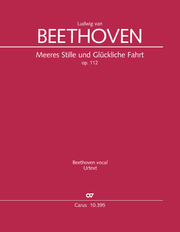
  • Ludwig van Beethoven: Calm Sea and Prosperous Voyage

    Beethoven never actually ventured out to sea, yet his 1815 composition continues to captivate listeners to this day. He set to music both the still surface of motionless waters—an image that, in the age of sailing ships, signified nothing but immobility and delay—and the rising wind that finally brings about the long-awaited “Prosperous Voyage”.

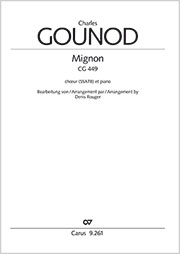
  • Charles Gounod: Mignon

    In Goethe’s novel Wilhelm Meister’s Apprenticeship, Mignon embodies a longing for Italy. Gounod captures this yearning for an Italian paradise through wistful melodies and a piano accompaniment bursting with flowing triplets. Choral arrangement by Denis Rouger. 

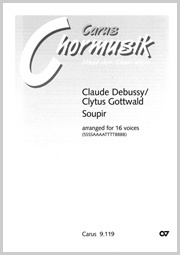
  • Claude Debussy: Soupir

    Debussy’s Soupir, masterfully arranged by Clytus Gottwald for 16-part choir, unfolds with floating harmonies and a dreamy text, expressing the melancholic beauty of nature. 

  • Niels Gade: Five Songs, Op. 13

    Danish composer Niels Gade wrote these a cappella pieces while studying under Felix Mendelssohn in Leipzig. With homophonic textures and subtle chromaticism, these songs are steeped in Romantic poetry inspired by the seasons, the morning light, water lilies, and walks in the woods.

  • Franz Schubert: Gott in der Natur

    In this choral work, Schubert powerfully expresses God’s majestic greatness and might. The forces of nature and the divine presence come to life in the music through dynamic contrasts and arresting texts.

  • Maurice Ravel: Matinée de Provence

    This work for choir and orchestra describes a morning in Provence with colorful harmonies and catchy melodies. Despite strict competition conditions at the “Prix de Rome” composition competition, the work impressively demonstrates Ravel's characteristic musical language.

  • Maurice Ravel: L'Aurore

    Ravel's fifth and last unsuccessful attempt at the “Prix de Rome” sparked a major controversy over the jury's lack of competence and impartiality. The description of nature at dawn makes full use of the orchestra's tonal colors and is easily feasible for the choir.