

Full score
moreHelmuth Rilling - favorite cantata
Der Himmel lacht!
Die Erde jubilieret
The heavens laugh, the earth exults in gladness. Cantata for Easter Sunday
BWV 31 (Carus 31.031)
The Easter story is vividly stamped onto each movement of this early cantata. Bach first greets the risen Christ with a magnificent Sinfonia dominated by the trumpets. All the instruments seem to rush past in unison, then praise the risen Lord in soloistic passages and chordal blocks. In the introductory chorus, unusually in five parts, Bach’s allegro music has a captivating, enthusiastic character. He follows this with an adagio section, harmonically recalling the preceding Passion story, and ends with a third section which takes up the vitality of the opening.
Bach writes a two-part recitative and aria for each of the three soloists. The constant change of tempo in the recitatives results in an exceptionally varied and lively interpretation of the text. The first aria for the bass is accompanied only by continuo. The beginning of the text “Fürst des Lebens, starker Streiter” sets off a majestic dotted rhythm which defines the whole piece. Bach embeds the tenor aria “Adam muss in uns verwesen” in a movement for strings. This has a liveliness through the constant sixteenth notes in the upper part, but also a warmth through the scoring for two viola parts. The third aria “Letzte Stunde brich herein” unfolds as a dialog between soprano and oboe. Line by line, the chorale “Wenn mein Stündlein vorhanden ist” is also heard in the violins and violas. The hope of a continued personal life after death is expressed in an enraptured, meditative way.
The final verse of the same hymn appears as the final chorale: “So fahr ich hin zu Jesu Christ”. As is often the case, the chorale is sung in a four-part setting by the chorus. In addition Bach gives the first trumpet and the first violin an obbligato part – the radiance of the resurrection shines on the chorale. The fermata at the end of the lines are notated on quarter notes. For the upper part Bach places the fermata an eighth note later. It is moving how the urgent hope of life after death gains expression in the final chorale through this device.
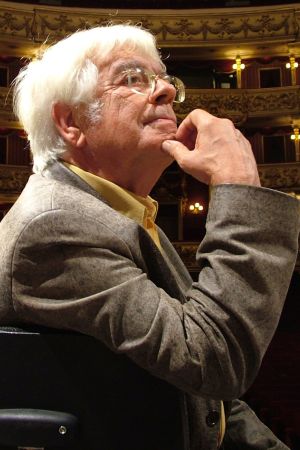
Helmuth Rilling’s career as a conductor is closely associated with J. S. Bach in many ways. He was the first conductor to record all the sacred Bach cantatas on LP record. In 2000 under his overall artistic direction, the first complete recording of all the works of Bach came to fruition. He was Artistic Director of the Internationale Bachakademie Stuttgart which he founded, and President of the Neue Bachgesellschaft from 1990 to 1996.
Photo: © Holger Schneider