Settings of Rilke
In 2025 we will celebrate the 150th anniversary of the birth of Rainer Maria Rilke, whose poems have been set to music in numerous choral compositions. Here we’ve put together a selection of a cappella works from our Carus catalog. These choral works encompass contrasting sound worlds which both reinforce Rilke's visions of loneliness and spiritual longing, and also bring the complexity of the poems to life through the polyphonic effect of multiple voices. We hope you enjoy discovering this music!
  • Franz Schreker / Clytus Gottwald: Drei Lieder

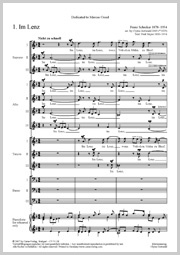
    With his transcriptions for mixed choir with six to thirteen parts Clytus Gottwald has created a masterful realization of Frank Schreker’s Drei Lieder in a uniquely captivating sound language. The third song in particular, Und wie mag Liebe (And How May Love) on a text by Rainer Maria Rilke, evolves from quiet, lyrical passages to a dynamic climax, and in Gottwald’s arrangement the song is emotionally powerfully underlined.
  • Leo Langer: Pietà

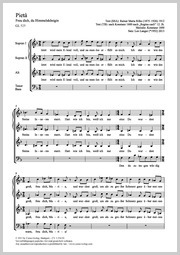
    Pietà by Leo Langer is a choral work for five-part mixed choir (SSATB) of a very easy level of difficulty, combining  two powerful texts. The women's voices sing a poem by Rainer Maria Rilke, whose melancholy and profound language determines the expressiveness of the work. The men's voices sing the text of the traditional Regina Coeli from the 12th century, with Langer using the melody of a version dating from 1600 from the city of Konstanz.

  • Claude Debussy / Clytus Gottwald: Des pas sur la neige

    Clytus Gottwald’s sophisticated transcription of Debussy’s Des pas sur la neige for 16-part chorus (SSSSAAAATTTTBBBB) lends a new vocal dimension to this piece, which was originally written for piano. At the suggestion of Heinz Holliger, Gottwald created a version that retains the sound and structural characteristics of the original while simultaneously integrating vocal techniques of New Music.

  • Wolfram Buchenberg: Liebes-Lied

    Wolfram Buchenberg’s Liebes-Lied was originally composed for a wedding service. Rilke’s poem is about the deep bond between lovers, symbolized by the image of two strings on a stringed instrument vibrating in unison. Buchenberg realizes this image in an impressive manner, with the split voice parts of the mixed choir reflecting the metaphorical connection and the harmonious interplay of the lovers. 

  • Cyrill Schürch: Ô bonheur de l'été

    In Ô bonheur de l'été Cyrill Schürch sets verses by Rilke which capture the colors and moods of nature in a poetically carefree Sunday mood. Schürch’s predominantly song-like compositional style reflects the compact, less lyrical nature of the poetry, while he uses dissonances sparingly and freely changes key. This approach presents an exciting challenge for choirs that would like to explore tone colors and emotional subtleties.

  • Cyrill Schürch: Après une journée

    Cyrill Schürch’s Après une journée is a delicate setting of Rilke’s poem describing the atmosphere of a peaceful evening after a stormy day. This composition for four-part mixed chorus begins quietly and builds to a more animated più mosso that depicts the evening's growing dynamism and the natural atmospheric changes. Schürch's predominantly homophonic, song-like writing makes sparing use of dissonance, which gives rise to comparisons with Hindemith’s compositions.

  • Cyrill Schürch: Vois-tu, là haut

    Cyrill Schürch’s Vois-tu, là haut for four-part mixed choir is a setting of a lyric poem by Rainer Maria Rilke that describes a picturesque vision of a landscape. After beginning in a lively vivace with accented marcati, the piece then reflects the changing moods of the text. The composition conveys the poetic, almost heavenly mood of Rilke's Walliser Vierzeiler (his French-language quatrains composed in Wallis) and the lyrical richness of nature.

  • Cyrill Schürch: Quel calme nocturne

    Quel calme nocturne is Cyrill Schürch’s sensitive setting of a Rilke poem which describes the soothing and mystical atmosphere of a nocturnal landscape. This piece for four-part mixed choir captures the meditative calm of the text with gentle rhythmic tempo changes.

  • Cyrill Schürch: Chemin qui tourne

    Cyrill Schürch’s Chemin qui tourne is a setting of Rilke’s quatrain about the path or journey and the grapevine, which metaphorically connects the flows of life and wine. This challenging work for four-part mixed choir moves at a playful, lively tempo and makes deliberate use of changes in tempo and rhythm. Schürch shapes the music with delicate vocal nuances, reflecting the poetic colorfulness of Rilke's texts.

  • Renato Miani: Die Worte des Engels

    The Words of the Angel by Renato Miani is based on a particularly profound Rilke poem about mystical communication with an angel. With its slow tempo, triplets and rhythmic variety, the setting underlines the spiritual and emotional depth of the text, while the male and female voices embody the increasing intensity of the encounter.