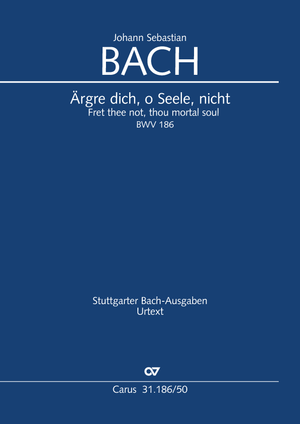
Fret thee not, thou mortal soul
Cantata for the 7th Sunday after Trinity BWV 186, 1723
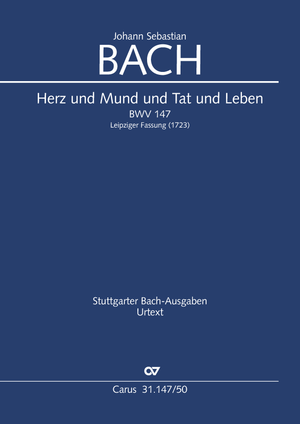
The cantata Fret thee not, thou mortal soul BWV 186 is in a sense the companion work to the much better known cantata Heart and mouth and thought and action BWV 147. Both were composed in Advent 1716 as Bach’s last two cantatas for the Weimar court, and both were re-worked for a different Sunday in Bach’s first Leipzig cantata cycle with the addition of recitatives and a large-scale chorale movement, heard at the end of both parts. The sound of the cantata BWV 186 is characterized by the four-part woodwind ensemble writing. The final chorale, heard twice, anticipates the opening choruses of the chorale cantatas from Bach’s second cycle.
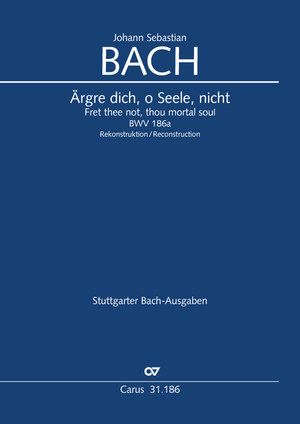
Cantata BWV 186 for the seventh Sunday after Trinity is a considerably expanded reworking of a Weimar Advent cantata of 1716. Only the text survives of the Advent cantata, but Diethard Hellmann has been able to reconstruct the work from the later version (Carus 31.186/00).
Explore


Purchase
Additional product information
-
Composer
Johann Sebastian Bach
| 1685-1750Johann Sebastian Bach is one of the most important composers of Western music history. He came from a widely ramified musical dynasty, which produced numerous musicians and organists in the Thuringian-Saxon area.
Bach vocal
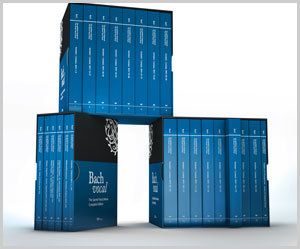
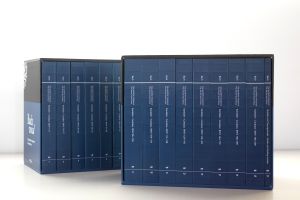
Ever since Carus-Verlag was founded in 1972, publishing the music of Johann Sebastian Bach has been a special focus for us. In the 2017 Reformation anniversary year we completed the Bach vocal project. Bach's complete sacred vocal works are now available in modern Urtext editions, together with performance material. A complete edition of all the full scores is also available in a high quality box set. Personal details
-
Editor
Uwe Wolf
| 1961As a musicologist, Dr. Uwe Wolf is particularly at home in the 17th and 18th centuries. The focus of his work ranges from the time of Monteverdi and Schütz to Bach and the generation of Bach's sons and pupils through to Viennese Classicism. He has been head of the editorial department at Carus-Verlag since October 2011. Prior to this, he worked in Bach research for over 20 years. Personal details
Reviews on our website can only be submitted by customers with a registered user account. A check whether the rated products were actually purchased does not take place.
No feedback available for this product.
Frequent questions about this work
 There are no questions and answers available so far or you were unable to find an answer to your specific question about this work? Then click here and send your specific questions to our Customer Services!