


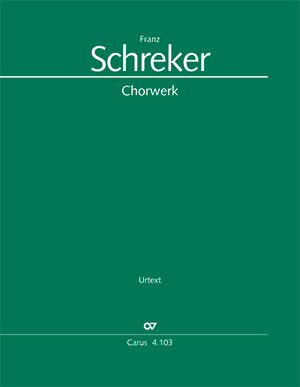
König Tejas Begräbnis (1899) shows how Schreker was influenced by his work with the Döblinger Männergesangverein, of which he was a member. In this work he set a text by Felix Dahn from Dahn’s historical novel, “Ein Kampf um Rom” (1876), which dealt with the collapse of the eastern Goths in the sixth century. The four-verse chorus, “Gebt Raum, ihr Völker, unserm Schritt,” is a verse taken from the last chapter of the novel. It describes how the last surviving Goths bring their fallen King Teja back to the mythical homeland of Thule. It is true, that the majestic work for four men’s voice is accompanied by a large orchestra, however the orchestral means are used sparingly, whether to support the choir, to provide a background (with string tremoli and timpani), or to play fanfares with horns and trombones.
Explore
 View
View

Purchase
Additional product information
-
Composer
Franz Schreker
| 1878-1934Franz Schreker was an Austrian composer and librettist. During his lifetime, Schreker was known alongside Richard Strauss as one of the most famous opera composers after Wagner. His late Romantic musical language also features expressionist elements. He wrote most of his opera libretti himself. In them, he created psychological portraits of his protagonists, some of which contain autobiographical references.
Franz Schreker's music was also denounced as ‘degenerate’ by the National Socialists, and it was not until the late 1970s that a renewed interest in Schreker's music began. Since then, more and more recordings of his music have been released.
Personal details
-
Editor
Christopher Hailey
-
Editor
Iris Pfeiffer
Reviews on our website can only be submitted by customers with a registered user account. A check whether the rated products were actually purchased does not take place.
No feedback available for this product.
Frequent questions about this work
 There are no questions and answers available so far or you were unable to find an answer to your specific question about this work? Then click here and send your specific questions to our Customer Services!