Giovanni Pierluigi da Palestrina’s Missa Papae Marcelli is one of the most famous works of the Renaissance age. And it’s not just the early 17th-century myth that this piece “saved” polyphonic sacred music from being banned by the Council of Trent which makes a performance of the Mass so appealing. Even apart from this legend and the work’s great history, it still captivates today due to the skilled setting of the text combined with a complex, multi-layered polyphony.
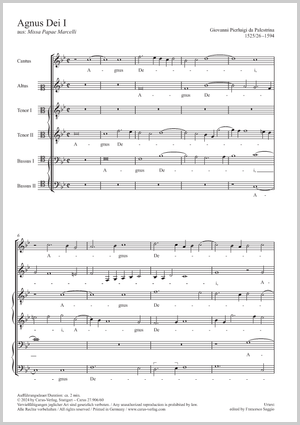
This edition by Italian musicologist Francesco Saggio is not only based on the earliest printed versions of the Mass, which first appeared in the 16th century, but also on two handwritten copies made during Palestrina’s lifetime that have been preserved in sacred collections. The edition also includes a second “Agnus Dei“, which until today has only been found in the manuscripts. The aim of the edition is to reproduce the earliest version of the score while at the same time revising it to meet modern performance requirements.
This separate edition offers choirs who are not (yet) familiar with the style a good opportunity to try out Palestrina's style.
Complete mass available under: Carus 27.906/00.
Explore
 View
View

Purchase
Additional product information
-
Composer
Giovanni Pierluigi da Palestrina
| 1525-1594The Italian Giovanni Pierluigi da Palestrina is one of the most important composers of the Renaissance. His oeuvre comprises around 950 compositions in the genres of motet, mass, madrigal, offertory, lamentatio, hymn, canzone, etc. His 'Missa Papae Marcelli' became particularly famous. His personal style, the contrapuntal vocal polyphony, predominantly a cappella, has become a model in church music for centuries. Palestrina was appointed papal singer at the Sistine Chapel in Rome in 1555 and was also organist and bandmaster in various churches in Rome and the surrounding area throughout his life. Personal details
-
Editor
Francesco Saggio
| 1981
Reviews on our website can only be submitted by customers with a registered user account. A check whether the rated products were actually purchased does not take place.
No feedback available for this product.
Frequent questions about this work
How do the individual editions of the movements differ from the score?
The individual editions are each transposed a whole tone lower to make them easier to sing.
 There are no questions and answers available so far or you were unable to find an answer to your specific question about this work? Then click here and send your specific questions to our Customer Services!