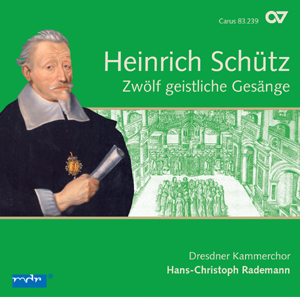
Stuttgarter Schütz-Ausgabe: Zwölf geistliche Gesänge (Gesamtausgabe, Bd. 15)
Stuttgart Schütz Edition

 Listen
(7)
Listen
(7)
- Kyrie, God Father throughout all time
- Glory to God upon his throne
- I belive in one god
- When our Lord was betrayed
- All thanks be to God
- Aller Augen warten auf dich
- Christe fac, ut sapiam
 Additional material
- Purchase additional material as a download product.
-
 Digital text (without sheet music) incl. printing licence, html file, singing text, english translationhtml file, singing text, english translation (Sample)
1. Kyrie, Gott Vater in Ewigkeit
„Missa brevis“ deutsch – Das Kyrie Kyrie, God Father throughout all time,
boundless is thy Grace divine,
Ruler and creator of all thing: eleison.
Jesus Christ, comfort supreme,
us sinners alone canst thou redeem.
Son of God, fount of love,
mediator, thou reign’st in heaven above;
we cry out in prayer our heartfelt despair: eleison.
Kyrie, O God, the Holy Ghost,
our faith increase to the uttermost,
that from this vale of woe
joyously singing to thee we will go: eleison.
Post-seal of the medieval Kyrie-Tropus "Kyrie fons bonitatis", Naumburg 1537
Translation: Derek McCulloch...
-
Digital text (without sheet music) incl. printing licence, html file, singing text, originalhtml file, singing text, original (Sample)
1. Kyrie, Gott Vater in Ewigkeit
„Missa brevis“ deutsch – Das Kyrie Kyrie, Gott Vater in Ewigkeit,
groß ist dein Barmherzigkeit,
aller Ding ein Schöpfer und Regierer: eleison.
Christe, aller Welt Trost,
uns Sünder allein du hast erlöst.
O Jesu, Gottes Sohn,
unser Mittler bist in dem höchsten Thron,
zu dir schreien wir aus Herzens Begier: eleison.
Kyrie, Gott Heiliger Geist,
tröst, stärk uns im Glauben allermeist,
dass wir am letzten End
fröhlich uns scheiden aus diesem Elend: eleison.
Nachdichtung des mittelalterlichen Kyrie-Tropus „Kyrie fons bonitatis“, Naumburg 1537...
-
Digital text (without sheet music) incl. printing licence, html file, Introductory text, englishhtml file, Introductory text, english (Sample)Text from the CD Carus 83.239
Oliver Geisler
Translation: Liz RobinsonFor “practical use”: Introduction A glance at music history always reveals more than just music. For music can also be regarded as a mirror or the essence of a whole culture. Indeed, even more importantly, studying and listening to music means learning something about societies and people. How valuable, therefore, are those works which are all too readily labelled “Gebrauchsmusik” (functional music) and consigned to oblivion in favor of the compositional high points of an era. Such works offer a glimpse into the workshops, laboratories, studies and living rooms of a society. Churches, castles and reception rooms are beautiful and imposing, but they also dazzle – because they are always designed to impress. Functional music is concerned with the everyday and with “real life.” And precisely because of this, such works are still performed today, even if they at first appear less grand.
Of the Zwölf geistliche Gesänge it is said that Schütz “sketched them in his spare time.” Evidently
...
-
Digital text (without sheet music) incl. printing licence, html file, Introductory text, germanhtml file, Introductory text, german (Sample)Booklet-Text der CD Carus 83.239
Oliver Geisler
Zum „nützlichen Gebrauch“: Einführung Ein Blick in die Musikgeschichte lässt einen immer mehr erkennen als nur Musik. Denn Musik kann auch als Spiegel oder Bündelung von Kultur insgesamt begriffen werden. Ja mehr noch: Musik zu betrachten und zu hören bedeutet, etwas über Gesellschaften zu erfahren und über Menschen. Wie wertvoll sind da jene Werke, die man als sogenannte „Gebrauchsmusik“ allzu gern zugunsten des kompositorischen Höhenkamms einer Epoche in die Versenkung schiebt! Kann man mit ihnen doch einen Blick in die Werkstätten, Experimentierstuben, Arbeits- und Wohnzimmer einer Gesellschaft erhaschen. Kirchen, Schlösser und festliche Säle sind schön und repräsentativ, sie blenden aber auch – weil sie immer schon auf Repräsentation angelegt sind. Gebrauchsmusiken haben etwas mit Alltag und dem „wahren Leben“ zu tun. Nicht zuletzt deshalb werden solche Werke auch heute noch gebraucht, auch wenn sie zunächst weniger glanzvoll
...
-
Digital text (without sheet music) incl. printing licence, html file, singing text, english translationhtml file, singing text, english translation (Sample)
2. All Ehr und Lob soll Gottes sein
„Missa brevis“ deutsch – Das Gloria in excelsis (Antiphona Angelorum) Glory to God upon His throne,
all praise to Him on high alone.
May here on earth His anger cease,
may He bestow His grace and peace,
that all mankind with joy proclaim
the glory of His holy Name.
O Lord our God, praised be Thy Name,
our thankful hearts Thy glory acclaim;
and kneeling we our King adore:
all laud and honor evermore.
We thank Thee, God, unceasingly
for Thine all glorious Majesty.
Lord God in Heaven, Thou art the King,
almighty Father of all thing.
Thou Saviour born and sacrificed
to save mankind, Lord Jesus Christ.
...
-
Digital text (without sheet music) incl. printing licence, html file, singing text, originalhtml file, singing text, original (Sample)
2. All Ehr und Lob soll Gottes sein
„Missa brevis“ deutsch – Das Gloria in excelsis (Antiphona Angelorum) All Ehr und Lob soll Gottes sein,
er ist und heißt der Höchst allein.
Sein Zorn auf Erden hat ein End,
sein Fried und Gnad sich zu uns wend.
Den Menschen das gefalle wohl,
dafür man herzlich danken soll.
O lieber Gott, dich loben wir
und preisen dich mit ganzer Begier;
auch herzlich wir anbeten dich,
dein Ehr wir rühmen stetiglich.
Wir danken dir zu aller Zeit
um deine große Herrlichkeit.
Herr Gott, im Himmel König du bist,
ein Vater, der allmächtig ist.
Du Gottes Sohn, vom Vater bist
einig geborn, Herr Jesu Christ.
...
-
Digital text (without sheet music) incl. printing licence, html file, Introductory text, englishhtml file, Introductory text, english (Sample)Text from the CD Carus 83.239
Oliver Geisler
Translation: Liz RobinsonFor “practical use”: Introduction A glance at music history always reveals more than just music. For music can also be regarded as a mirror or the essence of a whole culture. Indeed, even more importantly, studying and listening to music means learning something about societies and people. How valuable, therefore, are those works which are all too readily labelled “Gebrauchsmusik” (functional music) and consigned to oblivion in favor of the compositional high points of an era. Such works offer a glimpse into the workshops, laboratories, studies and living rooms of a society. Churches, castles and reception rooms are beautiful and imposing, but they also dazzle – because they are always designed to impress. Functional music is concerned with the everyday and with “real life.” And precisely because of this, such works are still performed today, even if they at first appear less grand.
Of the Zwölf geistliche Gesänge it is said that Schütz “sketched them in his spare time.” Evidently
...
-
Digital text (without sheet music) incl. printing licence, html file, Introductory text, germanhtml file, Introductory text, german (Sample)Booklet-Text der CD Carus 83.239
Oliver Geisler
Zum „nützlichen Gebrauch“: Einführung Ein Blick in die Musikgeschichte lässt einen immer mehr erkennen als nur Musik. Denn Musik kann auch als Spiegel oder Bündelung von Kultur insgesamt begriffen werden. Ja mehr noch: Musik zu betrachten und zu hören bedeutet, etwas über Gesellschaften zu erfahren und über Menschen. Wie wertvoll sind da jene Werke, die man als sogenannte „Gebrauchsmusik“ allzu gern zugunsten des kompositorischen Höhenkamms einer Epoche in die Versenkung schiebt! Kann man mit ihnen doch einen Blick in die Werkstätten, Experimentierstuben, Arbeits- und Wohnzimmer einer Gesellschaft erhaschen. Kirchen, Schlösser und festliche Säle sind schön und repräsentativ, sie blenden aber auch – weil sie immer schon auf Repräsentation angelegt sind. Gebrauchsmusiken haben etwas mit Alltag und dem „wahren Leben“ zu tun. Nicht zuletzt deshalb werden solche Werke auch heute noch gebraucht, auch wenn sie zunächst weniger glanzvoll
...
-
Digital text (without sheet music) incl. printing licence, html file, singing text, english translationhtml file, singing text, english translation (Sample)
3. Ich glaube an einen einigen Gott
„Missa brevis“ deutsch – Das Credo (Nizänum) I believe in one God,
the Father Almighty,
who created earth and heaven,
and all things visible and invisible.
And I believe in one Lord Christ Jesus,
only begotten Son of God,
begotten of his Father before all the worlds,
God of God, Light of Light,
and very God from out of very God,
who was begotten, not made,
for the Son doth equal in substance the Father
by whom all things were made,
who for our salvation,
for all men and for our salvation
came down from heaven,
and who was incarnate by the Holy Ghost
of the Virgin Mary, and was made man.
...
-
Digital text (without sheet music) incl. printing licence, html file, singing text, originalhtml file, singing text, original (Sample)
3. Ich glaube an einen einigen Gott
„Missa brevis“ deutsch – Das Credo (Nizänum) Ich glaube an einen einigen Gott,
allmächtigen Vater,
Schöpfer Himmels und der Erden,
alles, was sichtbar und unsichtbar ist.
Und an einen einigen Herren Jesum Christum,
Gottes einigen Sohn,
der vom Vater geboren ist vor der ganzen Welt,
Gott von Gott, Licht vom Licht,
wahrhaftiger Gott vom wahrhaftigen Gott,
geboren, nicht geschaffen,
mit dem Vater einerlei Wesens,
durch welchen alles geschaffen ist,
welcher für uns Menschen
und um unsrer Seligkeit willen
vom Himmel kommen ist
und leibhaftig worden durch den Heiligen Geist
...
-
Digital text (without sheet music) incl. printing licence, html file, Introductory text, englishhtml file, Introductory text, english (Sample)Text from the CD Carus 83.239
Oliver Geisler
Translation: Liz RobinsonFor “practical use”: Introduction A glance at music history always reveals more than just music. For music can also be regarded as a mirror or the essence of a whole culture. Indeed, even more importantly, studying and listening to music means learning something about societies and people. How valuable, therefore, are those works which are all too readily labelled “Gebrauchsmusik” (functional music) and consigned to oblivion in favor of the compositional high points of an era. Such works offer a glimpse into the workshops, laboratories, studies and living rooms of a society. Churches, castles and reception rooms are beautiful and imposing, but they also dazzle – because they are always designed to impress. Functional music is concerned with the everyday and with “real life.” And precisely because of this, such works are still performed today, even if they at first appear less grand.
Of the Zwölf geistliche Gesänge it is said that Schütz “sketched them in his spare time.” Evidently
...
-
Digital text (without sheet music) incl. printing licence, html file, Introductory text, germanhtml file, Introductory text, german (Sample)Booklet-Text der CD Carus 83.239
Oliver Geisler
Zum „nützlichen Gebrauch“: Einführung Ein Blick in die Musikgeschichte lässt einen immer mehr erkennen als nur Musik. Denn Musik kann auch als Spiegel oder Bündelung von Kultur insgesamt begriffen werden. Ja mehr noch: Musik zu betrachten und zu hören bedeutet, etwas über Gesellschaften zu erfahren und über Menschen. Wie wertvoll sind da jene Werke, die man als sogenannte „Gebrauchsmusik“ allzu gern zugunsten des kompositorischen Höhenkamms einer Epoche in die Versenkung schiebt! Kann man mit ihnen doch einen Blick in die Werkstätten, Experimentierstuben, Arbeits- und Wohnzimmer einer Gesellschaft erhaschen. Kirchen, Schlösser und festliche Säle sind schön und repräsentativ, sie blenden aber auch – weil sie immer schon auf Repräsentation angelegt sind. Gebrauchsmusiken haben etwas mit Alltag und dem „wahren Leben“ zu tun. Nicht zuletzt deshalb werden solche Werke auch heute noch gebraucht, auch wenn sie zunächst weniger glanzvoll
...
-
Digital text (without sheet music) incl. printing licence, html file, singing text, english translationhtml file, singing text, english translation (Sample)
4. Unser Herr Jesus Christus
Die Worte der Einsetzung des heiligen Abendmahls When our Lord was betrayed, that same night
Lord Jesus Christ took bread, gave thanks to God,
brake it, and said, giving it to his disciples:
Take of me and eat this,
my body’s flesh, which for you is broken here:
do this, that I be remembered.
And in the same manner took he then the cup,
after he had supped,
saying, as he gave the cup to them:
Take ye now the cup which I give you,
and drink ye of it:
For this is my blood
of the new testament,
which for you is shed
an bringeth forgiveness to sinners.
Do this, whenever ye drink,
that I be remembered.
1 Cor 11:23–25; Mt 26:26–28
Translation: Margaret Schubert...
-
Digital text (without sheet music) incl. printing licence, html file, singing text, originalhtml file, singing text, original (Sample)
4. Unser Herr Jesus Christus
Die Worte der Einsetzung des heiligen Abendmahls Unser Herr Jesus Christus in der Nacht,
da er verraten ward, nahm er das Brot,
danket und brach’s und gab’s seinen Jüngern
und sprach: Nehmet hin und esset,
das ist mein Leib, der für euch gegeben wird;
solchs tut zu meinem Gedächtnis.
Desselbigengleichen nahm er auch den Kelch
nach dem Abendmahl,
danket und gab ihnen den und sprach:
Nehmet hin
und trinket alle daraus;
dieser Kelch ist das neue Testament
in meinem Blut,
das für euch vergossen wird
zur Vergebung der Sünden,
solchs tut, so oft ihr’s trinkt,
zu meinem Gedächtnis.
1 Kor 11,23–25; Mt 26,26–28...
-
Digital text (without sheet music) incl. printing licence, html file, Introductory text, englishhtml file, Introductory text, english (Sample)Text from the CD Carus 83.239
Oliver Geisler
Translation: Liz RobinsonFor “practical use”: Introduction A glance at music history always reveals more than just music. For music can also be regarded as a mirror or the essence of a whole culture. Indeed, even more importantly, studying and listening to music means learning something about societies and people. How valuable, therefore, are those works which are all too readily labelled “Gebrauchsmusik” (functional music) and consigned to oblivion in favor of the compositional high points of an era. Such works offer a glimpse into the workshops, laboratories, studies and living rooms of a society. Churches, castles and reception rooms are beautiful and imposing, but they also dazzle – because they are always designed to impress. Functional music is concerned with the everyday and with “real life.” And precisely because of this, such works are still performed today, even if they at first appear less grand.
Of the Zwölf geistliche Gesänge it is said that Schütz “sketched them in his spare time.” Evidently
...
-
Digital text (without sheet music) incl. printing licence, html file, Introductory text, germanhtml file, Introductory text, german (Sample)Booklet-Text der CD Carus 83.239
Oliver Geisler
Zum „nützlichen Gebrauch“: Einführung Ein Blick in die Musikgeschichte lässt einen immer mehr erkennen als nur Musik. Denn Musik kann auch als Spiegel oder Bündelung von Kultur insgesamt begriffen werden. Ja mehr noch: Musik zu betrachten und zu hören bedeutet, etwas über Gesellschaften zu erfahren und über Menschen. Wie wertvoll sind da jene Werke, die man als sogenannte „Gebrauchsmusik“ allzu gern zugunsten des kompositorischen Höhenkamms einer Epoche in die Versenkung schiebt! Kann man mit ihnen doch einen Blick in die Werkstätten, Experimentierstuben, Arbeits- und Wohnzimmer einer Gesellschaft erhaschen. Kirchen, Schlösser und festliche Säle sind schön und repräsentativ, sie blenden aber auch – weil sie immer schon auf Repräsentation angelegt sind. Gebrauchsmusiken haben etwas mit Alltag und dem „wahren Leben“ zu tun. Nicht zuletzt deshalb werden solche Werke auch heute noch gebraucht, auch wenn sie zunächst weniger glanzvoll
...
-
Digital text (without sheet music) incl. printing licence, html file, singing text, english translationhtml file, singing text, english translation (Sample)
6. Danksagen wir alle Gott, unserm Herren Christo All thanks be to God,
all thanks be to Jesus, our Lord,
who with his Word hath shewed us the light
and hath released us through his precious blood
from the devil’s power.
Then let us all praise him,
join with his angels, singing his glory,
singing: Praise to God in the highest! Amen.
Johann Spangenberg (1545), after the medieval Christmas sequence "Grates nunc omnes"
Translation: Hans-Hubert Schönzeler...
-
Digital text (without sheet music) incl. printing licence, html file, singing text, originalhtml file, singing text, original (Sample)
6. Danksagen wir alle Gott, unserm Herren Christo Danksagen wir alle Gott,
unserm Herren Christo,
der uns mit seinem Wort hat erleuchtet
und uns erlöset hat mit seinem Blute
von des Teufels Gwalt.
Den sollen wir alle
mit seinen Engeln loben mit Schalle,
singen: Preis sei Gott in der Höhe! Amen.
Johann Spangenberg (1545), nach der mittelalterlichen Weihnachtssequenz „Grates nunc omnes“...
-
Digital text (without sheet music) incl. printing licence, html file, Introductory text, englishhtml file, Introductory text, english (Sample)Text from the CD Carus 83.239
Oliver Geisler
Translation: Liz RobinsonFor “practical use”: Introduction A glance at music history always reveals more than just music. For music can also be regarded as a mirror or the essence of a whole culture. Indeed, even more importantly, studying and listening to music means learning something about societies and people. How valuable, therefore, are those works which are all too readily labelled “Gebrauchsmusik” (functional music) and consigned to oblivion in favor of the compositional high points of an era. Such works offer a glimpse into the workshops, laboratories, studies and living rooms of a society. Churches, castles and reception rooms are beautiful and imposing, but they also dazzle – because they are always designed to impress. Functional music is concerned with the everyday and with “real life.” And precisely because of this, such works are still performed today, even if they at first appear less grand.
Of the Zwölf geistliche Gesänge it is said that Schütz “sketched them in his spare time.” Evidently
...
-
Digital text (without sheet music) incl. printing licence, html file, Introductory text, germanhtml file, Introductory text, german (Sample)Booklet-Text der CD Carus 83.239
Oliver Geisler
Zum „nützlichen Gebrauch“: Einführung Ein Blick in die Musikgeschichte lässt einen immer mehr erkennen als nur Musik. Denn Musik kann auch als Spiegel oder Bündelung von Kultur insgesamt begriffen werden. Ja mehr noch: Musik zu betrachten und zu hören bedeutet, etwas über Gesellschaften zu erfahren und über Menschen. Wie wertvoll sind da jene Werke, die man als sogenannte „Gebrauchsmusik“ allzu gern zugunsten des kompositorischen Höhenkamms einer Epoche in die Versenkung schiebt! Kann man mit ihnen doch einen Blick in die Werkstätten, Experimentierstuben, Arbeits- und Wohnzimmer einer Gesellschaft erhaschen. Kirchen, Schlösser und festliche Säle sind schön und repräsentativ, sie blenden aber auch – weil sie immer schon auf Repräsentation angelegt sind. Gebrauchsmusiken haben etwas mit Alltag und dem „wahren Leben“ zu tun. Nicht zuletzt deshalb werden solche Werke auch heute noch gebraucht, auch wenn sie zunächst weniger glanzvoll
...
-
Digital text (without sheet music) incl. printing licence, html file, singing text, english translationhtml file, singing text, english translation (Sample)
8. O süßer Jesu Christ, wer an dich recht gedenket
Des heiligen Bernhards Freudengesang Chorus I
Oh, Jesus Christ my Lord,
I beg Thee, do not leave me,
for then shall I have joy
and pleasure deep within me.
If Thou art by my side,
my soul shall know no dearth;
Thy comfort doth surpass
all sweetness of this earth.
Chorus II
We can but give thee praise
with prayer and with singing;
but they will not suffice,
though all the world be ringing,
nor can we fathom joys,
wheree’er our mind may run,
...
-
Digital text (without sheet music) incl. printing licence, html file, singing text, originalhtml file, singing text, original (Sample)
8. O süßer Jesu Christ, wer an dich recht gedenket
Des heiligen Bernhards Freudengesang Chorus I
O süßer Jesu Christ,
wer an dich recht gedenket,
dem wird sein Herze bald
mit Freud und Lust getränket.
Wer dich schon hat bei sich,
von dem weicht alles Leid,
da übertrifft dein Trost
auch alle Süßigkeit.
Chorus II
Nichts kann des Menschen Zung
und Mund so lieblich singen,
nichts kann so angenehm
in unsern Ohren klingen,
nichts ist, das unser Sinn
kann denken, ob es schon
...
-
Digital text (without sheet music) incl. printing licence, html file, Introductory text, englishhtml file, Introductory text, english (Sample)Text from the CD Carus 83.239
Oliver Geisler
Translation: Liz RobinsonFor “practical use”: Introduction A glance at music history always reveals more than just music. For music can also be regarded as a mirror or the essence of a whole culture. Indeed, even more importantly, studying and listening to music means learning something about societies and people. How valuable, therefore, are those works which are all too readily labelled “Gebrauchsmusik” (functional music) and consigned to oblivion in favor of the compositional high points of an era. Such works offer a glimpse into the workshops, laboratories, studies and living rooms of a society. Churches, castles and reception rooms are beautiful and imposing, but they also dazzle – because they are always designed to impress. Functional music is concerned with the everyday and with “real life.” And precisely because of this, such works are still performed today, even if they at first appear less grand.
Of the Zwölf geistliche Gesänge it is said that Schütz “sketched them in his spare time.” Evidently
...
-
Digital text (without sheet music) incl. printing licence, html file, Introductory text, germanhtml file, Introductory text, german (Sample)Booklet-Text der CD Carus 83.239
Oliver Geisler
Zum „nützlichen Gebrauch“: Einführung Ein Blick in die Musikgeschichte lässt einen immer mehr erkennen als nur Musik. Denn Musik kann auch als Spiegel oder Bündelung von Kultur insgesamt begriffen werden. Ja mehr noch: Musik zu betrachten und zu hören bedeutet, etwas über Gesellschaften zu erfahren und über Menschen. Wie wertvoll sind da jene Werke, die man als sogenannte „Gebrauchsmusik“ allzu gern zugunsten des kompositorischen Höhenkamms einer Epoche in die Versenkung schiebt! Kann man mit ihnen doch einen Blick in die Werkstätten, Experimentierstuben, Arbeits- und Wohnzimmer einer Gesellschaft erhaschen. Kirchen, Schlösser und festliche Säle sind schön und repräsentativ, sie blenden aber auch – weil sie immer schon auf Repräsentation angelegt sind. Gebrauchsmusiken haben etwas mit Alltag und dem „wahren Leben“ zu tun. Nicht zuletzt deshalb werden solche Werke auch heute noch gebraucht, auch wenn sie zunächst weniger glanzvoll
...
-
Digital text (without sheet music) incl. printing licence, html file, singing text, english translationhtml file, singing text, english translation (Sample)
9. Die deutsche Litanei
Kyrie eleison, Christe eleison, Kyrie eleison Kyrie eleison. Christe eleison. Kyrie eleison.
Christe hear us, we pray.
God the Father in heaven, have mercy upon us.
God the Son, our Redeemer, …
God the Holy Ghost, …
O, be gracious, and spare us, we beseech thee, Lord.
O, be gracious, help us, we beseech thee, Lord.
From all our transgressions protect us, we beseech thee, Lord.
From all our blindness …
And from all evil …
From the Devil’s wiles and crafts …
From sudden, violent death …
From pestilence and time of dearth …
From war and blood …
From schism and rebellion …
From peril in storm and tempest …
...
-
Digital text (without sheet music) incl. printing licence, html file, singing text, originalhtml file, singing text, original (Sample)
9. Die deutsche Litanei
Kyrie eleison, Christe eleison, Kyrie eleison Kyrie eleison, Christe eleison, Kyrie eleison.
Christe, erhöre uns.
Herr Gott Vater im Himmel, erbarm dich über uns,
Herr Gott Sohn, der Welt Heiland, …
Herr Gott Heiliger Geist, …
Sei uns gnädig, verschon uns, lieber Herre Gott.
Sei uns gnädig, hilf uns, lieber Herre Gott.
Vor allen Sünden behüt uns, lieber Herre Gott.
Vor allem Irrsal …
Vor allem Übel …
Vor des Teufels Trug und List …
Vor bösem, schnellem Tod …
Vor Pestilenz und teurer Zeit …
Vor Krieg und Blut …
Vor Aufruhr und Zwietracht …
Vor Hagel und Ungewitter …
...
-
(Sample)Text from the CD Carus 83.239
Oliver Geisler
Translation: Liz RobinsonFor “practical use”: Introduction A glance at music history always reveals more than just music. For music can also be regarded as a mirror or the essence of a whole culture. Indeed, even more importantly, studying and listening to music means learning something about societies and people. How valuable, therefore, are those works which are all too readily labelled “Gebrauchsmusik” (functional music) and consigned to oblivion in favor of the compositional high points of an era. Such works offer a glimpse into the workshops, laboratories, studies and living rooms of a society. Churches, castles and reception rooms are beautiful and imposing, but they also dazzle – because they are always designed to impress. Functional music is concerned with the everyday and with “real life.” And precisely because of this, such works are still performed today, even if they at first appear less grand.
Of the Zwölf geistliche Gesänge it is said that Schütz “sketched them in his spare time.” Evidently
...
-
Digital text (without sheet music) incl. printing licence, html file, Introductory text, germanhtml file, Introductory text, german (Sample)Booklet-Text der CD Carus 83.239
Oliver Geisler
Zum „nützlichen Gebrauch“: Einführung Ein Blick in die Musikgeschichte lässt einen immer mehr erkennen als nur Musik. Denn Musik kann auch als Spiegel oder Bündelung von Kultur insgesamt begriffen werden. Ja mehr noch: Musik zu betrachten und zu hören bedeutet, etwas über Gesellschaften zu erfahren und über Menschen. Wie wertvoll sind da jene Werke, die man als sogenannte „Gebrauchsmusik“ allzu gern zugunsten des kompositorischen Höhenkamms einer Epoche in die Versenkung schiebt! Kann man mit ihnen doch einen Blick in die Werkstätten, Experimentierstuben, Arbeits- und Wohnzimmer einer Gesellschaft erhaschen. Kirchen, Schlösser und festliche Säle sind schön und repräsentativ, sie blenden aber auch – weil sie immer schon auf Repräsentation angelegt sind. Gebrauchsmusiken haben etwas mit Alltag und dem „wahren Leben“ zu tun. Nicht zuletzt deshalb werden solche Werke auch heute noch gebraucht, auch wenn sie zunächst weniger glanzvoll
...
-
Digital text (without sheet music) incl. printing licence, html file, singing text, english translationhtml file, singing text, english translation (Sample)
12. Christe fac ut sapiam
Hymnus pro vera sapientia ad Deum Optimum Maximum Chorus I
Wisdom grant to me, O Christ,
even as Thou wisdom hast from
the Father, thou alone; so Thou
art the source of all wisdom.
Chorus II
Ah, what obscurity,
how vain empty knowledge
the spirit vexeth; how sweet
the pathway of truth’s instruction!
Chorus I und II
To Thee, Lord, now I fly,to Thee
whose light on the dying shines,
who art the light of day to all
creatures living.
...
-
Digital text (without sheet music) incl. printing licence, html file, singing text, german translationhtml file, singing text, german translation (Sample)
12. Christe fac ut sapiam
Hymnus pro vera sapientia ad Deum Optimum Maximum Chorus I
Christe, lass mich weise sein,
wie du selbst bist die Weisheit
des Vaters, du allein; von dir nur
kommt eines Menschen Weisheit.
Chorus II
Ach, welche Finsternis,
wie quält nicht’ges Wissen die
Seele, wie sehr; wer lehrt den
tröstenden Weg der Wahrheit!
Chorus I und II
Herr, meine Zuversicht, du
helles Licht für die Sterblichen
durch dich schauen alle Wesen
des Tages Licht.
...
-
Digital text (without sheet music) incl. printing licence, html file, singing text, originalhtml file, singing text, original (Sample)
12. Christe fac ut sapiam
Hymnus pro vera sapientia ad Deum Optimum Maximum Chorus I
Christe, fac ut sapiam,
quia tu sapientia Patris
solus es, et tecum
qui sapit ille sapit.
Chorus II
Heu quantae tenebrae,
quam vana scientia
mentem vexat;
quis veri dulce docebit iter!
Chorus I und II
Ad te confugio,
qui lux mortalibus ipse es,
per quem senserunt
cuncta creata diem.
...
-
Digital text (without sheet music) incl. printing licence, html file, Introductory text, englishhtml file, Introductory text, english (Sample)Text from the CD Carus 83.239
Oliver Geisler
Translation: Liz RobinsonFor “practical use”: Introduction A glance at music history always reveals more than just music. For music can also be regarded as a mirror or the essence of a whole culture. Indeed, even more importantly, studying and listening to music means learning something about societies and people. How valuable, therefore, are those works which are all too readily labelled “Gebrauchsmusik” (functional music) and consigned to oblivion in favor of the compositional high points of an era. Such works offer a glimpse into the workshops, laboratories, studies and living rooms of a society. Churches, castles and reception rooms are beautiful and imposing, but they also dazzle – because they are always designed to impress. Functional music is concerned with the everyday and with “real life.” And precisely because of this, such works are still performed today, even if they at first appear less grand.
Of the Zwölf geistliche Gesänge it is said that Schütz “sketched them in his spare time.” Evidently
...
-
Digital text (without sheet music) incl. printing licence, html file, Introductory text, germanhtml file, Introductory text, german (Sample)Booklet-Text der CD Carus 83.239
Oliver Geisler
Zum „nützlichen Gebrauch“: Einführung Ein Blick in die Musikgeschichte lässt einen immer mehr erkennen als nur Musik. Denn Musik kann auch als Spiegel oder Bündelung von Kultur insgesamt begriffen werden. Ja mehr noch: Musik zu betrachten und zu hören bedeutet, etwas über Gesellschaften zu erfahren und über Menschen. Wie wertvoll sind da jene Werke, die man als sogenannte „Gebrauchsmusik“ allzu gern zugunsten des kompositorischen Höhenkamms einer Epoche in die Versenkung schiebt! Kann man mit ihnen doch einen Blick in die Werkstätten, Experimentierstuben, Arbeits- und Wohnzimmer einer Gesellschaft erhaschen. Kirchen, Schlösser und festliche Säle sind schön und repräsentativ, sie blenden aber auch – weil sie immer schon auf Repräsentation angelegt sind. Gebrauchsmusiken haben etwas mit Alltag und dem „wahren Leben“ zu tun. Nicht zuletzt deshalb werden solche Werke auch heute noch gebraucht, auch wenn sie zunächst weniger glanzvoll
...
-
Digital text (without sheet music) incl. printing licence, html file, singing text, english translationhtml file, singing text, english translation (Sample)
1. Kyrie, Gott Vater in Ewigkeit
„Missa brevis“ deutsch – Das Kyrie Kyrie, God Father throughout all time,
boundless is thy Grace divine,
Ruler and creator of all thing: eleison.
Jesus Christ, comfort supreme,
us sinners alone canst thou redeem.
Son of God, fount of love,
mediator, thou reign’st in heaven above;
we cry out in prayer our heartfelt despair: eleison.
Kyrie, O God, the Holy Ghost,
our faith increase to the uttermost,
that from this vale of woe
joyously singing to thee we will go: eleison.
Post-seal of the medieval Kyrie-Tropus "Kyrie fons bonitatis", Naumburg 1537
Translation: Derek McCulloch2. All Ehr und Lob soll Gottes sein
„Missa brevis“ deutsch – Das Gloria in excelsis (Antiphona Angelorum) Glory to God upon His throne,
all praise to Him on high alone.
May here on earth His anger cease,
...
-
Digital text (without sheet music) incl. printing licence, html file, singing text, originalhtml file, singing text, original (Sample)
1. Kyrie, Gott Vater in Ewigkeit
„Missa brevis“ deutsch – Das Kyrie Kyrie, Gott Vater in Ewigkeit,
groß ist dein Barmherzigkeit,
aller Ding ein Schöpfer und Regierer: eleison.
Christe, aller Welt Trost,
uns Sünder allein du hast erlöst.
O Jesu, Gottes Sohn,
unser Mittler bist in dem höchsten Thron,
zu dir schreien wir aus Herzens Begier: eleison.
Kyrie, Gott Heiliger Geist,
tröst, stärk uns im Glauben allermeist,
dass wir am letzten End
fröhlich uns scheiden aus diesem Elend: eleison.
Nachdichtung des mittelalterlichen Kyrie-Tropus „Kyrie fons bonitatis“, Naumburg 15372. All Ehr und Lob soll Gottes sein
„Missa brevis“ deutsch – Das Gloria in excelsis (Antiphona Angelorum) All Ehr und Lob soll Gottes sein,
er ist und heißt der Höchst allein.
Sein Zorn auf Erden hat ein End,
...
-
Digital text (without sheet music) incl. printing licence, html file, Introductory text, englishhtml file, Introductory text, english (Sample)Text from the CD Carus 83.239
Oliver Geisler
Translation: Liz RobinsonFor “practical use”: Introduction A glance at music history always reveals more than just music. For music can also be regarded as a mirror or the essence of a whole culture. Indeed, even more importantly, studying and listening to music means learning something about societies and people. How valuable, therefore, are those works which are all too readily labelled “Gebrauchsmusik” (functional music) and consigned to oblivion in favor of the compositional high points of an era. Such works offer a glimpse into the workshops, laboratories, studies and living rooms of a society. Churches, castles and reception rooms are beautiful and imposing, but they also dazzle – because they are always designed to impress. Functional music is concerned with the everyday and with “real life.” And precisely because of this, such works are still performed today, even if they at first appear less grand.
Of the Zwölf geistliche Gesänge it is said that Schütz “sketched them in his spare time.” Evidently
...
-
Digital text (without sheet music) incl. printing licence, html file, Introductory text, germanhtml file, Introductory text, german (Sample)Booklet-Text der CD Carus 83.239
Oliver Geisler
Zum „nützlichen Gebrauch“: Einführung Ein Blick in die Musikgeschichte lässt einen immer mehr erkennen als nur Musik. Denn Musik kann auch als Spiegel oder Bündelung von Kultur insgesamt begriffen werden. Ja mehr noch: Musik zu betrachten und zu hören bedeutet, etwas über Gesellschaften zu erfahren und über Menschen. Wie wertvoll sind da jene Werke, die man als sogenannte „Gebrauchsmusik“ allzu gern zugunsten des kompositorischen Höhenkamms einer Epoche in die Versenkung schiebt! Kann man mit ihnen doch einen Blick in die Werkstätten, Experimentierstuben, Arbeits- und Wohnzimmer einer Gesellschaft erhaschen. Kirchen, Schlösser und festliche Säle sind schön und repräsentativ, sie blenden aber auch – weil sie immer schon auf Repräsentation angelegt sind. Gebrauchsmusiken haben etwas mit Alltag und dem „wahren Leben“ zu tun. Nicht zuletzt deshalb werden solche Werke auch heute noch gebraucht, auch wenn sie zunächst weniger glanzvoll
...
Contents


-
Composer
Heinrich Schütz
| 1585-1672Heinrich Schütz is regarded as the first German musician of European stature. As a choirboy from 1599 at the court of Landgrave Moritz of Hessen-Kassel, he received a thorough education. In 1608 he began a law degree in Marburg, but broke this off in 1609 in order, with the support of the Landgrave, to study composition with Giovanni Gabrieli, organist at St Mark’s in Venice. In 1613 Schütz returned to Kassel, but two years later was enticed away by Elector Johann Georg I of Saxony to the Dresden court as “Organist und Director der Musica”, where he held the position of Hofkapellmeister (court Kapellmeister) from 1617 until his death. Schütz’s great cycles of vocal works marked the high point of his reputation in Germany and northern Europe. But these represent only part of Schütz’s output; individual works are represented in printed collections with works by other composers, others only survive in manuscript, and much has been lost. The Stuttgart Schütz Edition makes available Schütz’s complete oeuvre, and all works are also published in practical Urtext editions. Personal details
Reviews on our website can only be submitted by customers with a registered user account. A check whether the rated products were actually purchased does not take place.
Frequent questions about this work
 There are no questions and answers available so far or you were unable to find an answer to your specific question about this work? Then click here and send your specific questions to our Customer Services!