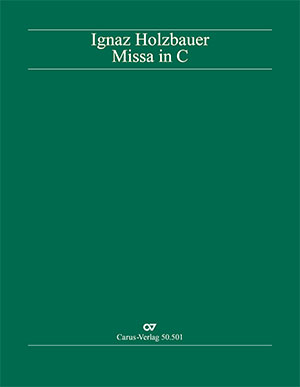
Der Tod der Dido (The Death of Dido)
Singspiel in one act (Musik der Mannheimer Hofkapelle, Vol. 3)
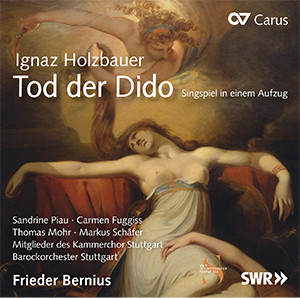
Ignaz Holzbauer, Kapellmeister at the Kurpfälzische Hof in Mannheim, was counted among the renowned opera composers of his time in the second half of the 18th century. He became known in music history mainly through the opera Günther von Schwarzburg (1777), which is regarded as the first contribution to the German National Opera. One year after the premiere of his opera La morte di Didone (1779) he composed Der Tod der Dido as a German text version of Metastasio’s drama. Holzbauer was not only a master of both, the interpretation of the meaning of words and the portrayal of emotions, but also, already since Günther von Schwarzburg, a pioneer of the convergence of recitative and aria in favor of an undisturbed dramatic progression.
Explore



 Listen
(16)
Listen
(16)
- Purchase the work as a CD or download.
- Sinfonia
- Aria: So täuscht mein Herz die Liebe
- Recitativo: Wie bestürzt bin ich! / O Himmel! Schwester!!
- Recitativo: Ihr Götter! Hilfe!
- Aria: Du liebst mein Herz!
- Cavata: Es häufet und vermehret sich
- Recitativo: Ach! Alle Hoffnung ist verloren
- Coro: Schwingt die Fackeln, ihr Brüder!
- Recitativo: Oh fliehe, Königin!
- Aria: In Flammen stürzt zertrümmert hin
- Recitativo: Ergib dich, Königin!
- Recitativo: Die Flammen nähern sich
- Cavata: Du lästerst die Götter
- Recitativo: Ach! Was sagt ich Unglückselige
- Cavata: Flieh ich? Wohin?
- Recitativo: Ist so viel Feigheit denn in meinem Herzen?
Purchase
Additional product information
Contents

-
Composer
Ignaz Holzbauer
| 1711-1783Ignaz Holzbauer, born in Vienna in 1711, began his musical career as a self-taught musician. After traveling to Italy and spending years as music director at the Burgtheater in Vienna alongside renowned figures such as Galuppi and Gluck, he moved to Stuttgart in 1751 to serve as chief conductor, where he enjoyed great success with his stage works. Shortly thereafter, he was appointed Kapellmeister of the legendary Mannheim Court Orchestra, a position he held until his death on April 7, 1783. His innovative symphonic church style is based on a deep understanding of contemporary musical trends, combined with a love of experimentation and a distinct talent for dramatic music. Mozart, too, appreciated this “fine church style” and “fine arrangement of the vocal parts.” Holzbauer shaped the “Mannheim style” and, with it, an entire generation of composers and musicians. Personal details
-
Editor
Bärbel Pelker
-
Songwriter / Librettist
Anton Klein
Reviews on our website can only be submitted by customers with a registered user account. A check whether the rated products were actually purchased does not take place.
No feedback available for this product.
Frequent questions about this work
What is a director’s book?
A director’s book (sometimes known as a production or prompt book) contains a record of everything that happens during a theater performance. For example, it documents entrances and exits, cues for set changes, lighting, sound and stage technology, the positions of the characters, costume changes, and placement of props. To provide sufficient space for notes, the vocal score is printed on one page, with the facing page left blank for writing. To ensure maximum writing comfort, Carus offers one version for right-handed users (printed on the left, blank on the right) and one for left-handed users (blank on the left, printed on the right). The content is otherwise identical to the vocal score. The director’s book is available in printed and digital form.
 There are no questions and answers available so far or you were unable to find an answer to your specific question about this work? Then click here and send your specific questions to our Customer Services!