

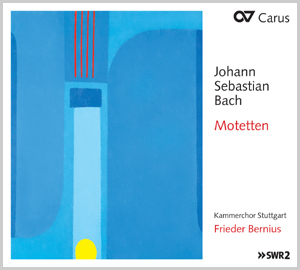
This early motet, very probably by Johann Sebastian Bach, belongs to a quite different stylistic world than its better-known sister works. It is surely a work by a young composer: here, great sonority and security of intonation is required. And some of the intervals are quite challenging.
Simply practice. Anytime. Everywhere.
Whether at home on your tablet or PC or on the road on your smartphone: with carus music, the Choir Coach, you always have your choral works with you to practice! With the carus music choir app, you can listen to your score together with a first-class recording on any device and easily practice your own choir part with a coach. With carus music, your concert preparation is easy, efficient and fun to master!
The Motets are sung in German. Performers: Kammerchor Stuttgart – Frieder Bernius
Explore
 Listen
(1)
Listen
(1)
- Ich lasse dich nicht/Ich danke dir, Christe, Gottes Sohn
 Practise
-
 carus music, the Choir Coach
Üben mit carus music
carus music, the Choir Coach
Üben mit carus music
-
Practice aids
-
Practice aids voice part soprano
- Ich lasse dich nicht/Ich danke dir, Christe, Gottes Sohn (Choir Coach, soprano 1)
- Ich lasse dich nicht/Ich danke dir, Christe, Gottes Sohn (Choir Coach, Slow mode, soprano 1)
- Ich lasse dich nicht/Ich danke dir, Christe, Gottes Sohn (Choir Coach, soprano 2)
- Ich lasse dich nicht/Ich danke dir, Christe, Gottes Sohn (Choir Coach, Slow mode, soprano 2)
-
Practice aids voice part alto
- Ich lasse dich nicht/Ich danke dir, Christe, Gottes Sohn (Choir Coach, Alto 1)
- Ich lasse dich nicht/Ich danke dir, Christe, Gottes Sohn (Choir Coach, Slow mode, Alto 1)
- Ich lasse dich nicht/Ich danke dir, Christe, Gottes Sohn (Choir Coach, Alto 2)
- Ich lasse dich nicht/Ich danke dir, Christe, Gottes Sohn (Choir Coach, Slow mode, Alto 2)
-
Practice aids voice part tenore
- Ich lasse dich nicht/Ich danke dir, Christe, Gottes Sohn (Choir Coach, Tenore 1)
- Ich lasse dich nicht/Ich danke dir, Christe, Gottes Sohn (Choir Coach, Slow mode, Tenore 1)
- Ich lasse dich nicht/Ich danke dir, Christe, Gottes Sohn (Choir Coach, Tenore 2)
- Ich lasse dich nicht/Ich danke dir, Christe, Gottes Sohn (Choir Coach, Slow mode, Tenore 2)
-
Practice aids voice part basso
- Ich lasse dich nicht/Ich danke dir, Christe, Gottes Sohn (Choir Coach, Basso 1)
- Ich lasse dich nicht/Ich danke dir, Christe, Gottes Sohn (Choir Coach, Slow mode, Basso 1)
- Ich lasse dich nicht/Ich danke dir, Christe, Gottes Sohn (Choir Coach, Basso 2)
- Ich lasse dich nicht/Ich danke dir, Christe, Gottes Sohn (Choir Coach, Slow mode, Basso 2)
-
 Additional material
- Purchase additional material as a download product.
-
 Digital text (without sheet music) incl. printing licence, html file, singing text, english translationhtml file, singing text, english translation (Sample)
To thee will I cling, until I am blessed!
Lord Jesus, my Saviour, to thee will I cling,
until I am blessed!
Genesis 32:26Since thou my God and Father art,
thy child will ne’er from thee depart,
not from the Father’s heart.
No virtue is in me from birth,
no comfort have I here on earth.
Erasmus Alber 1557, „Why are you troubled, my heart?“ (Str. 3)Translation: Margaret Schubert
...
-
Digital text (without sheet music) incl. printing licence, html file, singing text, originalhtml file, singing text, original (Sample)
Ich lasse dich nicht, du segnest mich denn.
Mein Jesu, ich lasse dich nicht,
du segnest mich denn.
Genesis 32,26Weil du mein Gott und Vater bist,
dein Kind wirst du verlassen nicht,
du väterliches Herz.
Ich bin ein armer Erdenkloß,
auf Erden weiß ich keinen Trost.
Erasmus Alber 1557, „Warum betrübst du dich, mein Herz“ (Str. 3)...
-
Digital text (without sheet music) incl. printing licence, html file, Introductory text, englishhtml file, Introductory text, english (Sample)Text from the CD Carus 83.298
Uwe Wolf
Translation (abridged): Elizabeth RobinsonThe first printed edition of Johann Sebastian Bach’s motets appeared in Leipzig in 1802/03, over fifty years after the composer’s death. This was not only the first edition of the famous motets, but was also the first printed edition of Bach’s vocal works at all since 1708. It differs in some respects from our present-day editions, primarily in the inclusion in the place of the motet Lobet den Herrn of Ich lasse dich nicht, du segnest mich denn, attributed a little later to Johann Christoph Bach. In reprints of the first printed edition, accordingly, this was replaced by Lobet den Herrn, establishing the group of six motets which ultimately found their place in the Bach-Werke-Verzeichnis (Bach Works Catalog) as BWV 225–230, where they long held an undisputed position.
But doubts remain about Lobet den Herrn. There is so much which is curious about this motet, which breaks every rule, so that in the form in which it is known to us, it may well not be by Bach. On the other hand, we nevertheless believe that we find so much of Bach in it that hardly any other composer can be contemplated. We
...
-
Digital text (without sheet music) incl. printing licence, html file, Introductory text, germanhtml file, Introductory text, german (Sample)Booklet-Text der CD Carus 83.298
Uwe Wolf
Gut 50 Jahre nach dem Tod des Komponisten erschien in Leipzig 1802/03 eine erste gedruckte Ausgabe der Motetten Johann Sebastian Bachs. Dies war nicht nur die erste Ausgabe der berühmten Motetten, es war zugleich die erste Druckausgabe Bachscher Vokalwerke überhaupt seit 1708. Herausgegeben wurden die Motetten von dem vielseitigen Leipziger Musiker Johann Gottlieb Schicht, damals Gewandhauskapellmeister, Musikdirektor der Leipziger Neukirche und der Leipziger Singakademie; 1810 wurde Schicht schließlich selbst als vierter Nachfolger Bachs Thomaskantor in Leipzig.
Schichts Ausgabe unterscheidet sich in manchem von unseren heutigen Ausgaben – vor allem an den Texten hatte Schicht Modernisierungen vorgenommen –, aber bereits mit dieser ersten Ausgabe wird die Sechszahl der Motetten Bachs etabliert, die bis heute viele Ausgaben und Einspielungen bestimmt. Die Erstausgabe enthielt allerdings nur fünf der „traditionellen“ Motetten Bachs: Anstelle der Motette Lobet den Herrn BWV 230 war nämlich Ich lasse dich nicht, du segnest mich denn BWV Anh. 159 enthalten. Erst deutlich später erschien 1821 die Erstausgabe von Lobet den Herrn,
...
Purchase
Additional product information
-
Composer
Johann Sebastian Bach
| 1685-1750Johann Sebastian Bach is one of the most important composers of Western music history. He came from a widely ramified musical dynasty, which produced numerous musicians and organists in the Thuringian-Saxon area.
Bach vocal
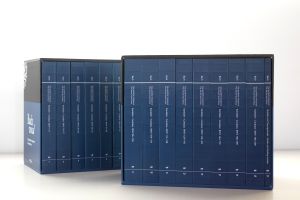
Ever since Carus-Verlag was founded in 1972, publishing the music of Johann Sebastian Bach has been a special focus for us. In the 2017 Reformation anniversary year we completed the Bach vocal project. Bach’s complete sacred vocal works are now available in modern “Urtext” editions, together with performance material. A complete edition of all the full scores is also available in a high quality box set.
Personal details
Reviews on our website can only be submitted by customers with a registered user account. A check whether the rated products were actually purchased does not take place.
No feedback available for this product.
Frequent questions about this work
 There are no questions and answers available so far or you were unable to find an answer to your specific question about this work? Then click here and send your specific questions to our Customer Services!