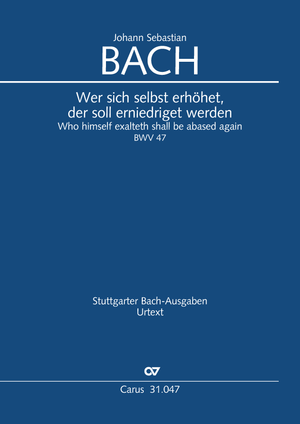
Who himself exalteth shall be abased again
Cantata for the 17th Sunday after Trinity BWV 47, 1726
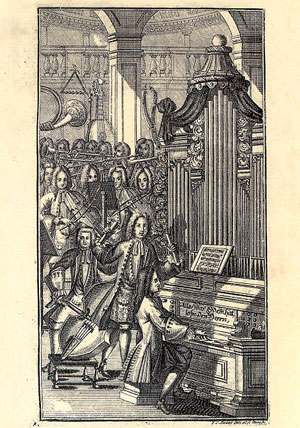
Bach’s cantata Wer sich selbst erhöhet, der soll erniedriget werden (Who himself exalteth shall be abased again), BWV 47 for the 17th Sunday after Trinity, belongs to a whole series of cantatas with obbligato organ, most of which were composed in the autumn of 1726. In this case, the obbligato organ comes to the fore in the first aria which is scored for soprano, obbligato organ and continuo only. Prior to this, the cantata begins with a large-scale opening chorus with a long instrumental introduction and a choral fugue. The fugue reflects the text with a theme that rises ornately for an octave and then descends again in a straight line. The soprano aria with obbligato organ is followed by a bass accompagnato and a chamber music-like bass aria with violin, oboe, basso continuo, before the cantata concludes with a simple final chorale.
For a later performance, Bach replaced the obbligato organ with a solo violin; today the cantata is usually performed in this version.
For a later performance, Bach replaced the obbligato organ with a solo violin; today the cantata is usually performed in this version.
Explore
 View
View

 Additional material
- Purchase additional material as a download product.
-
 Digital text (without sheet music) incl. printing licence, html file, singing text, english translationhtml file, singing text, english translation (Sample)1 Coro
Who himself exalteth,
2 Aria (Soprano)
shall be abased again ever,
and he who gains humility,
shall be exalted ever.Ye who would, like Christ, be holy,
3 Recitativo (Basso)
like him be ye meek and lowly,
meekness cometh from the Lord.
Meekness comes from Christ the Lord. Pride is Satan’s base reward.
God will foster them who hate it
fight it and abate it.Mankind is clay, dust, earth and ashes,
yet sometimes all the arrogance
that marks the Devil’s brood,
will totally bewitch thim.
Lo! Jesus, God’s own Son,
he, who hath all created,...
-
Digital text (without sheet music) incl. printing licence, html file, singing text, originalhtml file, singing text, original (Sample)1 Coro
Wer sich selbst erhöhet, der soll erniedriget werden,
2 Aria (Soprano)
und wer sich selbst erniedriget, der soll erhöhet werden.Wer ein wahrer Christ will heißen,
3 Recitativo (Basso)
muss der Demut sich befleißen,
Demut stammt aus Jesu Reich.
Hoffart ist dem Teufel gleich,
Gott pflegt alle die zu hassen,
so den Stolz nicht fahren lassen.Der Mensch ist Kot, Staub, Asch und Erde;
ist’s möglich, dass vom Übermut, als einer Teufelsbrut,
er noch bezaubert werde?
Ach, Jesus, Gottes Sohn, der Schöpfer aller Dinge,
ward unsertwegen niedrig und geringe,
er duldte Schmach und Hohn;
und du, du armer Wurm, suchst dich zu brüsten?
Gehört sich das vor einen Christen?
Geh, schäme dich, du stolze Kreatur,...
Purchase
Additional product information
-
Composer
Johann Sebastian Bach
| 1685-1750Johann Sebastian Bach is one of the most important composers of Western music history. He came from a widely ramified musical dynasty, which produced numerous musicians and organists in the Thuringian-Saxon area.
Bach vocal
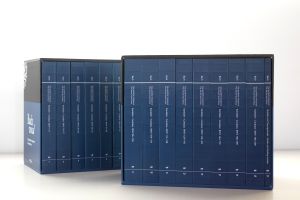
Ever since Carus-Verlag was founded in 1972, publishing the music of Johann Sebastian Bach has been a special focus for us. In the 2017 Reformation anniversary year we completed the Bach vocal project. Bach’s complete sacred vocal works are now available in modern “Urtext” editions, together with performance material. A complete edition of all the full scores is also available in a high quality box set.
Personal details
-
Editor
Michael Märker
-
Songwriter / Librettist
Johann Friedrich Helbig
-
Translator
Henry Drinker
Reviews on our website can only be submitted by customers with a registered user account. A check whether the rated products were actually purchased does not take place.
No feedback available for this product.
Frequent questions about this work
Which situation is the transposed organ part intended for?
Bach planned this cantata with concertante organ for the organs in the main Leipzig churches. These were tuned a whole tone higher (c. a1=466 Hz, ‘Chorton’ [choir/organ pitch] than strings and woodwinds (a1=415 Hz, ‘Kammerton’ [chamber pitch]). In order to allow for this difference, the organ part was notated a whole tone lower (in F Minor instead of G Minor). Today, many Baroque organs are still tuned to a higher pitch. In order to enable performances to take place in such churches, we offer the transposed organ part in F Minor (31.047/47). Especially in a cantata with obbligato organ, the use of a historical organ is appropriate. For all other performance situations where there is no difference in pitch, there is a normal, untransposed organ part in G Minor (31.047/49).
 There are no questions and answers available so far or you were unable to find an answer to your specific question about this work? Then click here and send your specific questions to our Customer Services!