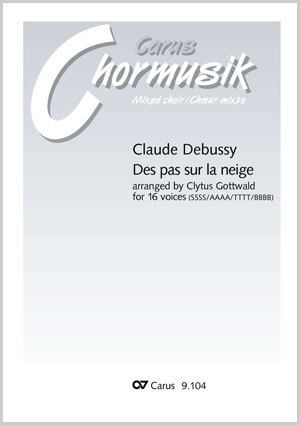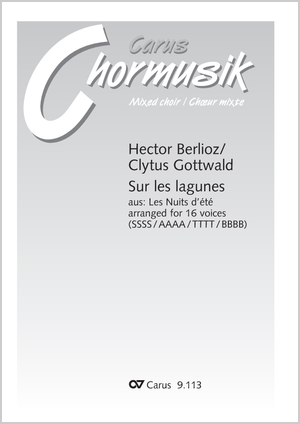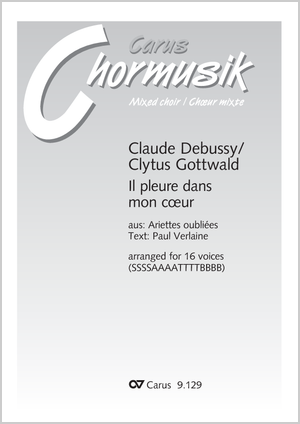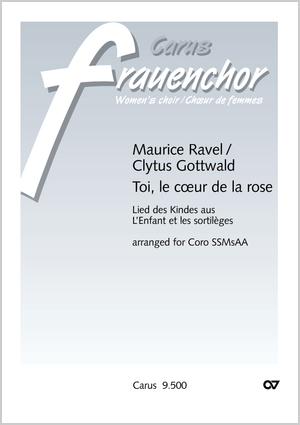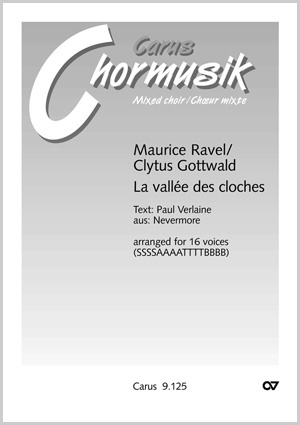
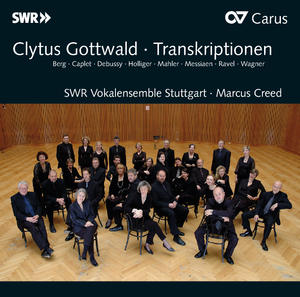
Clytus Gottwald’s sophisticated arrangements for chorus a cappella have very successfully established themselves in the choral repertoire all over the world. In his choral transcriptions, Gottwald applies the vocal compositional techniques of contemporary music, which he studied as the long-standing director of the Schola Cantorum, to traditional compositions, using the highly differentiated sound to reveal the structures of these works.
Explore
 View
View
 Listen
(1)
Listen
(1)
- La vallée des cloches. Vocal transcription by Clytus Gottwald
 Additional material
- Purchase additional material as a download product.
-
 Digital text (without sheet music) incl. printing licence, html file, singing text, originalhtml file, singing text, original (Sample)Unbenanntes Dokument La vallée des cloches
Sonnez, grelots ; sonnez, clochettes ; sonnez, cloches !
Car mon rêve impossible a pris corps, et je l’ai
entre mes bras pressé : le Bonheur, cet ailévoyageur qui de l’homme évite les approches.
Sonnez, grelots ; sonnez, clochettes ; sonnez, cloches !Paul Verlaine (1844–1896)
...
-
Digital text (without sheet music) incl. printing licence, html file, singing text, german translationhtml file, singing text, german translation (Sample)Unbenanntes Dokument Das Tal der Glocken
Klinget, ihr Schellen, ertönt, ihr Glöckchen, läutet, ihr Glocken!
Denn mein unerhörter Traum hat Gestalt angenommen, und ich halte
in meinen Armen das Glück, diesen geflügeltenReisenden, der einer Annäherung des Menschen aus dem Weg geht.
Klinget, ihr Schellen, ertönt, ihr Glöckchen, läutet, ihr Glocken!Paul Verlaine (1844–1896)
Übersetzung: Barbara Großmann...
-
Digital text (without sheet music) incl. printing licence, html file, singing text, english translationhtml file, singing text, english translation (Sample)Unbenanntes Dokument The Valley of Bells
Ring out, hand-bells; ring out, small bells; ring out, great bells!
Because my impossible dream came true, and I hold fast
in my arms: happiness, that wingedtraveller who eludes the approach of men.
Ring out, hand-bells; ring out, small bells; ring out, great bells!Paul Verlaine (1844–1896)
Translation: Earl Rosenbaum...
Purchase
Additional product information
-
Composer
Maurice Ravel
| 1875-1937Maurice Ravel was an important French composer and one of the main representatives of Impressionism in music.
He was born on March 7, 1875 in Ciboure near Saint-Jean-de-Luz and showed musical talent at an early age. He began taking piano lessons at the age of seven. His first works were written during composition lessons with Charles-René. In 1889, he was accepted at the Paris Conservatoire, where he initially pursued a career as a pianist, but later concentrated on composition. The extensive knowledge gained from his pianistic training is later evident in Ravel's piano writing and his understanding of orchestration, e.g. in his arrangement of Mussorgsky's Pictures at an Exhibition.
Ravel's compositional style is characterized by refined timbres, innovative harmonies and masterful orchestration. Despite his importance for the music history of the 20th century, he often remained controversial during his lifetime. Most of his works, with their unusual rhythms and harmonies, were initially met with incomprehension by the general public, but were praised by some critics for their innovative power. Nevertheless, works such as La Valse, Bolero and his two piano concertos became popular during his lifetime. In addition to his instrumental and stage works, Ravel also created vocal music, including the choral piece L'Aurore.
In the last years of his life, a progressive physical decline increasingly prevented him from performing in public and composing new works. He died in Paris on December 28, 1937.
Personal details
-
Arranger
Clytus Gottwald
| 1925-2023The choral conductor, composer and musicologist Clytus Gottwald (1925 - 2023) made significant contributions to contemporary choral music. As editor for New Music at Südfunk Stuttgart and founder and director of the Schola Cantorum Stuttgart, he was in productive exchange with his contemporaries, Pierre Boulez, Mauricio Kagel, György Ligeti, Luigi Nono, Karlheinz Stockhausen and many others. With his Schola Cantorum, a 16-voice chamber vocal ensemble, Gottwald decisively shaped the a cappella choral culture of the highest technical level that is taken for granted today. Clytus Gottwald's transcriptions of piano songs and instrumental pieces for unaccompanied choir are appreciated by choirs all over the world. Modelled on the style of Ligeti, his works set the highest of musical standards. Clytus Gottwald has received several awards for his services, including the Cultural Prize of Baden-Württemberg in 2009, the European Church Music Prize in 2012, and the Cross of Merit of the Federal Republic of Germany in 2014. His importance for the development of contemporary choral music cannot be overestimated. Personal details
Reviews on our website can only be submitted by customers with a registered user account. A check whether the rated products were actually purchased does not take place.
No feedback available for this product.
Frequent questions about this work
 There are no questions and answers available so far or you were unable to find an answer to your specific question about this work? Then click here and send your specific questions to our Customer Services!