Rheinberger's Abendlied (Evening Song), Op. 69, No. 3, is still widely recognized today, but after his death in 1901 many of his other works initially fell into obscurity. Today some of his less familiar compositions are now being rediscovered and performed more frequently, not least thanks to the publication of his Complete Works by Carus, along with numerous individual editions. During his lifetime Rheinberger was also a highly regarded teacher of composition and, as both a professor at the Munich Conservatory and a Bavarian court conductor, he influenced a whole generation of musicians, including Ermanno Wolf-Ferrari, whose anniversary is also being celebrated this year.
Composer anniversaries
To support you in your medium-term program planning, we have compiled an overview of famous composers (selection) and their anniversaries. Stay up to date on composer anniversaries and current choral topics with our free monthly newsletter! >> Register here
Anniversaries 2026
| Pablo Casals | 1876–1973 | 150th anniversary |
| Zsolt Gárdonyi | *1946 | 80th anniversary |
| Josef Gabriel Rheinberger | 1839–1901 | 125th anniversary of death |
| Carl Maria von Weber | 1786–1826 | 200th anniversary of death |
| Ermanno Wolf-Ferrari | 1876-1948 | 150th anniversary |
| Giuseppe Verdi | 1813–1901 | 125th anniversary of death |
Anniversaries 2027
| Johann Ernst Bach | 1722–1777 | 250th anniversary of death |
| Johann Ludwig Bach | 1677–1731 | 350th anniversary |
| Ludwig van Beethoven | 1770–1827 | 200th anniversary of death |
Anniversaries 2028
| Johann Adam Hiller | 1728–1804 | 300th anniversary |
| Johann Nepomuk Hummel | 1778–1837 | 250th anniversary |
| Franz Schreker | 1878–1934 | 150th anniversary |
| Franz Schubert | 1797–1824 | 200th anniversary of death |
| Antonio Vivaldi | 1678–1741 | 350th anniversary |
Anniversaries 2029
| Johann David Heinichen | 1683–1729 | 300th anniversary of death |
| Engelbert Humperdinck | 1854–1921 | 175th anniversary |
| Ottorino Respighi | 1879–1936 | 150th anniversary |
| Jan Dismas Zelenka | 1679–1745 | 350th anniversary |
Anniversaries 2030
| Bob Chilcott | *1955 | 75th anniversary |
| Johann Hermann Schein | 1586–1630 | 400th anniversary of death |
| Józef Swider | 1930–2014 | 100th anniversary |
| Veljo Tormis | 1930–2017 | 100th anniversary |
Anniversaries 2031
| Johann Ludwig Bach | 1677–1731 | 300th anniversary of death |
| Anton Diabelli | 1781–1858 | 250th anniversary |
| Wolfgang Amadeus Mozart | 1756–1791 | 275th anniversary |
| Georg Philipp Telemann | 1681–1767 | 350th anniversary |
-
1839–1901: Josef Gabriel Rheinberger
-
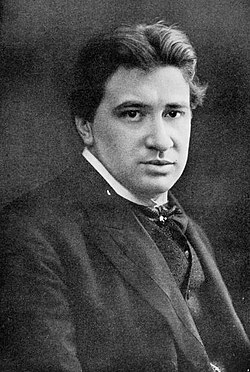
1876–1948: Ermanno Wolf-Ferrari
The German-Italian composer Ermanno Wolf-Ferrari, a student of Josef Rheinberger, rose to prominence at the beginning of the 20th century with his comic operas. His early work Die neugierigen Frauen (The Curious Women) premiered in Munich in 1903 and was later performed under Toscanini at the Met in New York. Wolf-Ferrari's dual cultural influences are clearly reflected in his music: his Otto cori for mixed choir, for example, are testament to his close engagement with traditional Italian musical forms such as the madrigal, the stornello and the rispetto.
image: cc Wiki Commons -
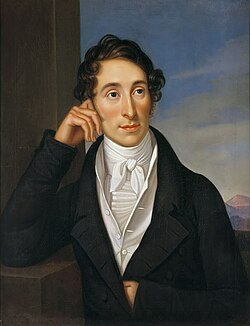
1786–1826: Carl Maria von Weber
The 1821 premiere of Der Freischütz brought Carl Maria von Weber instant acclaim and established his standing as the leading German opera composer of his time. His work had a decisive influence on subsequent generations, especially Richard Wagner. While Weber was employed as Kapellmeister at the Dresden royal court, he also composed several sacred works, including the Freischütz Mass and the Jubilation Mass.
-
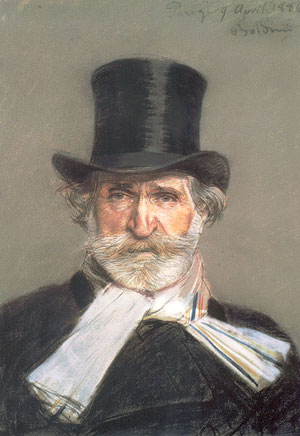
1813–1901: Giuseppe Verdi
Verdi's operas are now among the cornerstones of the opera repertoire. He achieved his breakthrough in 1842 with the premiere of Nabucco in Milan. More than three decades later, his Messa da Requiem, composed in memory of the poet Alessandro Manzoni, was premiered in the same city. It stands out among Verdi's works as one of his few sacred compositions and is still frequently performed today.