

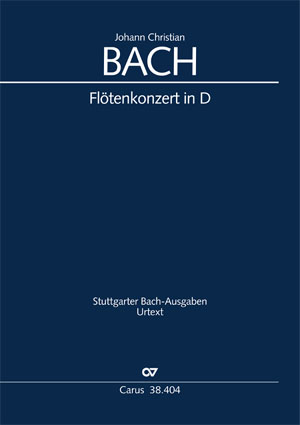
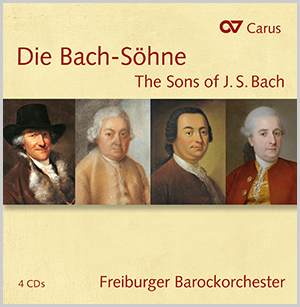
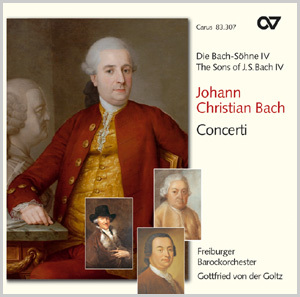
Johann Christian Bach was – as his father before him – only very seldom satisfied with the compositions that he put down on paper. Thus did this concerto too undergo many corrections/revisions by the composer and today consists of three movements of similar length. Although they were initially handed down separately at different locations, the motivic relationship as well as the melodic and figurative references among themselves clearly reveals the common identity of the three movements. Not only the final rondo is characterized by highly virtuoso passages, but both the slow, second movement as well as the introductory movement testify to youngest Bach son’s compositional greatness, whose works later generations unjustly let almost fall into desuetude.
Explore


 Listen
(3)
Listen
(3)
- Larghetto
- Allegro con brio
- Rondeau
Purchase
Additional product information
Contents
-
Composer
Johann Christian Bach
| 1735-1782Johann Christian Bach (1735–1782), the youngest son of the Thomaskantor, developed his personal style principally during a long stay in Italy (1755–1762) – a period which saw a break with the musical world of his father and his elder brothers. His easily accessible and melodious compositions, which were to have a lasting influence on the young Mozart, are characterized by the noble elegance and cantabile qualities of Italian opera aria. Beside numerous stage works, most of which date from his years in London (1762–1782), J.C. Bach also wrote sacred vocal works, and instrumental music for almost all the ensembles commonly used in this time. Personal details
-
Editor
Ulrich Leisinger
Reviews
Das D-Dur Konzert von Johann Christian Bach ist eines der großen, dankbaren und wichtigen klassischen Flötenkonzerte vor Mozart! [...] Die Ausgabe bei Carus erfüllt alle Wünsche und ist ein „must have” für jeden Flötisten!
Michael Schneider. Tibia Nr.4/2012
Michael Schneider. Tibia Nr.4/2012
Reviews on our website can only be submitted by customers with a registered user account. A check whether the rated products were actually purchased does not take place.
No feedback available for this product.
Frequent questions about this work
 There are no questions and answers available so far or you were unable to find an answer to your specific question about this work? Then click here and send your specific questions to our Customer Services!