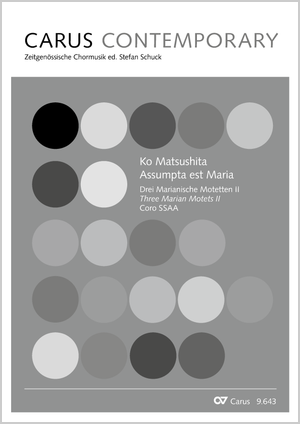
Assumpta est Maria
No. 2 from Three Marian Motets
 View
View

-
Composer
Ko Matsushita
| 1962
Reviews
Allen Werken des japanischen Komponisten Ko Matsushita ist eine fesselnde abwechslungsreiche Harmonik eigen, welche von modalen Flächen über häufig verwendete diatonische Mixturen und Ganztonfolgen bis zu extrem spannungsgeladenen Akkordballungen führt, aber genau dadurch stets interessant bleibt und die Ausführbarkeit im Bereich des für ambitionierte Kammerchöre Machbaren belässt...
Andreas Boltz, Kirchenmusik im Bistum Limburg, 1/2015
Warum man sich dieser Stücke annehmen sollte - Matsushita setzt den Text seiner Drei Marianische Motetten klanglich hervorragend um.
Christoph Stockmeyer, Musica Sacra, 5/2014
...Matsushita bedient sich ... verschiedener Stilelemente (von Gregorianik bis zu Clustern und Aleatorik) und kommt dabei zu überzeugenden, klanglich wie deklamatorisch reizvollen Ergebnissen.
singende kirche, 3/2014
Reviews on our website can only be submitted by customers with a registered user account. A check whether the rated products were actually purchased does not take place.
Frequent questions about this work
 There are no questions and answers available so far or you were unable to find an answer to your specific question about this work? Then click here and send your specific questions to our Customer Services!