Explore
 View
View

Purchase
Additional product information
-
Composer
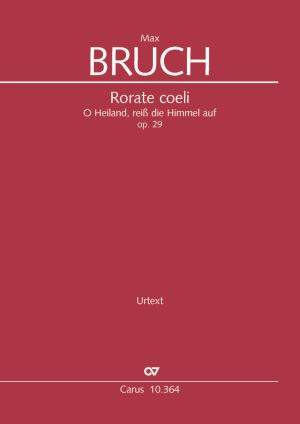
Max Bruch
| 1838-1920Max Bruch, geb. 1838 in Köln, gest. 1920 in Berlin. Schüler von F. Hiller (Theorie und Komposition) und C. Reinecke (Klavier). Nach einigen Jahren als Musiklehrer in Köln ausgedehnte Studienreise; Musikdirektor in Koblenz, Hofkapellmeister in Sondershausen, schließlich Direktor des Sternschen Gesangvereins in Berlin. Von 1880–1883 Direktor der Philharmonic Society in Liverpool, danach Leiter des Orchestervereins Breslau. 1851 Professor für Komposition an der Berliner Akademie der Künste. Seine zahlreichen großen Chorwerke mit Orchester, z.B. "Das Lied von der Glocke", aber auch die A-cappella-Chöre erfreuten sich seinerzeit großer Beliebtheit. Personal details
-
Songwriter / Librettist
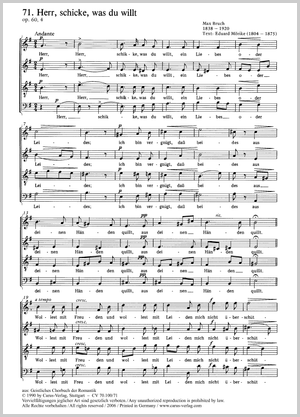
Eduard Mörike
| 1804-1875Eduard Mörike was a German poet and writer of the Schwäbische Dichterschule. He studied theology at Tübingen Abbey and then worked as a vicar and parish administrator in various parishes. In 1834, Mörike was appointed pastor of Cleversulzbach until he took early retirement in 1843. From then on, he devoted his time entirely to his literary work and also began teaching literature at the Katharinenstift in Stuttgart in 1851. He lived and worked in Stuttgart until his death in 1875.
Eduard Mörike is considered one of the most important poets between Romanticism and Realism. His best-known works include the novel Maler Nolten, the novella Mozart auf der Reise nach Prag and numerous poems, including the popular Er ist's. His lyrical works deal with personal experiences and observations of nature, but his subjects also include mythological and religious motifs. His texts are characterized by a deep emotionality and musical quality, which has led to many musical settings of Mörike's poems. Josef G. Rheinberger, Robert Schumann, Max Bruch, Max Reger, Hugo Wolf, Peter Schindler and many others have used Mörike's texts for their compositions. Personal details
Reviews on our website can only be submitted by customers with a registered user account. A check whether the rated products were actually purchased does not take place.
No feedback available for this product.
Frequent questions about this work
 There are no questions and answers available so far or you were unable to find an answer to your specific question about this work? Then click here and send your specific questions to our Customer Services!