


Explore


Purchase
Additional product information
-
Composer
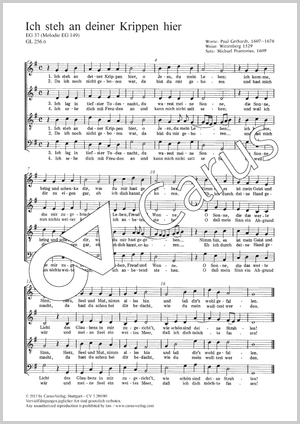
Michael Praetorius
| -1621Michael Praetorius (Schultheis) was born around 1571 in Creuzburg/Werra. His father Michael Schultheis had been a teacher alongside Johann Walter at the Latin school in Werra when he was young, and later studied theology with Martin Luther and Philipp Melanchton in Wittenberg. In the times of unrest following Luther’s death, he – as an orthodox Lutheran – was forced to change his place of residence several times; from 1569 to 1573, he was a pastor in Creuzburg. Praetorius initially also studied theology under the aegis of his brother Andreas, who held a professorship in Frankfurt/Oder. After the death of his brother in 1586, he accepted an organist’s post in order to secure his livelihood. In 1589 we find him as a student at the University of Helmstedt. In 1593, finally, he entered the service of Duke Heinrich Julius in nearby Wolfenbüttel, serving as court organist from 1594, and as court kapellmeister from 1604. The duke’s death in 1613 largely terminated Praetorius’s work at the court and in Wolfenbüttel. In the same year, Praetorius was “lent” to Dresden, where he remained until 1616. He was responsible for numerous “Festmusiken” (festive music events), some of which he organized together with Heinrich Schütz (who, from 1614 onwards, had likewise initially been “lent” to Dresden from Kassel). From 1616, Praetorius led the life of an itinerant organ expert, ensemble (re)organizer and organizer of musical festivities at numerous courts in North and Central Germany. In 1619, already marked by illness, he returned to settle in Wolfenbüttel, where he died on 15 February 1621. Personal details
-
Songwriter / Librettist
Paul Gerhardt
| 1607-1676Paul Gerhardt wurde am 12. März 1607 in Gräfenhainichen bei Wittenberg geboren. Nach dem Besuch der Fürstenschule in Grimma, einer der Eliteschulen des Kurfürstentums Sachsen, begann er 1628 sein Theologie-Studium in Wittenberg. Dieser Ort – Ursprung der lutherischen Bewegung – war prägend für sein weiteres Leben. Hier erhielt Gerhardt die theologische Bildung, die Grundlage war für seine spätere Tätigkeit als Pfarrer und Textdichter. Nach seinem Studium arbeitete er als Hauslehrer und wurde 1657 Diakonus an St. Nikolai in Berlin – die nächste wichtige Station. Durch Gerhardts enge Zusammenarbeit unter anderem mit Johann Crüger und dessen Nachfolger Johann Georg Ebeling entstand ein wichtiger intellektueller und künstlerischer Kreis in Berlin. Ebeling war es auch, der eine erste vollständige Gerhardt-Ausgabe edierte: Pauli Gerhardi Geistliche Andachten (1666/67). Darin enthalten sind 120 seiner später insgesamt 137 Lieder. Allein schon aufgrund der Vielzahl seiner Liedtexte stellt Gerhardt den wichtigsten evangelischen Textdichter nach Luther dar. Personal details
Reviews on our website can only be submitted by customers with a registered user account. A check whether the rated products were actually purchased does not take place.
No feedback available for this product.
Frequent questions about this work
 There are no questions and answers available so far or you were unable to find an answer to your specific question about this work? Then click here and send your specific questions to our Customer Services!