

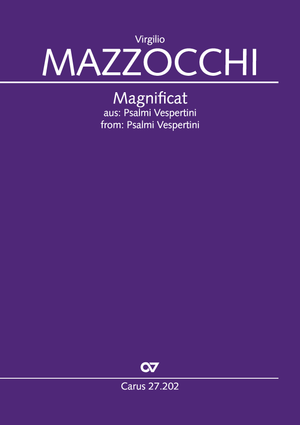
Magnificat
from: Psalmi Vespertini
 View
View

-
Composer
Virgilio Mazzocchi
| 1597-1646
Reviews
Virgilio Mazzocchi: Magnificat
Virgilio Mazzocchi: Magnificat
Rom war zu Beginn des 17. Jahrhunderts eine an musikalischen Institutionen reiche Stadt. Unter der schier unüberschaubaren Zahl von Musikern, die in der „ewigen Stadt” in Arbeit und Brot standen, findet sich auch Virgilio Mazzocchi (1597–1646). Von 1629 bis zu seinem Tod hatte er das Amt des Kapellmeisters der Cappella Guilia am Petersdom inne. Im Jahre 1648 erschien in Rom unter dem Titel „Psalmi Vespertini” eine umfangreiche Sammlung mit doppelchöriger Vespermusik von Mazzocchi: 14 Kompositionen zur Sonntags-, Heiligen- und Marienvesper. Das nun beim Carus-Verlag veröffentlichte Magnificat stellt den Abschluss der Vesperae Dominci dar. Neben solistisch besetzten, konzertierenden Abschnitten in bester frühbarocker Manier, finden sich blockhaft oder kontrapunktisch geführte Passagen, die in der Tradition der römischen Vokalpolyphonie stehen. Ein klangprächtiges Werk, problemlos auch nur mit acht Solisten ausführbar, bei dem man bedauert, dass die Vesper in der heutigen Liturgiepraxis auf ein Skelett dessen zusammengeschmolzen ist, was sie im 17. und 18. Jahrhundert einmal war.
Wilfried Rombach
Quelle: Kirchenmusikalische Mitteilungen 10/2004
Scored for double SATB and organ, this was published in Mazzocchi‚s posthumous Psalmi Vespertini (1648). lt only needs eight voices, though there is a clear alternation between the editorially marked solo and tutti sections which allows (though doesn‚t demand) more than one a part in the latter. The editor draws attention to the use of instruments in the Cappella Giulia at St Peter‚s Rome (where Mazzocchi was maestro di cappella from 1629 until his death in 1646). After the d‚India reviewed on page 2, this is refreshingly competent - and more. lt fits modern voice-categories better than most music of the period and should be extremely enjoyable to sing. Try it.
Quelle: Early Music Review, 4/04, S.3
Reviews on our website can only be submitted by customers with a registered user account. A check whether the rated products were actually purchased does not take place.
Frequent questions about this work
 There are no questions and answers available so far or you were unable to find an answer to your specific question about this work? Then click here and send your specific questions to our Customer Services!