Romantic Orchestral Masses

Romantic Orchestral Masses: Masterpieces of Sacred Music

Romantic masses are characterized by emotional depth and musical sophistication. Prominent composers such as Carl Maria von Weber, Anton Diabelli, Luigi Cherubini, Antonín Dvorák, Franz Schubert, Anton Bruckner and Otto Nicolai have all left their mark on this genre with their unique settings. Their masses combine sacred texts with the rich harmonies and passionate expressiveness of Romanticism.

  • Luigi Cherubini: Messe solennelle in d

    In 1810, Cherubini composed his Messe solennelle in D minor  as a musical recommendation for a position at the court of Prince Nikolaus II Esterházy. It ranks among the most expansive mass settings ever written – the Gloria alone comprises nearly 900 bars. Wolfgang Hochstein’s critical edition offers new insight into this remarkable work that bridges the Classical and Romantic eras.
  • Pietro Mascagni: Messa di Gloria

    This unique mass composition by the world-famous opera composer offers intricate lyrical melodies and energetic choral movements. As the level of difficulty is moderate and the instrumentation is not too large, the mass is equally suitable for professional and amateur ensembles as well as youth choirs and youth orchestras.

  • Carl Maria von Weber: Missa sancta No. 2

    Carl Maria von Weber’s masterful Jubilee Mass was composed for the golden wedding anniversary of the Saxon royal couple. Ideal for festive occasions in a liturgical setting or concert hall, this shorter mass offers an accessible challenge for choirs of all levels of experience.

  • Luigi Cherubini: Messe solennelle

    The so-called Coronation Mass captivates with its richness of tone color in the orchestra and choral parts, as well as the expressive dynamic shadings achieved without resorting to solo singing.

  • Carl Maria von Weber: Missa sancta No. 1

    Weber’s Freischütz Mass is an attractive work for mixed choir with orchestra, which charms us with its easy to medium level of difficulty and its assimilation to the liturgical practices of the Dresden court.

  • Anton Bruckner: Missa solemnis

    This mass from 1854 shows surprisingly clear influences of Viennese Classicism along with early indications of Bruckner’s later style. The Urtext edition of the Missa solemnis, which is ideal for choirs and orchestra, offers an exciting alternative to his better-known works.

  • Anton Diabelli: Pastoral-Messe in F

    The Pastoral Mass combines the artistic demands of the Biedermeier period with a practicable performance style and it’s ideally suited for amateur choirs with orchestra.

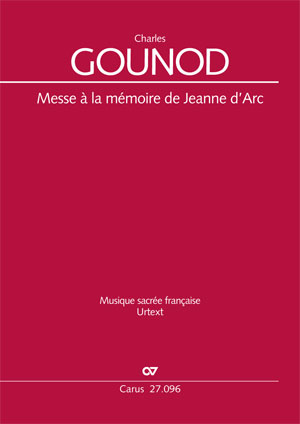
  • Charles Gounod: Mass à la mémoire de Jeanne d'Arc

    This festive mass from 1887 is dedicated to the French national heroine Joan of Arc. In addition to the a cappella version, there is also a version with organ accompaniment. The work combines archaic style with magnificent preludes.

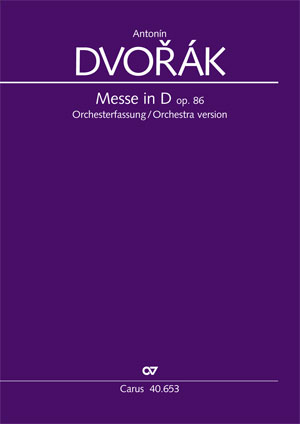
  • Antonín Dvorák: Mass in D

    The Mass in D wins us over with its traditional forms, folk-influenced melodies and rich harmonies; it is an ideal as a lyrical and meditative worship of God.

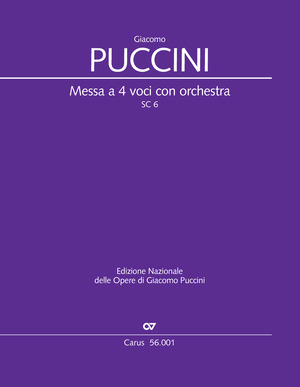
  • Giacomo Puccini: Messa a 4 voci con orchestra

    Puccini composed his Messa a 4 voci con orchestra in 1878–1880. The musical quality, the energy, and the freshness of this youthful work led the composer to quote from his Mass in later operas, ensuring an ever-growing popularity for the work after its rediscovery in 1952.

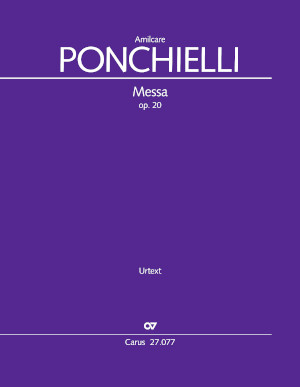
  • Amilcare Ponchielli: Messa

    Amilcare Ponchielli (1834–1886), known as an opera composer and teacher of Puccini and Mascagni, scored his greatest success with the opera La Gioconda. Ponchielli's sacred works were composed in his later years, when he was maestro di cappella in Bergamo. His Mass in A major, premiered on Christmas Day 1882, is characterized by singable melodies, rich harmonies and close interaction between the choir and the male soloists.

  • Franz Schubert: Mass in E flat

    Schubert’s last and most monumental mass is full of varied drama and orchestral splendor. Carus’ historical-critical Urtext edition offers carefully revised details on dynamics and articulation, ideal for historically aware performance practices.

  • Franz Schubert: Mass in A flat

    This large-scale solemn mass is considered one of Schubert's most important sacred works. As a splendid Missa solemnis, it demonstrates his ambitious artistic powers.

  • Franz Schubert: Mass in G

    Schubert’s popular Mass in G major impresses with its clear structure and melodic beauty. This Urtext edition offers the Klosterneuburg version with optional trumpets and timpani, in accordance with Schubert's own scoring intentions.

  • Otto Nicolai: Mass No. 1 in D

    Nicolai’s only surviving mass, known for its versatility and eminent singability, is an important contribution to church music. The Carus Urtext edition presents the Viennese version of this cheerful festive mass in its final form.

  • Ludwig van Beethoven: Mass in C major

    The first of Beethoven’s two mass settings opens up entirely new expressive worlds in its treatment of the liturgical text – strikingly modern and forward-looking. Beethoven himself was aware of this: “I do not like to speak of my Mass, or of myself, but I believe I have treated the text in a manner few others have.” The work is also available in an arrangement for chamber orchestra.

  • Ludwig van Beethoven: Missa solemnis

    Beethoven considered his Missa solemnis to be his greatest work, one that should move people because it came “from the heart”, which is evident from his long and intense engagement with the composition. The work goes far beyond the standard liturgical repertoire and demands a high level of skill from the choir. In addition to Ernst Herttrich's Urtext edition, the work is also available from Carus in the series “Great Choral Works in Small Scorings” (Carus 40.689/50).