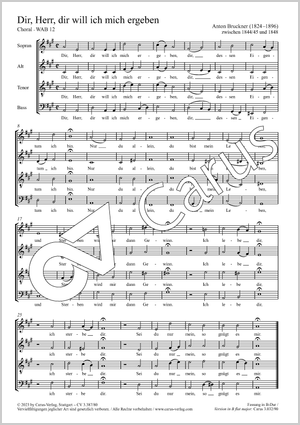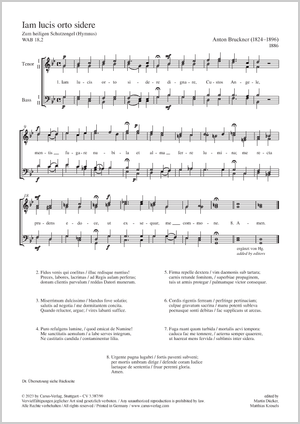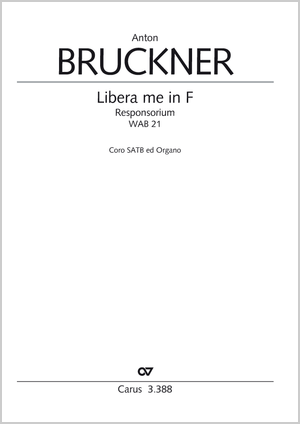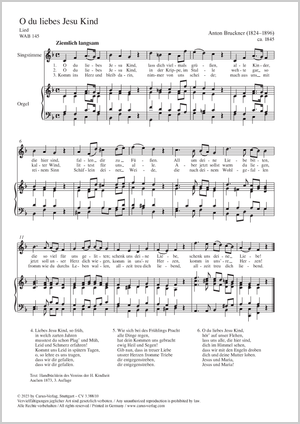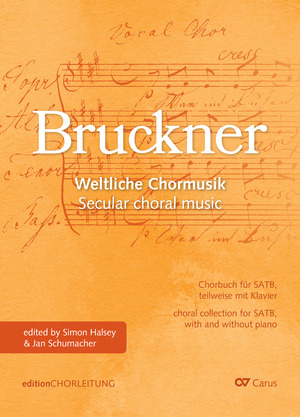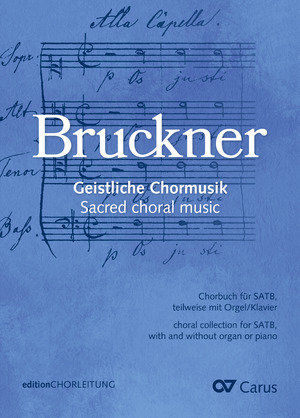
Choral Collection Bruckner. Sacred choral music
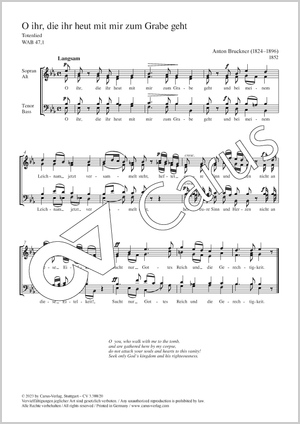
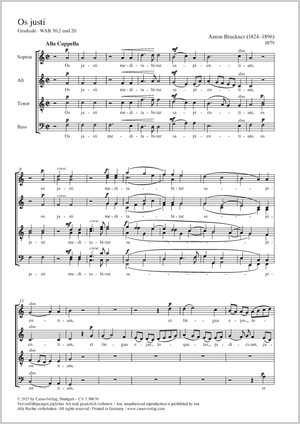
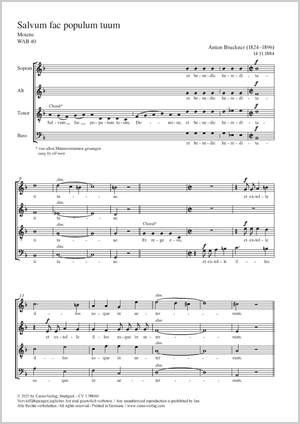
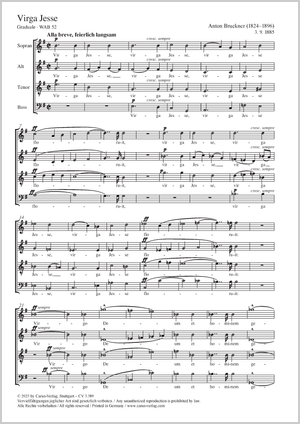
Great art in small forms – Bruckner's smaller sacred works reveal a more personal side to the master symphonist and creator of large-scale orchestral masses. Throughout his life, Bruckner’s deep faith and dedication to the Catholic liturgy inspired him to write church music in smaller forms suitable for performance at Sunday services or in sacred concerts. The long phrases and shimmering sounds of Locus iste, the chromatic modulations and thrilling climaxes in Christus factus est (1884) and in Virga Jesse (1885), or the use of church modes in almost all the motets present a range of fascinating challenges to any choir.
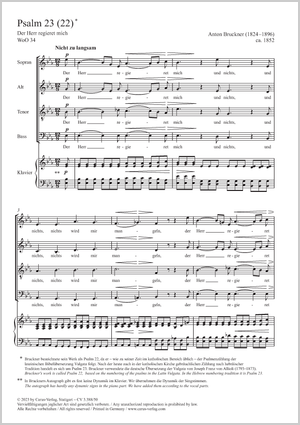
In addition to the well-known motets, the choral collection includes smaller sacred works such as short mass settings (a cappella or with organ) and simple liturgical songs and hymns, some with organ or occasionally with trombones. In addition, the volume presents two somewhat longer works from Bruckner’s youth: a Magnificat and a setting of Psalm 23, both with piano accompaniment.
The Choral Collection Bruckner. Sacred Choral Music is an expanded new edition of the successful choral collection Anton Bruckner für Gottesdienst und Konzert (Sacred works for worship and concert, Carus 2.065).
Several indexes supplement the musical scores in the editionCHORLEITUNG with information on the works and their liturgical usability. An affordable volume (editionCHOR) is also available for purchase, as well as separate editions in print and digital form.
- New expanded volume featuring 39 sacred choral works at all levels of difficulty
- For use both in worship and in concert
- Affordable editionCHOR volume as well as separate editions available in print and digitally
 View
View


 Listen
(17)
Listen
(17)
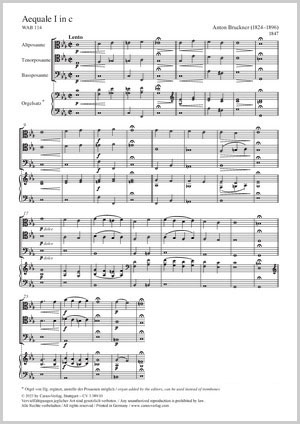
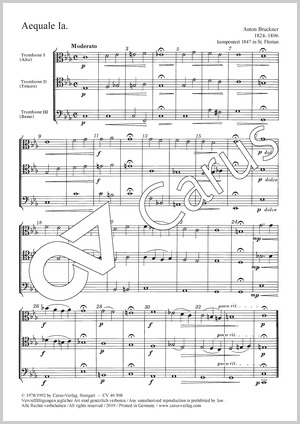
- Aequale I
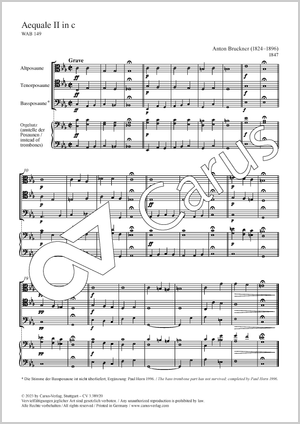
- Aequale II
- Mass in C major
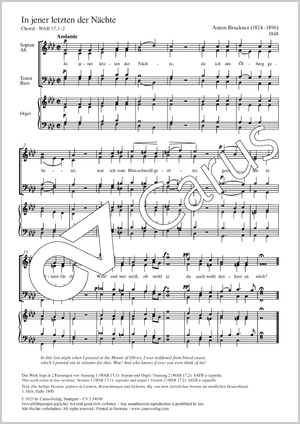
- There were brought in gladness virginews pure and lovely
- Speak, my tongue
- I have found David
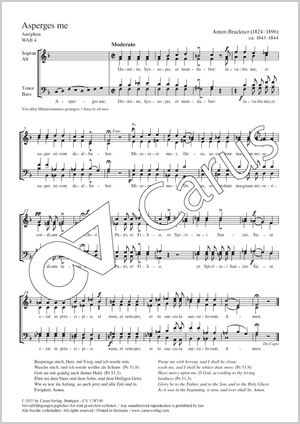
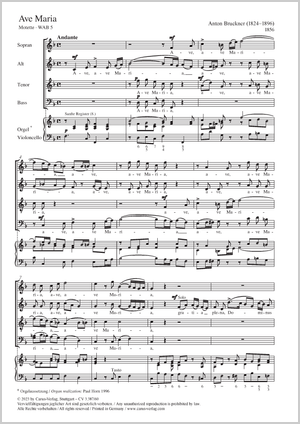
- Ave Maria
- Your are beautiful, o Mary
- Ave Maria
- Locus iste
- Os justi
- Christus factus est
- Salvum fac populum tuum
- Virga Jesse
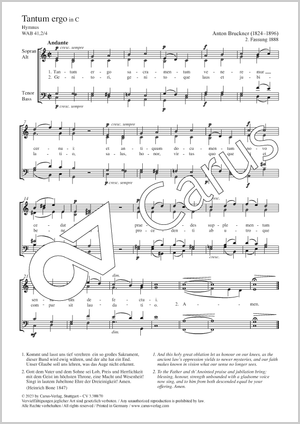
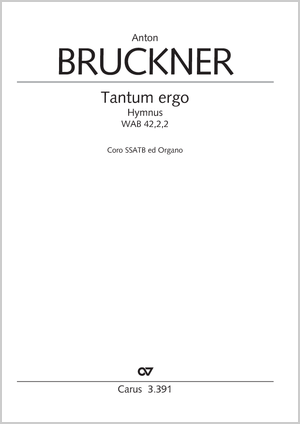
- Tantum ergo in D major
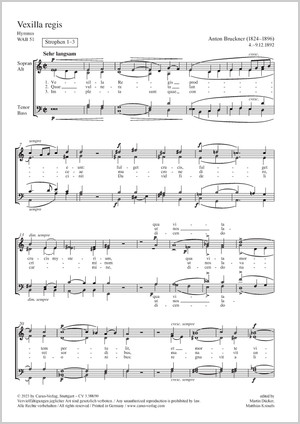
- Vexilla regis prodeunt
- Psalm 23 (22 nach Vulgata)
Contents


-
Composer
Anton Bruckner
| 1824-1896Anton Bruckner was born in Ansfelden (Austria) in 1824 and did not have a particularly easy life. The Austrian composer came from a simple, rural background and was plagued by self-doubt throughout his life. After the death of his father, he was accepted as a choirboy at St Florian's Abbey at the age of 13. After several years as a school assistant and self-taught organ and piano studies, he initially worked as an organist in St Florian. In 1855 he was appointed cathedral organist in Linz. After an introduction to music theory and instrumentation by Simon Sechter and Otto Kitzler, Bruckner discovered Richard Wagner as an artistic role model, whom he admired throughout his life and also visited several times in Bayreuth.
In 1868 Anton Bruckner became professor of basso continuo, counterpoint and organ at the Vienna Conservatory, ten years later court organist. In 1891 he was awarded an honorary doctorate from the University of Vienna. He was regarded as an important organ virtuoso of his time, but his compositional recognition was a long time coming. It was not until the Symphony No. 7 in E major, composed between 1881 and 1883, with the famous Adagio, which was written under the impression of Wagner's death, that he received the recognition he had hoped for, even if he did not want to accept it in view of his tendency towards scepticism and self-criticism.
Anton Bruckner was a solitary composer who did not want to follow any school or doctrine. He wrote both sacred and secular works in all their facets. In addition to numerous motets, Bruckner composed three masses, the Missa Solemnis in B flat minor (1854) and the Te Deum (1881-84; CV 27.190/00), which is available from Carus-Verlag. As a symphonist, he wrote a total of nine symphonies and many symphonic studies from 1863 onwards, whereby he tended to revise finished versions several times. Bruckner's orchestral works were long considered unplayable, but for the tonal language of their time they were merely unusually bold sound monuments on the border between late Romanticism and Modernism, uniting traditions from Beethoven to Wagner and folk music.
Personal details
-
Editor
Matthias Kreuels
| 1952Matthias Kreuels studierte Schulmusik, Instrumentalpädagogik, Klavier und Kirchenmusik in Köln. Später war er unter anderem als Rektor der Katholischen Hochschule für Kirchenmusik St. Gregorius in Aachen tätig. Personal details
-
Editor
Martin Dücker
| 1951
Reviews
Beispielhaft aus dieser für unsere Chorpraxis sehr empfehlenswerten Sammlung ...
Kirchenmusikalische Mitteilungen Dözese Rottenburg-Stuttgart, 05/2024
Umso mehr sei dem Carus-Verlag gedankt, dass … den Chören eine reiche Fundgrube von vierzig Werken jeglichen Schwierigkeitsgrades geboten wird. … Mustergültig editiert, sollte diese Sammlung in keinem Notenschrank fehlen.
Kirchenmusik Bistum Trier, 01/2024
Große Kunst auf engem Raum… reizvolle Herausforderungen für jeden Chor.
Kirchenmusik Südtirol, 10/2023
Eine wichtige Repertoirefundgrube für Kirchenchöre aller Größen.
Singende Kirche, 09/2023
Der Gesamteindruck dieses Bruckner-Chorbuchs … ist ausgezeichnet und bietet selbst für den Bruckner-Kenner lohnende Neuentdeckungen.
Musik & Kirche, 07-08/2023
Eine wichtige Repertoirefundgrube für Kirchenchöre aller Größen.
Singende Kirche, September 2023Insgesamt ist die Ausgabe nachdrücklich zu empfehlen: Mit wenig Aufwand können Chöre die Stücke unterschiedlicher Schwierigkeitsstufen aufführen, sodass Bruckners kleinere geistliche Werke einem größeren Publikum präsentiert werden können.
Chorzeit, No. 105, 06/2023
Ein besonderes Augenmerk wurde auf eine praxisnahe und vielseitige Verwendbarkeit gelegt. Dies zeigt sich zum Beispiel in einem nicht überfrachteten, gut lesbaren und großzügigen Notenbild. Zum besseren Verständnis wurde jeweils eine Textübersetzung hinzugefügt. Im Vorwort findet der Leser auch nützliche Hinweise, die sich mit der liturgischen und musikalischen Aufführungspraxis beschäftigen.
Musica Sacra, 06/2023
Selbstverständlich bietet der Verlag eine preisgünstige Chorausgabe zusätzlich zu diesem vorbildlich edierten Kompendium ... Gerade die schlichteren Sätze empfehlen sich nachdrücklich für den gottesdienstlichen Einsatz.
Kirchenmusik im Bistum Limburg, 02/2023
Reviews on our website can only be submitted by customers with a registered user account. A check whether the rated products were actually purchased does not take place.
Frequent questions about this work
What is the difference to Choral Collection Bruckner Sacred works for worship and concert (Carus 2.065/00)?
 There are no questions and answers available so far or you were unable to find an answer to your specific question about this work? Then click here and send your specific questions to our Customer Services!