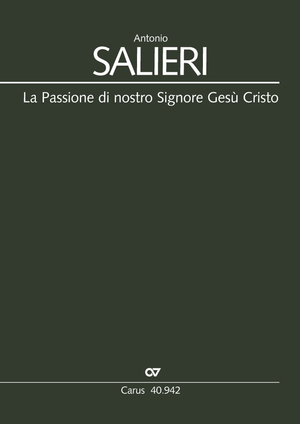
La Passione di nostro Signore Gesù Cristo
1776
Pietro Metastasio’s libretto to La Passione di nostro Signore Gesù Cristo (1730) is a prototype for the Italian Catholic oratorio of the 18th century. The Biblical text is entirely transformed into free verse. Metastasio originally wrote the text for Antonio Caldara, but it has been set to music many times.
Salieri's setting seems to have particularly pleased the famous poet. In a letter to the 26-year-old composer, he stated that it was the most expressive music written to this poem – a great compliment!
Salieri composed his oratorio in 1776 for a concert presented by the “Musicalische Societät der freyen Tonkunst der Witwen und Waisen.” This society was a kind of pension and insurance organization and at the same time it was the first public concert society in Vienna and the only Musical institution devoted primarily to the performance of oratorios. Its concerts were given in the Burgtheater during Advent and Lent.


-
Composer
Antonio Salieri
| 1750-1825Antonio Salieri (1750–1825) was an Italian composer of the Classical period. In 1766, Florian Leopold Gassman invited Salieri to come to Vienna. Salieri accepted this offer and, apart from travelling, never left the city again until the end of his life. He composed in all genres common at the time and was very successful in his day, with his operas being particularly popular in Vienna. His works also include many sacred choral works, such as oratorios, cantatas, masses and requiems.
In the last century, Salieri gained fame through his portrayal in the film Amadeus (1984). The film depicts the supposed rivalry between him and Mozart. Even though the version portrayed in the film most likely bears little resemblance to the historical reality, it had a strong influence on the public image of Salieri. However, the film also ensured that Salieri's largely unperformed works are receiving more attention again today.
Personal details
-
Editor
Rudolf Kelber
| 1948
-
Songwriter / Librettist
Pietro Metastasio
| 1698-1782
Reviews on our website can only be submitted by customers with a registered user account. A check whether the rated products were actually purchased does not take place.
Frequent questions about this work
 There are no questions and answers available so far or you were unable to find an answer to your specific question about this work? Then click here and send your specific questions to our Customer Services!