

Composed in nine parts and scored for SSAT soli, SATB chorus, strings and continuo, Vivaldi’s Magnificat, RV 610, is exceptionally moving, fundamental and profound. Among the work’s special moments is the "Deposuit potentes,” where the chorus is brought together in unison: a true challenge, but it’s absolutely essential to have perfect intonation here!
Simply practice. Anytime. Everywhere.
Whether at home on your tablet or PC or on the road on your smartphone: with carus music, the Choir Coach, you always have your choral works with you to practice! With the carus music choir app, you can listen to your score together with a first-class recording on any device and easily practice your own choir part with a coach. With carus music, your concert preparation is easy, efficient and fun to master!
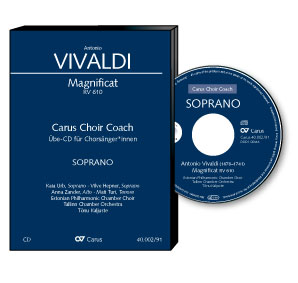
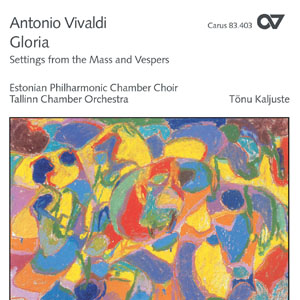
Performers: Kaia Urb (soprano), Vilve Hepner (soprano), Anna Zander (alto), Mati Turi (tenore) – Estonian Philharmonic Chamber Choir, Tallinn Chamber Orchestra – Tõnu Kaljuste
Explore
 Listen
(9)
Listen
(9)
- Magnificat (Coro)
- Et exsultavit (Soli SAT, Coro)
- Et misericordia (Coro)
- Fecit potentiam (Coro)
- Deposuit potentes (Coro)
- Esurientes (Soli SS)
- Suscepit Israel (Coro)
- Sicut locutus est (Coro SAB)
- Gloria patri (Coro)
 Practise
-
 carus music, the Choir Coach
Üben mit carus music
carus music, the Choir Coach
Üben mit carus music
-
Practice aids
-
Practice aids voice part alto
- Sicut locutus est (Coro SAB) (Choir Coach, Slow mode)
- Magnificat (Coro) (Choir Coach)
- Magnificat (Coro) (Choir Coach, Slow mode)
- Et exsultavit (Soli SAT, Coro) (Choir Coach)
- Et exsultavit (Soli SAT, Coro) (Choir Coach, Slow mode)
- Et misericordia (Coro) (Choir Coach)
- Et misericordia (Coro) (Choir Coach, Slow mode)
- Fecit potentiam (Coro) (Choir Coach)
- Fecit potentiam (Coro) (Choir Coach, Slow mode)
- Deposuit potentes (Coro) (Choir Coach)
- Deposuit potentes (Coro) (Choir Coach, Slow mode)
- Suscepit Israel (Coro) (Choir Coach)
- Suscepit Israel (Coro) (Choir Coach, Slow mode)
- Sicut locutus est (Coro SAB) (Choir Coach)
- Gloria patri (Coro) (Choir Coach)
- Gloria patri (Coro) (Choir Coach, Slow mode)
-
Practice aids voice part soprano
- Sicut locutus est (Coro SAB) (Choir Coach, Slow mode)
- Magnificat (Coro) (Choir Coach)
- Magnificat (Coro) (Choir Coach, Slow mode)
- Et exsultavit (Soli SAT, Coro) (Choir Coach)
- Et exsultavit (Soli SAT, Coro) (Choir Coach, Slow mode)
- Et misericordia (Coro) (Choir Coach)
- Et misericordia (Coro) (Choir Coach, Slow mode)
- Fecit potentiam (Coro) (Choir Coach)
- Fecit potentiam (Coro) (Choir Coach, Slow mode)
- Deposuit potentes (Coro) (Choir Coach)
- Deposuit potentes (Coro) (Choir Coach, Slow mode)
- Suscepit Israel (Coro) (Choir Coach)
- Suscepit Israel (Coro) (Choir Coach, Slow mode)
- Sicut locutus est (Coro SAB) (Choir Coach)
- Gloria patri (Coro) (Choir Coach)
- Gloria patri (Coro) (Choir Coach, Slow mode)
-
Practice aids voice part basso
- Sicut locutus est (Coro SAB) (Choir Coach, Slow mode)
- Magnificat (Coro) (Choir Coach)
- Magnificat (Coro) (Choir Coach, Slow mode)
- Et exsultavit (Soli SAT, Coro) (Choir Coach)
- Et exsultavit (Soli SAT, Coro) (Choir Coach, Slow mode)
- Et misericordia (Coro) (Choir Coach)
- Et misericordia (Coro) (Choir Coach, Slow mode)
- Fecit potentiam (Coro) (Choir Coach)
- Fecit potentiam (Coro) (Choir Coach, Slow mode)
- Deposuit potentes (Coro) (Choir Coach)
- Deposuit potentes (Coro) (Choir Coach, Slow mode)
- Suscepit Israel (Coro) (Choir Coach)
- Suscepit Israel (Coro) (Choir Coach, Slow mode)
- Sicut locutus est (Coro SAB) (Choir Coach)
- Gloria patri (Coro) (Choir Coach)
- Gloria patri (Coro) (Choir Coach, Slow mode)
-
Practice aids voice part tenore
- Magnificat (Coro) (Choir Coach)
- Magnificat (Coro) (Choir Coach, Slow mode)
- Et exsultavit (Soli SAT, Coro) (Choir Coach)
- Et exsultavit (Soli SAT, Coro) (Choir Coach, Slow mode)
- Et misericordia (Coro) (Choir Coach)
- Et misericordia (Coro) (Choir Coach, Slow mode)
- Fecit potentiam (Coro) (Choir Coach)
- Fecit potentiam (Coro) (Choir Coach, Slow mode)
- Deposuit potentes (Coro) (Choir Coach)
- Deposuit potentes (Coro) (Choir Coach, Slow mode)
- Suscepit Israel (Coro) (Choir Coach)
- Suscepit Israel (Coro) (Choir Coach, Slow mode)
- Gloria patri (Coro) (Choir Coach)
- Gloria patri (Coro) (Choir Coach, Slow mode)
-
 Additional material
- Purchase additional material as a download product.
-
 Digital text (without sheet music) incl. printing licence, html file, singing text, english translationhtml file, singing text, english translation (Sample)1. Magnificat (Tutti)
My soul doth magnify
2. Et exultavit (Aria Soprano 1, Soprano 2, Tenore e Coro)
the Lord.And my spirit hath rejoiced
3. Et misericordia eius (Tutti)
in God my Saviour.
For he hath regarded the low
estate of his handmaiden: for,
behold, from henceforth shall
call me blessed all generations.
For he that is mighty
hath done great things;
and holy is his name.And his mercy is on them
4. Fecit potentiam (Tutti)
that fear him
from generation to generation.He hath showed strength
with his arm;...
-
Digital text (without sheet music) incl. printing licence, html file, singing text, german translationhtml file, singing text, german translation (Sample)1. Magnificat (Tutti)
Meine Seele erhebt
2. (Et exultavit (Aria Soprano 1, Soprano 2, Tenore e Coro)
den Herrn,und mein Geist freuet sich
3. Et misericordia eius (Tutti)
Gottes, meines Heilands.
Denn er hat die Niedrigkeit
seiner Magd angesehen.
Siehe, von nun an werden mich
selig preisen alle Kindeskinder.
Denn er hat große Dinge an mir getan,
der da mächtig ist
und des Name heilig ist.Und seine Barmherzigkeit
4. Fecit potentiam (Tutti)
währet immer für und für
bei denen, die ihn fürchten.Er übet Gewalt
mit seinem Arm...
-
Digital text (without sheet music) incl. printing licence, html file, singing text, originalhtml file, singing text, original (Sample)1. Magnificat (Tutti)
Magnificat anima mea Dominum.
2. Et exultavit (Aria Soprano 1, Soprano 2, Tenore e Coro)Et exsultavit spiritus meus
3. Et misericordia eius (Tutti)
in Deo salutari meo.
Quia respexit humilitatem
ancillae suae,
ecce enim ex hoc beatam me
dicent omnes generationes.
Quia fecit mihi magna
qui potens est,
et sanctum nomen eius.Et misericordia
4. Fecit potentiam (Tutti)
a progenie in progenies
timentibus eum.Fecit potentiam
in bracchio suo,...
-
Digital text (without sheet music) incl. printing licence, html file, Introductory text, englishhtml file, Introductory text, english (Sample)Text from the CD Carus 83.325
Karl Heller
Translation (abridged): John CoombsThe Magnificat in G minor belongs liturgically in the service of Vespers. Vivaldi set this song of praise to Mary only once. The first version was written for the Ospedale della Pietà between 1713 and 1717 (RV 610b), but the work was revised at least twice. The version RV 610, differs from the original version only in points of detail. The characteristic features of this work include a clear sense of compositional terseness. Despite the particular charm of such a piece as the duet “Esurientes,” it is generally agreed that the greatest effect is created by the choral movements. This is true of the opening “Magnificat” with its extravagant gestures, concise plasticity in the unisono of the “Deposuit potentes de sede,” and above all of the “Et misericordia,” which is distinguished by its close counterpoint and expressive harmonic tension. The words at that point are set to music whose
...
-
Digital text (without sheet music) incl. printing licence, html file, Introductory text, germanhtml file, Introductory text, german (Sample)Booklet-Text der CD Carus 83.325
Karl Heller
Die Wiederbelebung der Musik Antonio Vivaldis im 20. Jahrhundert ging einher mit der Neuentdeckung bisher völlig unbekannter Schaffensbereiche des Komponisten. Für die stärksten Überraschungen sorgte dabei ein großer Bestand an geistlicher Vokalmusik, dessen Repertoire von der groß angelegten Mess- und Vesperkomposition bis zum biblischen Oratorium und zur Solomotette reicht. Die ersten Wiederaufführungen solcher Werke, darunter das Gloria RV 589 und das Credo RV 591, während einer Vivaldi-Woche in Siena 1939 wurden geradezu als Sensation empfunden. Sie ließen deutlich werden, dass der Komponist gerade auf diesem Sektor Werke höchsten künstlerischen Ranges geschaffen hat.
Zu den Sätzen des Messordinariums tritt mit dem Magnificat g-Moll eine Komposition, die ihrer liturgischen Stellung nach dem Vespergottesdienst – als dessen Schlussstück – zugehört. Vivaldi hat diesen Lobgesang der Maria (Luk 1,46–55) nur ein einziges Mal vertont, die zwischen 1713 und 1717 entstandene Erstfassung (RV 610b) allerdings wenigstens zweimal umgearbeitet, das letzte Mal 1739 zu einer Fassung, die fünf neu komponierte Soloarien für Sängerinnen des Ospedale della Pietà
...
Purchase
Additional product information
Contents


-
Composer
Antonio Vivaldi
| 1678-1741Antonio (Lucio) Vivaldi was an Italian composer and violinist of the Baroque period.
It is assumed that his father, who was a musician himself, was responsible for Vivaldi's musical education. However, he began his professional career as a priest, which earned him the nickname Il prete rosso (the red-haired priest).
From 1703, Vivaldi worked intermittently as a violin teacher and composer at the Ospedale della Pietà, an orphanage for girls in Venice, until shortly before his death. Initially, he also worked there as a priest, but relinquished this role after three years. He wrote numerous chamber music works and concertos for his pupils at the Pietà. The famous Four Seasons are particularly well-known and often performed today. Vivaldi also composed sacred and secular vocal music and was an opera composer and director.
Of over 800 works known today, only 135 were published during Vivaldi's lifetime. After his death, Vivaldi's compositions were initially largely forgotten. Many of his works were rediscovered and published, particularly in the 20th century. Among them is the Gloria in D RV 589, the very first sheet music edition published by Carus-Verlag.
Personal details
-
Ensemble
Estonian Philharmonic Chamber Choir
-
Ensemble
Tallinn Chamber Orchestra
-
Conductor
Tonu Kaljuste
For twenty years Tõnu Kaljuste (conductor) was artistic director and principal conductor of the Estonian Philharmonic Chamber Choir, which he founded in 1981, and the Tallinn Chamber Orchestra. Kaljuste has also been chief conductor of the Swedish Radio Choir and the Netherlands Chamber Choir. He has directed international choral seminars and workshops for several years and has worked as a guest conductor with leading orchestras and choirs throughout Europe, Australia and America. As well as immersing himself in the music of the great northern and eastern European moderns, such as Schnittke, Kurtag, Penderecki, Rautavaara and Kancheli, he has a deep affinity with the composers of his native Estonia, including Pärt, Tüür, Tormis and Eller. He has established an international reputation with his wide-ranging repertoire from opera, via the traditional symphonic repertoire to contemporary music. His numerous recordings have won many awards and have been nominated for Grammy awards. In 1999 he received the Cannes Classical Award in the category “Best 20th Century Choral Music” for his recording of Alfred Schnittke’s Psalms of Repentance. In 2004 he was awarded first prize by the Estonian State Foundation “Kultuurkapital.” The same year he became artistic director of the Nargen Festival, an annual, three-month long musical event on the coast of Estonia. He is a member of the Royal Swedish Academy of Music. Personal details
-
Soloist - soprano
Kaia Urb
-
Soloist - soprano
Vilve Hepner
-
Soloist - alto
Anna Zander
-
Soloist - tenor
Mati Turi
Reviews on our website can only be submitted by customers with a registered user account. A check whether the rated products were actually purchased does not take place.
No feedback available for this product.
Frequent questions about this work
 There are no questions and answers available so far or you were unable to find an answer to your specific question about this work? Then click here and send your specific questions to our Customer Services!