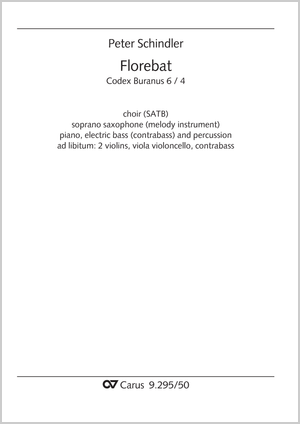

Composer Peter Schindler on this separate edition from Perpetuum mobile:
Texts nos. 6 and 4 in the Codex Buranus describe the decline of morals, combined with a tribute to the past. They complain above all about the demise of learning and the arrogance of youth. Such jeremiads, or laments, date from ancient times. As early as 5000 years ago the Sumerians wrote on clay tablets, “Youth shows no willingness to learn and rejects the values handed down to them”.
Clearly, succeeding generations will always criticize their forefathers! These texts from the first part of the Codex Buranus are part of the group of moral and mocking chants. The composition is correspondingly ironic: the interpretation is not at all judgmental. This piece in a whimsical 3/4 time should be performed with a playful wink.
Explore


 Listen
(1)
Listen
(1)
- Florebat
Purchase
Additional product information
-
Composer
Peter Schindler
| 1960Composer, pianist and organist Peter Schindler writes and performs music for ballets and theatrical performances, films and dramatic recordings, instrumental and choral arrangements, chansons and sacred works. He is particularly passionate about his compositions for children and young adults, which has come to comprise hundreds of humourous children’s songs (Kinderhits mit Witz). His full-length musicals include Geisterstunde auf Schloss Eulenstein (Witching Hour at Eulenstein Castle), Max und die Käsebande (Max and the Cheese Gang), König Keks (Cookie King), Zirkus Furioso (Circus Allegro), and SCHOCKORANGE. These musicals are some of the most frequently played pieces of their kind by children’s and youth choirs in German-speaking theaters and schools. With his first English musical Circus Allegro, Peter’s hugely sucessful work for all kids under 100 is now also accessible to audiences around the world.
For further information visit: http://peter-schindler.de/
We asked the composer 6 questions, read them here in our blog: https://blog.carus-verlag.com/en/personalities/5-questions-for-peter-schindler/
Personal details
Reviews on our website can only be submitted by customers with a registered user account. A check whether the rated products were actually purchased does not take place.
No feedback available for this product.
Frequent questions about this work
 There are no questions and answers available so far or you were unable to find an answer to your specific question about this work? Then click here and send your specific questions to our Customer Services!