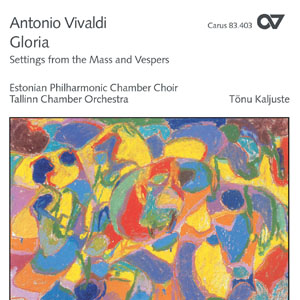
The Gloria in D major RV 589 is Vivaldi's most famous sacred work and it is among his most important church music compositions. The Carus edition, the publisher’s inaugural music edition, helped considerably to turn this musically impressive and varied work into one of Vivaldi’s most popular choral works today. The music and text sections of the Carus edition no. 1 have now been subject to a thorough revision. The music has been newly engraved, and a new Foreword and Critical Report by Uwe Wolf reflect the latest research.
The Gloria was probably written between 1713 and 1717 for the Ospedale della Pietà, one of the orphanages in Venice where young girls received a thorough musical training. This musically impressive work in the style of a so-called “cantata mass” is divided into 12 sections which vary in scoring, style of setting, key, and emotional content. Vivaldi’s mastery is shown in the solemn, sonorous choral movements and equally in the more chamber music-like solo movements.
- Revised Urtext edition
- Complete performance material
- Foreword and Critical Report reflect the latest research
- carus plus: Vocal score XL, Carus Choir Coach and carus music, the choir app
Very few alterations have been made to the choral parts, so that the new edition can be used in combination with the previous choral score (Carus 40.001/05) without any problems.
Explore
 View
View


 Listen
(12)
Listen
(12)
- Gloria in excelsis Deo
- Et in terra pax
- Laudamus te
- Gratias agimus
- Propter magnam
- Domine Deus
- Domine Fili unigenite
- Domine Deus, Agnus Dei
- Qui tollis peccata mundi
- Qui sedes ad dexteram Patris
- Quoniam tu solus sanctus
- Cum Sancto Spiritu
 Practise
-
 carus music, the Choir Coach
Üben mit carus music
carus music, the Choir Coach
Üben mit carus music
-
Practice aids
-
Practice aids voice part soprano
- Gloria in excelsis Deo (Choir Coach)
- Gloria in excelsis Deo (Choir Coach, Slow mode)
- Et in terra pax (Choir Coach)
- Et in terra pax (Choir Coach, Slow mode)
- Gratias agimus (Choir Coach)
- Gratias agimus (Choir Coach, Slow mode)
- Propter magnam (Choir Coach)
- Propter magnam (Choir Coach, Slow mode)
- Domine Fili unigenite (Choir Coach)
- Domine Fili unigenite (Choir Coach, Slow mode)
- Domine Deus, Agnus Dei (Choir Coach)
- Domine Deus, Agnus Dei (Choir Coach, Slow mode)
- Qui tollis peccata mundi (Choir Coach)
- Qui tollis peccata mundi (Choir Coach, Slow mode)
- Quoniam tu solus sanctus (Choir Coach)
- Quoniam tu solus sanctus (Choir Coach, Slow mode)
- Cum Sancto Spiritu (Choir Coach)
- Cum Sancto Spiritu (Choir Coach, Slow mode)
-
Practice aids voice part alto
- Gloria in excelsis Deo (Choir Coach)
- Gloria in excelsis Deo (Choir Coach, Slow mode)
- Et in terra pax (Choir Coach)
- Et in terra pax (Choir Coach, Slow mode)
- Gratias agimus (Choir Coach)
- Gratias agimus (Choir Coach, Slow mode)
- Propter magnam (Choir Coach)
- Propter magnam (Choir Coach, Slow mode)
- Domine Fili unigenite (Choir Coach)
- Domine Fili unigenite (Choir Coach, Slow mode)
- Domine Deus, Agnus Dei (Choir Coach)
- Domine Deus, Agnus Dei (Choir Coach, Slow mode)
- Qui tollis peccata mundi (Choir Coach)
- Qui tollis peccata mundi (Choir Coach, Slow mode)
- Quoniam tu solus sanctus (Choir Coach)
- Quoniam tu solus sanctus (Choir Coach, Slow mode)
- Cum Sancto Spiritu (Choir Coach)
- Cum Sancto Spiritu (Choir Coach, Slow mode)
-
Practice aids voice part tenore
- Gloria in excelsis Deo (Choir Coach)
- Gloria in excelsis Deo (Choir Coach, Slow mode)
- Et in terra pax (Choir Coach)
- Et in terra pax (Choir Coach, Slow mode)
- Gratias agimus (Choir Coach)
- Gratias agimus (Choir Coach, Slow mode)
- Propter magnam (Choir Coach)
- Propter magnam (Choir Coach, Slow mode)
- Domine Fili unigenite (Choir Coach)
- Domine Fili unigenite (Choir Coach, Slow mode)
- Domine Deus, Agnus Dei (Choir Coach)
- Domine Deus, Agnus Dei (Choir Coach, Slow mode)
- Qui tollis peccata mundi (Choir Coach)
- Qui tollis peccata mundi (Choir Coach, Slow mode)
- Quoniam tu solus sanctus (Choir Coach)
- Quoniam tu solus sanctus (Choir Coach, Slow mode)
- Cum Sancto Spiritu (Choir Coach)
- Cum Sancto Spiritu (Choir Coach, Slow mode)
-
Practice aids voice part basso
- Gloria in excelsis Deo (Choir Coach)
- Gloria in excelsis Deo (Choir Coach, Slow mode)
- Et in terra pax (Choir Coach)
- Et in terra pax (Choir Coach, Slow mode)
- Gratias agimus (Choir Coach)
- Gratias agimus (Choir Coach, Slow mode)
- Propter magnam (Choir Coach)
- Propter magnam (Choir Coach, Slow mode)
- Domine Fili unigenite (Choir Coach)
- Domine Fili unigenite (Choir Coach, Slow mode)
- Domine Deus, Agnus Dei (Choir Coach)
- Domine Deus, Agnus Dei (Choir Coach, Slow mode)
- Qui tollis peccata mundi (Choir Coach)
- Qui tollis peccata mundi (Choir Coach, Slow mode)
- Quoniam tu solus sanctus (Choir Coach)
- Quoniam tu solus sanctus (Choir Coach, Slow mode)
- Cum Sancto Spiritu (Choir Coach)
- Cum Sancto Spiritu (Choir Coach, Slow mode)
-
 Additional material
- Purchase additional material as a download product.
-
 Digital text (without sheet music) incl. printing licence, html file, singing text, english translationhtml file, singing text, english translation (Sample)1. Gloria in excelsis (Coro
Glory be to God on high
2. Et in terra pax (Coro)and on earth peace to men of good will.
3. Laudamus te (Duetto Soprano I.II)We praise Thee;
4. Gratias agimus tibi (Coro)
we bless Thee;
we adore Thee;
we glorify Thee.We give Thee thanks
5. Propter magnam gloriam tuam (Coro)for Thy great glory.
6. Domine Deus (Aria Soprano)Lord God, heavenly King, God the almighty Father.
7. Domine Fili unigenite (Coro)O Lord, the only-begotten Son,
...
-
Digital text (without sheet music) incl. printing licence, html file, singing text, german translationhtml file, singing text, german translation (Sample)1. Gloria in excelsis (Coro)
Ehre sei Gott in der Höhe
2. Et in terra pax (Coro)und Friede auf Erden den Menschen, die guten Willens sind.
3. Laudamus te (Duetto Soprano I.II)Wir loben Dich,
4. Gratias agimus tibi (Coro)
wir preisen Dich,
wir beten Dich an,
wir rühmen Dich.Wir danken Dir,
5. Propter magnam gloriam tuam (Coro)denn groß ist Deine Herrlichkeit.
6. Domine Deus (Aria Soprano)Herr und Gott, König des Himmels, Gott, allmächtiger Vater.
7. Domine Fili unigenite (Coro)Herr Jesus Christus,
...
-
Digital text (without sheet music) incl. printing licence, html file, singing text, originalhtml file, singing text, original (Sample)1. Gloria in excelsis Deo (Coro)
Gloria in excelsis Deo.
2. Et in terra pax (Coro)Et in terra pax hominibus bonae voluntatis.
3. Laudamus te (Duetto Soprano I.II)Laudamus te, benedicimus te, adoramus te, glorificamus te.
4. Gratias agimus tibi (Coro)Gratias agimus tibi
5. Propter magnam gloriam tuam (Coro)propter magnam gloriam tuam.
6. Domine Deus (Aria, Soprano)Domine Deus, Rex coelestis,
7. Domine Fili unigenite (Coro)
Deus Pater omnipotens.Domine Fili unigenite, Jesu Christe.
8. Domine Deus, Agnus Dei (Alto e Coro)...
-
Digital text (without sheet music) incl. printing licence, html file, Introductory text, englishhtml file, Introductory text, english (Sample)Text from the CD Carus 83.325
Karl Heller
Translation (abridged): John CoombsThe Gloria in D major has, more than any other work, established Vivaldi’s reputation as a composer of church music. In the compositional design of this work Vivaldi followed the same basic conception which is known from Bach’s B minor Mass: it is arranged in a large number of individual movements, some of which are for chorus, while others are solo arias or duets. This is the basis of the socalled “cantata” or “number” Mass, which enabled the composer to focus on central thoughts of the text. Thus the twelve movements profit from a great diversity of character, while at the same spanning a considerable stylistic range.
The heart of the composition is the chorus “Et in terra pax.” Among the unusual features of this masterly piece is the fact that the musical events proceed on two levels which motivically are distinct from each other: the orchestra plays wide intervals,
...
-
Digital text (without sheet music) incl. printing licence, html file, Introductory text, germanhtml file, Introductory text, german (Sample)Booklet-Text der CD Carus 83.325
Karl Heller
Die Wiederbelebung der Musik Antonio Vivaldis im 20. Jahrhundert ging einher mit der Neuentdeckung bisher völlig unbekannter Schaffensbereiche des Komponisten. Für die stärksten Überraschungen sorgte dabei ein großer Bestand an geistlicher Vokalmusik, dessen Repertoire von der groß angelegten Mess- und Vesperkomposition bis zum biblischen Oratorium und zur Solomotette reicht. Die ersten Wiederaufführungen solcher Werke, darunter das Gloria RV 589 und das Credo RV 591, während einer Vivaldi-Woche in Siena 1939 wurden geradezu als Sensation empfunden. Sie ließen deutlich werden, dass der Komponist gerade auf diesem Sektor Werke höchsten künstlerischen Ranges geschaffen hat.
Wie kaum ein zweites Werk hat das Gloria D-Dur RV 589 dazu beigetragen, den Ruf Vivaldis als Kirchenkomponist zu begründen. Seit es 1941 als erstes der kirchenmusikalischen Werke des Komponisten durch Druck veröffentlicht wurde, erfreut es sich der besonderen Gunst der Musizierenden und der Hörer. Die Gründe dafür mögen vielfältiger Natur sein, liegen aber gewiss primär bei der Kraft und dem Reichtum der musikalischen Erfindung und Ausdrucksgebung.
Vivaldi folgt in der kompositorischen
...
Purchase
Additional product information
Contents


-
Composer
Antonio Vivaldi
| 1678-1741Antonio (Lucio) Vivaldi was an Italian composer and violinist of the Baroque period.
It is assumed that his father, who was a musician himself, was responsible for Vivaldi's musical education. However, he began his professional career as a priest, which earned him the nickname Il prete rosso (the red-haired priest).
From 1703, Vivaldi worked intermittently as a violin teacher and composer at the Ospedale della Pietà, an orphanage for girls in Venice, until shortly before his death. Initially, he also worked there as a priest, but relinquished this role after three years. He wrote numerous chamber music works and concertos for his pupils at the Pietà. The famous Four Seasons are particularly well-known and often performed today. Vivaldi also composed sacred and secular vocal music and was an opera composer and director.
Of over 800 works known today, only 135 were published during Vivaldi's lifetime. After his death, Vivaldi's compositions were initially largely forgotten. Many of his works were rediscovered and published, particularly in the 20th century. Among them is the Gloria in D RV 589, the very first sheet music edition published by Carus-Verlag.
Personal details
-
Editor
Günter Graulich
| 1926The publisher, church musician and teacher Günter Graulich is one of the major personalities in German publishing of the post-war period. With his wife Waltraud he founded Carus-Verlag Stuttgart in 1972, which he built up from a 2-person family firm to a medium-sized business with around 60 employees. A trained church musician and Kantor for many years at the Matthäuskirche Stuttgart, he also directed the Motettenchor Stuttgart for 50 years. With his choir he made LP and CD recordings, and undertook numerous concert tours to other European countries and America. Personal details
-
Vocal score arranger
Paul Horn
| 1922-2016Paul Horn war ein deutscher Kirchenmusiker, Organist, Komponist und Musikwissenschaftler. Er studierte Kirchenmusik und Orgel an der Evangelischen Kirchenmusikschule Esslingen am Neckar bei Hans-Arnold Metzger und Musikwissenschaft, Theologie und Geschichte an der Universität Tübingen. Seine berufliche Laufbahn begann als Kantor an der Evangelischen Michaelskirche in Stuttgart-Degerloch. 1954 wurde er Kantor an der Evangelischen Stadtkirche Ravensburg, eine Position, die er bis zu seiner Pensionierung innehatte. Als Musikwissenschaftler arbeitete Horn bis ins hohe Alter eng mit Carus zusammen. So stammen zahlreiche Carus-Klavierauszüge aus seiner Feder. Personal details
-
Continuo realization
Paul Horn
| 1922-2016Paul Horn war ein deutscher Kirchenmusiker, Organist, Komponist und Musikwissenschaftler. Er studierte Kirchenmusik und Orgel an der Evangelischen Kirchenmusikschule Esslingen am Neckar bei Hans-Arnold Metzger und Musikwissenschaft, Theologie und Geschichte an der Universität Tübingen. Seine berufliche Laufbahn begann als Kantor an der Evangelischen Michaelskirche in Stuttgart-Degerloch. 1954 wurde er Kantor an der Evangelischen Stadtkirche Ravensburg, eine Position, die er bis zu seiner Pensionierung innehatte. Als Musikwissenschaftler arbeitete Horn bis ins hohe Alter eng mit Carus zusammen. So stammen zahlreiche Carus-Klavierauszüge aus seiner Feder. Personal details
Reviews
Das Gloria RV 589 war die Gründungs-Ausgabe des Carus Verlages. Diese Partitur erschien ein Jahr später als die von Malipiero bei Ricordi. Man kann von dieser Publikation als von einer Antwort im Sinne der historischen Aufführungspraxis auf Ricordi sprechen, denn diese Carus-Partitur ist von den in Klammern gesetzten Zeichen und den interpretatorischen Vorschlägen, die für die 70er Jahre typisch waren und die Malipiero Ausgabe plagen, befreit. Das große Format und das Layout auf 64 Seiten sind aus praktischen Gründen sehr zu empfehlen. Dies ist die schönste Ausgabe des Gloria, die ich kenne.
Toccata, 07/2003
Reviews on our website can only be submitted by customers with a registered user account. A check whether the rated products were actually purchased does not take place.
No feedback available for this product.
Frequent questions about this work
How does the new edition 40.001/50 differ from the old one 40.001/00?
The new edition is characterized above all by its clearer, more up-to-date music engraving. In addition, a Foreword contains information about the current state of research, and, for the first time, a Critical Report. The musical text has naturally been compared with the sources again, and in some places a different decision has been reached. But our old edition was so good that this recent comparison of the sources has not led to any fundamental divergences, and the material from both editions can be used together – with a few cuts.
 There are no questions and answers available so far or you were unable to find an answer to your specific question about this work? Then click here and send your specific questions to our Customer Services!