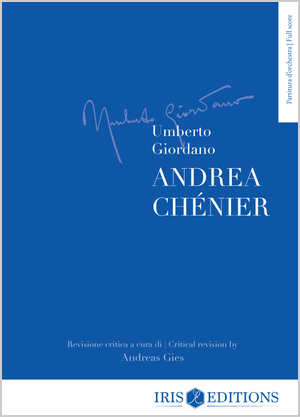
Andrea Chénier
Opera in quattro quadri


-
Composer
Umberto Giordano
-
Editor
Andreas Gies
| 1993Andreas Gies, born in Italy to Italian and German parents, studied flute, piano, composition, singing, and conducting at conservatories in Castelfranco V., Venice, and Milan. He holds a bachelor’s and two master’s degrees and attended masterclasses with renowned conductors like M. Beltrami and D. Gatti. Gies has been assistant conductor at theaters such as La Fenice di Venezia and Regio di Torino. In 2019, he won the “Premio Nazionale delle Arti” and conducted the “La Verdi” orchestra of Milan. His conducting debut was in 2016 at the Mainfranken Theater Würzburg. He has conducted premieres and performances in Milan, Nice, Novara, and Sofia.
As a composer, Gies has won several competitions and his works have been performed by major orchestras in the USA and Italy. He also produces critical editions of lesser-known Italian operas, collaborating with musicologist C. Orselli. His compositions include pieces for chamber groups, orchestras, and chamber operas.
Personal details
-
Songwriter / Librettist
Luigi Illica
| 1857-1919
Reviews on our website can only be submitted by customers with a registered user account. A check whether the rated products were actually purchased does not take place.
Frequent questions about this work
 There are no questions and answers available so far or you were unable to find an answer to your specific question about this work? Then click here and send your specific questions to our Customer Services!