Passions-Cantate
The Last Sufferings of the Saviour BR-CPEB D 2 (Wq 233), 1770
Carl Philipp Emanuel Bach scored a real hit with his Passion cantata. The work was already so popular during his lifetime that there were public calls for repeat performances every year. Bach himself is said to have dubbed the work his “Spinnhauß Passion”: following the premiere in 1770, a tradition of annual performances was established at Hamburg’s Spinnhaus church until 1785.
This crowd-pleaser is musically very closely related to Carl Philipp Emanuel Bach’s St. Matthew Passion of 1769. The composer simply reused the majority of the solo movements from the older work, supplemented with new recitatives, a chorale and two choruses. In contemporary fashion, he rejected the biblical text in favor of a poetic version written by Anna Louisa Karsch. And thus the St. Matthew Passion became a Passion cantata.
This more modern and perhaps also more accessible genre struck a nerve. Numerous manuscript copies and librettos confirm the work’s popularity far outside the environs of Hamburg.
The score is volume IV,3 of the C.P.E. Bach Complete Edition, edited by Moira Hill for the Packard Humanities Institute in Los Altos (California). Carus publishes the vocal score and choral score for this work. Also available from Carus: the high-quality clothbound full score and orchestral material.




-
Composer
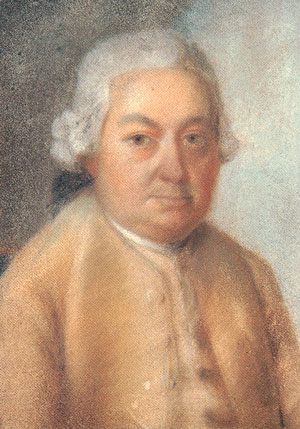
Carl Philipp Emanuel Bach
| 1714-1788Carl Philipp Emanuel Bach (1714–1788) was an extremely prolific composer who enjoyed a high reputation during his lifetime with the result that his music became known far and wide. The early works were influenced by the Berlin School. In his later works, however, this composer developed a thoroughly individual style, independent of contemporary fashions, which is to be found especially in the sacred vocal works written during his years as Director of Music in Hamburg (1768–1788). Personal details
-
Editor
Moira Leanne Hill
-
Songwriter / Librettist
Anna Luise Karsch
| 1722-1791
-
Songwriter / Librettist
Christoph Daniel Ebeling
| 1741-1817
-
Songwriter / Librettist
Johann Joachim Eschenburg
| 1743-1820
-
Continuo realization
Andreas Gräsle
| 1964Andreas Gräsle (harmonium) studied church music in Stuttgart (organ: Jon Laukvik) and took his concert diploma in organ with Daniel Roth in Saarbrücken, followed by early music studies with Andrea Marcon. He was a scholarship holder of the German Academic Exchange Service (DAAD), and a prizewinner at the International Johann Pachelbel Competition in Nuremberg in 1991. From 1996 to 2003 he was choirmaster and organist at the Augustinuskirche in Schwäbisch Gmünd, and in April 2003 he became district choirmaster in Ditzingen. In addition, he is much in demand as chamber music partner, organist and harpsichordist. He has made several CDs of organ and chamber music, and his own improvisations and arrangements of children’s songs round off his musical activities. He has taught score reading at the Musikhochschule Stuttgart since 1997. Personal details
Reviews on our website can only be submitted by customers with a registered user account. A check whether the rated products were actually purchased does not take place.
Frequent questions about this work
 There are no questions and answers available so far or you were unable to find an answer to your specific question about this work? Then click here and send your specific questions to our Customer Services!