Transcriptions
 Listen
(15)
Listen
(15)
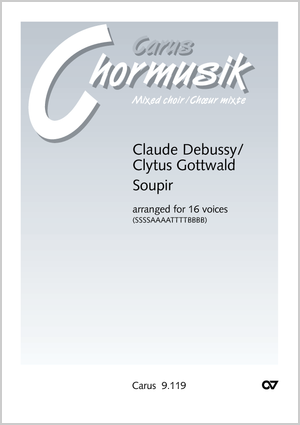
- Soupir. Vokaltranskription von Clytus Gottwald
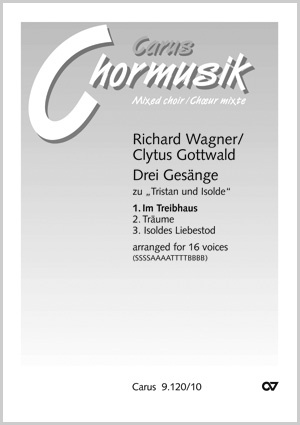
- Im Treibhaus. Vocal transcription by Clytus Gottwald
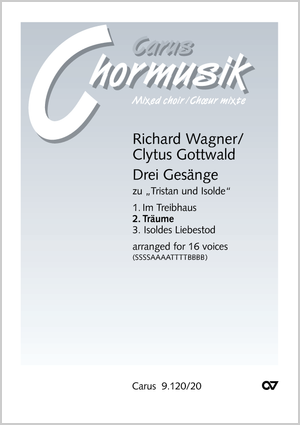
- Dreams. Transcription by Clytus Gottwald
- Die Nachtigall
- Ich bin der Welt abhanden gekommen. Vokaltranskription von Clytus Gottwald
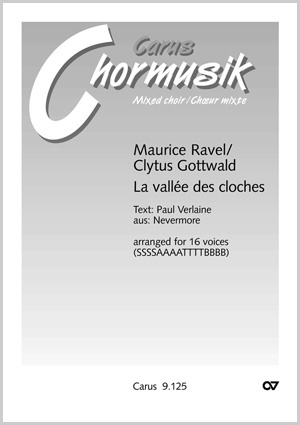
- La vallée des cloches. Vocal transcription by Clytus Gottwald
- Offering
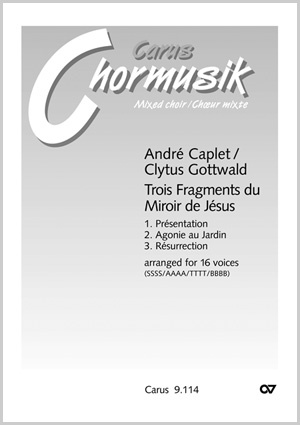
- Gehtsemene
- Resurrection
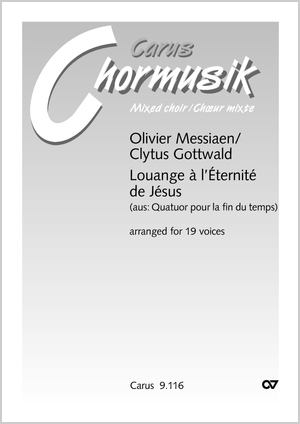
- Louange à l'Éternité de Jésus. Vocal transcription by Clytus Gottwald
- Soupir. Vocal transcription by Clytus Gottwald
- Im Zimmer
- Traumgekrönt
- Vöglein Schwermut
- Herbst
 Additional material
- Purchase additional material as a download product.
-
 Digital text (without sheet music) incl. printing licence, html file, singing text, originalhtml file, singing text, original (Sample)Unbenanntes Dokument Soupir
Mon âme vers ton front où rêve, o calme sœur,
un automne jonché de taches de rousseur,
et vers le ciel errant de ton oeil angélique monte
comme dans un jardin mélancolique,
fidèle un blanc jet d'eau soupire vers l’Azur !
Vers l’Azur attendri d’Octobre pâle et pur,
qui mire aux grands bassins sa langueur infinie.
Sur l’eau morte où la fauve agonie des feuilles
erre au vent et creuse un froid sillon,...
-
Digital text (without sheet music) incl. printing licence, html file, singing text, german translationhtml file, singing text, german translation (Sample)Unbenanntes Dokument
Meine Seele zu deinem Antlitz steigt, wo, o Schwester still,
ein Herbst träumt, bedeckt mit Sommersprossen
und zum ruhelosen Himmel deine engelgleichen Augen,wie in einem schwermütigen Garten
getreulich eine weiße Wasserfontäne zum Himmelsblau seufzt!Dem milde gestimmten Himmelsblau des fahlen und klaren Oktobers
entgegen,
das in den großen Wasserbecken seine unendliche Mattigkeit
betrachtet.Im regungslosen Wasser, wo die welke Agonie der Blätter
im Wind umher irrt und eine kalte Furche zieht,
mühsam die gelbe Sonne an einem langen Strahl hinter sich her
schleppt....
-
Digital text (without sheet music) incl. printing licence, html file, singing text, english translationhtml file, singing text, english translation (Sample)Unbenanntes Dokument
My soul rises towards your face, oh calm sister,
where an autumn lies dreaming, covered with freckles,
and towards the restless sky of your angelic eye,as in a melancholy garden,
a white fountain sighs faithfully towards the azure!Towards the softened azure of an October pale and clear,
which regards its endless languor in the great pools.On the stagnant water, where the faded agony of leaves
stirs in the wind and draws a cold furrow,
the yellow sun drags itself out in a long ray.Stéphane Mallarmé (1842–1898)
Translation: Earl Rosenbaum...
-
Digital text (without sheet music) incl. printing licence, html file, singing text, originalhtml file, singing text, original (Sample)Unbenanntes Dokument Im Treibhaus
Hochgewölbte Blätterkronen, Baldachine von Smaragd,
Kinder ihr aus fernen Zonen, saget mir, warum ihr klagt?
Schweigend neiget ihr die Zweige, malet Zeichen in die Luft
und der Leiden stummer Zeuge, steiget aufwärts süßer Duft.
Weit in sehnendem Verlangen breitet ihr die Arme aus
und umschlinget wahnbefangen öde Leere, nichtgen Graus.
Wohl ich weiß es, arme Pflanze, ein Geschicke teilen wir,
ob umstrahlt von Licht und Glanze, unsre Heimat ist nicht hier!
Und wie froh die Sonne scheidet von des Tages leerem Schein,
hüllet der, der wahrhaft leidet, sich in Schweigens Dunkel ein.
Stille wirds, ein säuselnd Weben füllet bang den dunklen Raum.
Schwere Tropfen seh ich schweben an der Blätter grünem Saum....
-
Digital text (without sheet music) incl. printing licence, html file, singing text, english translationhtml file, singing text, english translation (Sample)Unbenanntes Dokument In the greenhouse
High-arched crowns of leaves, emerald canopies,
you children of distant regions, tell me, why do you lament?
Silently you bend the branches, painting symbols in the air,
and of suffering mute witness, sweet fragrance ascending.
In yearning desire you spread wide your arms
and, caught up in delusion, embrace the desolate void, devastating
horror.
Well I know, poor plant, one fate we share,
though illuminated by light and brightness, our home is not here!
And as happily the sun parts the day’s idle lustre,
he, who truly suffers, shrouds himself in the darkness of silence.
It becomes still, a murmur weaving, filling anxiously the dark room....
-
Digital text (without sheet music) incl. printing licence, html file, singing text, french translationhtml file, singing text, french translation (Sample)Unbenanntes Dokument Dans la Serre
Hautes voûtes, couronnes de feuillage, baldaquins d’émeraude,
enfants de zones éloignées, dites moi, pourquoi vous plaindre ?
En silence vous penchez vos branches, peignant des signes dans
les airs,
et la peine de témoins muets élève vers les cieux de doux parfums.
En un désir ardent largement vous ouvrez vos bras
et enlacez, ô chimère, un ennuyeux vide d’horreur futile.
Oui, je sais, pauvre plante nous partageons un même destin,
même dans la lumière et l’éclat notre patrie n’est pas ici !
Et comme avec joie le soleil quitte la lumière stérile du jour,
qui souffre vraiment, se drape dans le sombre silence.
Le calme vient, un murmure tremblant remplit inquiet la sombre...
-
Digital text (without sheet music) incl. printing licence, html file, singing text, originalhtml file, singing text, original (Sample)Unbenanntes Dokument Träume
Sag, welch wunderbare Träume halten meinen Sinn umfangen,
dass sie nicht wie leere Schäume sind in ödes Nichts vergangen?
Träume, die in jeder Stunde, jedem Tage schöner blühn
und mit ihrer Himmelskunde selig durchs Gemüte ziehn?
Träume, die wie hehre Strahlen in die Seele sich versenken,
dort ein ewig Bild zu malen: Allvergessen, Eingedenken!
Träume, wie wenn Frühlingssonne aus dem Schnee die Blüten küsst,
dass zu nie geahnter Wonne sie der neue Tag begrüßt,
dass sie wachsen, dass sie blühen, träumend spenden ihren Duft,
sanft an deiner Brust verglühen und dann sinken in die Gruft.Mathilde Wesendonck (1828–1902)
...
-
Digital text (without sheet music) incl. printing licence, html file, singing text, english translationhtml file, singing text, english translation (Sample)Unbenanntes Dokument Dreams
Tell me, what wonderful dreams keep encircling my mind,
which, like nothing but idle froth, have dissolved in an empty void?
Dreams, which flourish more beautifully every hour, every day
and with their message from heaven pass through the soul?
Dreams, which like rays sublime sink into the soul,
to paint eternally a picture there: all forgotten, remembering!
Dreams, as spring sun kissed the blossoms from the snow,
that to a never foreseen bliss they greet the new day,
that they grow, that they blossom, dreamingly giving their fragrance,
gently fading away on your breast and then sinking into the grave.Mathilde Wesendonck (1828–1902)
Translation: Earl Rosenbaum
...
-
Digital text (without sheet music) incl. printing licence, html file, singing text, french translationhtml file, singing text, french translation (Sample)Unbenanntes Dokument Rêves
Dis-moi, quels rêves merveilleux tiennent mes sens prisonniers,
qu’ils ne sont pas comme la vaine écume disparus dans un vide
ennuyeux ?
Rêves qui à chaque heure à chaque jour fleurissent encore plus
beaux
et qui dans leur message du ciel joyeusement parcourez le coeur ?
Rêves qui tels d’augustes rayons sombrez profondément dans l’âme
pour y peindre une image éternelle : immense oubli, souvenir !
Rêves comme soleil au printemps embrassant les fleurs hors de la
neige
que, comme un délice jamais attendu, le jour nouveau les salue,
qu’ils croissent, qu’ils fleurissent, dispensent leur parfum en rêvant,...
-
Digital text (without sheet music) incl. printing licence, html file, singing text, originalhtml file, singing text, original (Sample)Unbenanntes Dokument La vallée des cloches
Sonnez, grelots ; sonnez, clochettes ; sonnez, cloches !
Car mon rêve impossible a pris corps, et je l’ai
entre mes bras pressé : le Bonheur, cet ailévoyageur qui de l’homme évite les approches.
Sonnez, grelots ; sonnez, clochettes ; sonnez, cloches !Paul Verlaine (1844–1896)
...
-
Digital text (without sheet music) incl. printing licence, html file, singing text, german translationhtml file, singing text, german translation (Sample)Unbenanntes Dokument Das Tal der Glocken
Klinget, ihr Schellen, ertönt, ihr Glöckchen, läutet, ihr Glocken!
Denn mein unerhörter Traum hat Gestalt angenommen, und ich halte
in meinen Armen das Glück, diesen geflügeltenReisenden, der einer Annäherung des Menschen aus dem Weg geht.
Klinget, ihr Schellen, ertönt, ihr Glöckchen, läutet, ihr Glocken!Paul Verlaine (1844–1896)
Übersetzung: Barbara Großmann...
-
Digital text (without sheet music) incl. printing licence, html file, singing text, english translationhtml file, singing text, english translation (Sample)Unbenanntes Dokument The Valley of Bells
Ring out, hand-bells; ring out, small bells; ring out, great bells!
Because my impossible dream came true, and I hold fast
in my arms: happiness, that wingedtraveller who eludes the approach of men.
Ring out, hand-bells; ring out, small bells; ring out, great bells!Paul Verlaine (1844–1896)
Translation: Earl Rosenbaum...
Contents


-
Composer
Clytus Gottwald
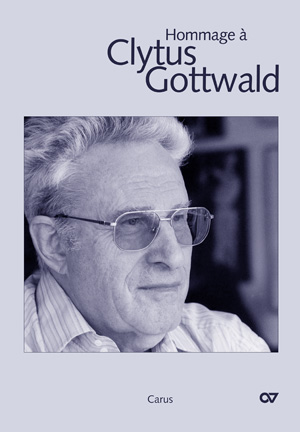
| 1925-2023The choral conductor, composer and musicologist Clytus Gottwald (1925 - 2023) made significant contributions to contemporary choral music. As editor for New Music at Südfunk Stuttgart and founder and director of the Schola Cantorum Stuttgart, he was in productive exchange with his contemporaries, Pierre Boulez, Mauricio Kagel, György Ligeti, Luigi Nono, Karlheinz Stockhausen and many others. With his Schola Cantorum, a 16-voice chamber vocal ensemble, Gottwald decisively shaped the a cappella choral culture of the highest technical level that is taken for granted today. Clytus Gottwald's transcriptions of piano songs and instrumental pieces for unaccompanied choir are appreciated by choirs all over the world. Modelled on the style of Ligeti, his works set the highest of musical standards. Clytus Gottwald has received several awards for his services, including the Cultural Prize of Baden-Württemberg in 2009, the European Church Music Prize in 2012, and the Cross of Merit of the Federal Republic of Germany in 2014. His importance for the development of contemporary choral music cannot be overestimated. Personal details
-
Preface writer
Clytus Gottwald
| 1925-2023The choral conductor, composer and musicologist Clytus Gottwald (1925 - 2023) made significant contributions to contemporary choral music. As editor for New Music at Südfunk Stuttgart and founder and director of the Schola Cantorum Stuttgart, he was in productive exchange with his contemporaries, Pierre Boulez, Mauricio Kagel, György Ligeti, Luigi Nono, Karlheinz Stockhausen and many others. With his Schola Cantorum, a 16-voice chamber vocal ensemble, Gottwald decisively shaped the a cappella choral culture of the highest technical level that is taken for granted today. Clytus Gottwald's transcriptions of piano songs and instrumental pieces for unaccompanied choir are appreciated by choirs all over the world. Modelled on the style of Ligeti, his works set the highest of musical standards. Clytus Gottwald has received several awards for his services, including the Cultural Prize of Baden-Württemberg in 2009, the European Church Music Prize in 2012, and the Cross of Merit of the Federal Republic of Germany in 2014. His importance for the development of contemporary choral music cannot be overestimated. Personal details
-
Ensemble
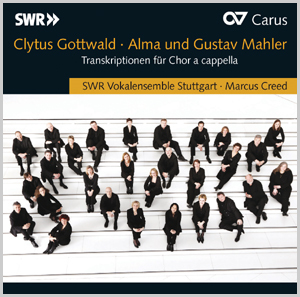
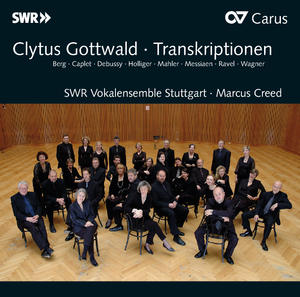
SWR Vokalensemble Stuttgart
-
Conductor
Marcus Creed
The conductor Marcus Creed was born and grew up on the south coast of England. He began his studies at King’s College in Cambridge, where he had the opportunity to sing in the famous King’s College Choir. Further studies took him to Christ Church in Oxford and the Guildhall School in London. Marcus Creed moved to Berlin in 1977. Stations in his professional career have been the Deutsche Oper Berlin and the Hochschule der Künste, as well as the Gruppe Neue Musik and the Scharoun Ensemble. From 1987 to 2001, Marcus Creed was artistic director of the RIAS-Kammerchor. In 1998, he accepted a professorship for conducting at the Musikhochschule in Cologne. Marcus Creed has been artistic director of the SWR Vokalensemble Stuttgart since 2003. His particular objective with this ensemble has been to make renewed performances of outstanding compositions from the recent past, including, for example, works by Luigi Nono, György Kurtág, Wolfgang Rihm or Heinz Holliger. Marcus Creed is regularly invited to international festivals for both early music and new music and he regularly collaborates with the Akademie für Alte Musik Berlin, the Freiburger Barockorchester and Concerto Köln. His CD releases have won international awards for their stylistically sure and acoustically sensitive interpretations. Among others, he has been awarded the German Record Critics’ Award, the Edison Award, the Diapason D’Or, the Cannes Classical Award, and the Echo Classic Prize. Personal details
Reviews
Untitled Document
Marcus Creed gilt nicht umsonst als einer der begabtesten Chordirigenten weltweit. Die Höhenflüge, zu denen er das mit 36 Solisten brillant besetzte SWR-Vokalensemble inspiriert, dürften schwerlich einzuholen, geschweige denn zu übertreffen sein. Die zum Teil haarsträubenden stimmtechnischen Anforderungen Gottwalds sind kaum je als Belastung hörbar - die Musik kommt hier ganz zu sich selbst, wird reiner, schwereloser Ausdruck.
Quelle: WDR3 Hörzeichen, 12.2.2007
[...] Clytus Gottwalds Transkriptionen haben im SWR-Vokalensemble einen würdigen Partner gefunden. Ein schier phantastischer Chor, bei dem man alles findet, was man bei Chören nicht selten vergeblich sucht: Ein stets schlanker, transparenter Klang, der aber auch klangliche Explosionen keineswegs scheut. Niemals verwirbeln sich die polyphon geführten Stimmen in einem hallig-wohligen Einheitsbrei, jede Stimme ist hörbar. Unglaublich, mit welcher Präsenz an einigen Stellen der erste Sopran hervortritt und schier unmögliche Höhen wie selbstverständlich meistert -das gelingt besonders eindrucksvoll in Mahlers ,Ich bin der Welt abhanden gekommen' - bei einer Live-Aufnahme, fast unvorstellbar!
Gordon Kampe
Quelle: klassik.com, 14.7.2007
[...] Ende des 19. Jahrhunderts versuchte Richard Strauss, den Chor auf eine spezifische Klanglichkeit hin zu entwickeln, indem er die Singstimmen quasi "orchestrierte". Erst in den 1960er Jahren griff György Ligeti diese Chortechnik in seinem "Lux aeterna" wieder auf. Hier versuchen diese Transkriptionen anzuknüpfen: indem sie diese Technik auf Modelle der romantisch-impressionistischen Epoche anwenden. Die klangprächtigen, für vielfach geteilten Chor gesetzten Transkriptionen - alle noch dazu meisterhaft umgesetzt vom SWR Vokalensemble Stuttgart unter Marcus Creed - rücken die im Original meist bekannten Werke (u.a. von Berg, Wagner und Mahler) in ein völlig neues, aufregendes Licht.
Quelle: Chor aktuell, Sept. 2007
[...] Auch wie Gottwald die Unterlegung von Texten zu reiner Instrumentalmusik gelingt, das zeugt von großer Meisterschaft und schlicht von gutem Geschmack - nach der Art, wie Arnold Schönberg ihn immer forderte. [...]
Gordon Kampe
klassik.com, 14.07.2007
Reviews on our website can only be submitted by customers with a registered user account. A check whether the rated products were actually purchased does not take place.
Frequent questions about this work
 There are no questions and answers available so far or you were unable to find an answer to your specific question about this work? Then click here and send your specific questions to our Customer Services!